
UK Online Casino Payment Methods: Deposits to Withdrawals
 Available in GB
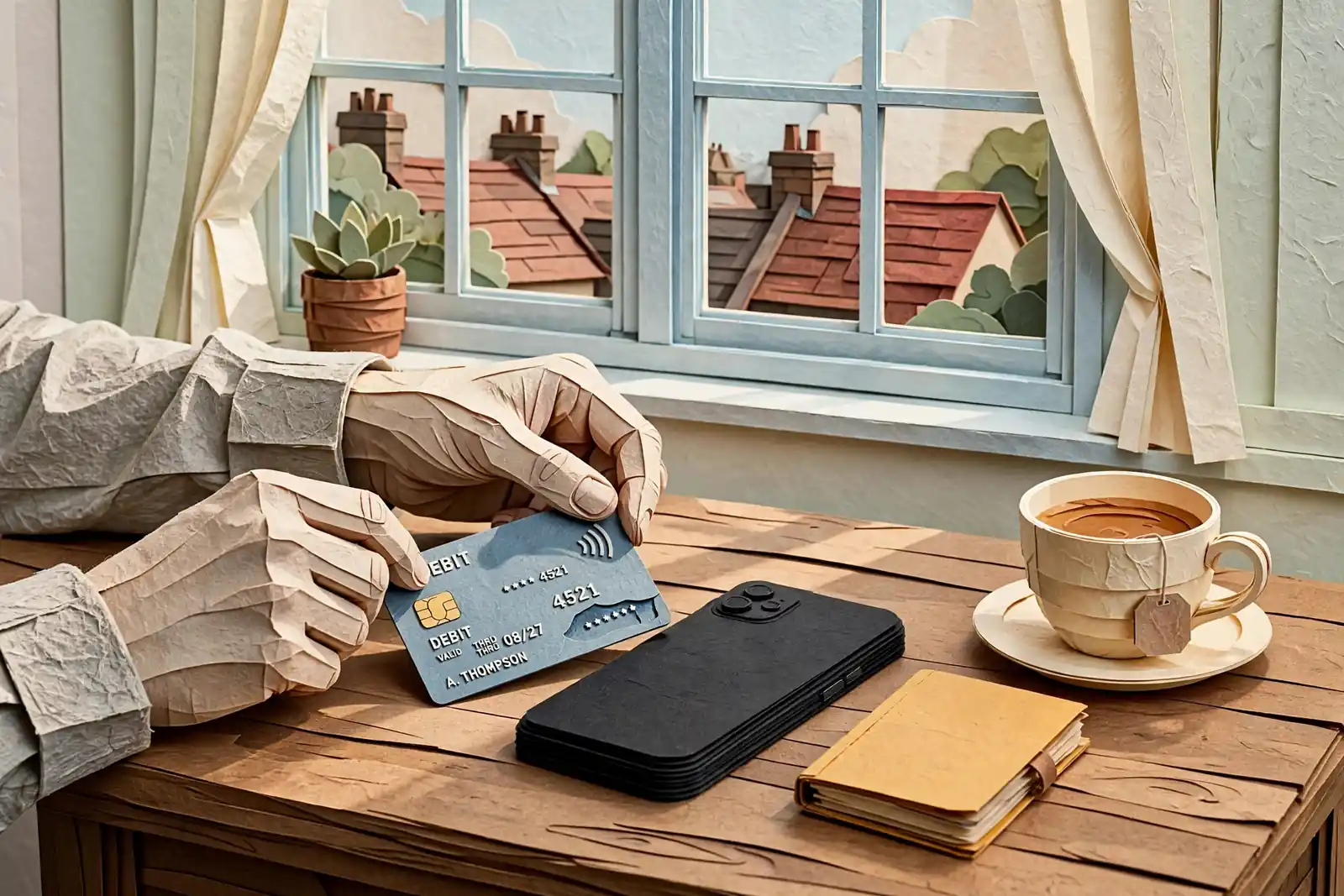
See how payment methods differ from the first deposit to withdrawal, including verification, mobile use and the effect of payment choice on bonuses.
How Casino Payments Move from Deposit to Withdrawal
An online casino payment begins before any money reaches the game balance. Registration creates the account, age verification must be completed before a deposit is accepted, and the casino may ask for a financial limit before that first deposit. These steps make the transaction part of the account’s identity rather than a detached transfer of cash.
The deposit stage is comparatively simple. A player selects an available casino payment method, enters the required details, confirms the transaction and waits for the balance to update. The money is then available for gambling under the operator’s account rules. In Britain, credit cards cannot be used for gambling, including through a money service business. A wallet funded by a credit card cannot be used as a workaround either.
A debit card casino payment in the UK therefore means a permitted debit-card transaction, not a credit facility disguised by familiar branding. Bank transfers, electronic wallets and other routes follow their own verification and processing procedures, but the underlying sequence remains similar: select the route, authenticate the payment, receive the account credit and retain the transaction record.
Withdrawal reverses the movement, although not always through the same channel. The casino checks the account, confirms that the requested funds are withdrawable and may require evidence that the deposit instrument belongs to the account holder. This is why the original deposit method matters. A card deposit may lead to a card-related return where the operator supports it; another withdrawal may need to go through a bank account or a wallet held in the same name. The available route depends on the casino’s banking arrangements and the account’s verification status.
Welcome bonus rules add another layer. A specialist review describes claiming such an offer as a sequence of registration, opting in and making a qualifying deposit, but the operator’s terms govern the actual transaction. Another specialist review notes that a promo code may need to be entered during the deposit, while some offers are added automatically. Missing that step can leave the money in the account while the promotional part quietly fails to appear.
Online Casino Cashback Bonuses: Terms and Value
The payment trail is therefore administrative as much as financial. Deposit, verification, play, withdrawal. Four small doors, each with its own key.
Recommended online casinos
- BeOnBetBonus: 100% up to €500 + 100 FS · Payout speed: 1-3 business days
- NightWinBonus: £900 + 400 free spins · Payout speed: 1-3 business days
- ZombillionBonus: Welcome Pack 250% up to £4000 + 200 FS · Payout speed: 1-3 business days
- BritsinoBonus: Welcome Package – Get your £2,200 + 2,000 FS · Payout speed: 1-3 business days
- DieselwinBonus: Welcome Pack 250% up to £4000 + 200 FS · Payout speed: 1-3 business days
- Revery PlayBonus: 100% up to€1,000+ 100 FS · Payout speed: 1-3 business days
- x3betBonus: Welcome Pack 100% Up to £1.000 + 200 Free Spins · Payout speed: 1-3 business days
Payment Methods: The Differences That Matter
A casino account is not merely a place where money enters and leaves. Each deposit method creates a different relationship between the account, the bank, the payment provider and, sometimes, the terms of a welcome bonus. The familiar labels—cards, bank payments, e-wallets, vouchers and mobile billing—describe broad families rather than interchangeable tools.
The best online casino payment methods in the UK therefore depend on what matters in a particular account: whether the route connects directly to a bank account, whether it requires a separate wallet, whether funds are prepaid, and whether the casino accepts it for both deposits and withdrawals.
Cards: familiar, but not credit cards
Debit cards remain an easily understood option because the transaction is tied to a bank account rather than to a separate balance held with a payment service. The casino account records the deposit, while the bank handles the underlying transfer. This can make the method straightforward to recognise and manage alongside ordinary spending.
There is an important boundary in Britain. Remote gambling operators cannot accept credit-card payments for gambling, including credit-card funding routed through a money service business. A wallet that permits credit-card funds to be used for gambling is also excluded. The restriction concerns the source of the money, not simply the shape of the button displayed at the cashier.
A debit-card deposit may therefore look like the most conventional of casino payment methods, but its usefulness still depends on the account’s own cashier and withdrawal arrangements. A method that is familiar is not automatically available for every transaction.
Bank payments: money from the account itself
Bank payments connect the casino account more directly with a current account. They avoid the separate stored balance associated with an e-wallet and can suit people who prefer to keep gambling transactions within ordinary online banking.
Newest Online Casinos with No-Deposit Spins
That direct connection also gives the method a particular character. A bank payment is less like handing over a card at a counter and more like authorising a transfer from one financial account to another. The casino must identify the payment correctly, and the name attached to the banking account can matter during account checks.
Bank-connected routes are distinct from card transactions even when both draw on the same bank account. One uses card details and the card network; the other relies on account-to-account authorisation. The difference is technical, but it becomes practical when a casino lists only one of those routes.
E-wallets: a separate layer between bank and casino
An e-wallet places an additional account between the casino and the player’s bank or card. Money can be held with the wallet provider and then used at participating casinos without entering card details into every cashier. This separation is one reason e-wallets appeal to people who want a clearer boundary between their main bank account and online gambling activity.
The arrangement is not universally accepted. A casino may list e-wallets for deposits but apply different rules to withdrawals, or a welcome bonus may exclude a particular wallet route. A specialist review has reported that welcome deals can restrict e-wallet deposits, but that is not a standing rule for every British-licensed casino. Eligibility belongs to the individual offer.
The wallet’s funding source matters as well. UK operators cannot accept wallet payments where credit-card funds can be used for gambling. The convenient middle layer does not erase the rule governing the money behind it.
Vouchers: prepaid value without a direct bank transaction
A voucher works differently again. Instead of authorising a payment from a bank account or moving money through a wallet, the account is funded with prepaid value. The voucher may be bought separately and then entered at the casino cashier.
Best Cascading Slot Games UK: How the Reels Work
This can appeal to people who prefer a fixed amount set aside before gambling begins. It also changes the account relationship: the casino receives a redemption request rather than a direct card or bank authorisation. The trade-off is that vouchers are not accepted everywhere, and their role may be limited to deposits rather than withdrawals.
Prepaid value can look simple because the transaction is bounded from the start. The simplicity belongs to the funding stage, however; account verification and the casino’s own cashier rules still govern what happens afterwards.
Mobile billing: charged through a communications account
Mobile billing treats the phone account as the payment channel. Rather than using a card, bank account or separate wallet at the point of deposit, the charge is handled through a mobile provider. Its appeal lies in using an account already attached to the phone.
That convenience comes with a narrower set of conditions. Mobile billing is not the same as opening a casino on a phone and paying by debit card or bank transfer. The device is merely the screen in the latter case; in mobile billing, the communications account is part of the transaction itself.
The distinction matters because mobile access does not turn every casino payment method into mobile billing. A casino may be perfectly usable on a phone while accepting only ordinary bank or wallet transactions. The handset is often just a window; occasionally, it is also the till.
What belongs in the comparison
The useful comparison is therefore not a race for one universal winner. Cards place the transaction close to a bank account; bank payments authorise money from that account directly; e-wallets create a separate payment layer; vouchers use prepaid value; mobile billing charges through a communications provider.
Availability is only one part of the decision. The casino account may treat deposit and withdrawal routes differently, and promotional eligibility may depend on the selected deposit method. A welcome deal’s value is shaped by the reward, the qualifying deposit, game contribution, expiry and withdrawal conditions—not by the payment label alone.
Casino Bonuses: Free Spins and Welcome Offers
For that reason, the most suitable payment methods for online casinos are the ones whose structure fits the account’s practical use and whose terms remain clear at the cashier. Familiarity helps, but it is not the same thing as suitability.
Mobile Casino Payments and the Limits of Convenience
A mobile casino payment can mean two quite different things. In the first case, the phone is simply the screen through which an ordinary deposit method is used: a debit card, bank service or digital wallet opens in the mobile browser or app, and the transaction follows the same account rules as it would on a desktop. In the second, the charge is attached to the mobile account itself. The distinction matters because “paying by phone” describes the device, while “paying through a phone bill” describes the funding route.
The first arrangement is now unremarkable. A casino account can be opened on a handset, the deposit page can be reached through a mobile browser, and a saved wallet such as Skrill may authorise the transaction without the user ever leaving the smaller screen. The phone is acting as a doorway, not as a bank. A Skrill payment at an online casino remains a wallet transaction even when the approval takes place with a fingerprint or facial scan on a handset.
The second arrangement is closer to mobile billing. A service such as Boku may allow an eligible charge to be associated with a mobile account rather than entered as a card transaction. Depending on the operator and the mobile provider, the amount may appear on a phone bill or be deducted through the mobile account. That is why searches for a phone-bill casino payment often lead to Boku: the attraction is not merely a mobile interface, but a different way of funding the gambling account.
Online Casino with 100% Bonus: How the Match Works
Availability is not a universal feature of the casino industry. A casino may display a mobile-billing option only for particular customers, networks or account conditions, and the method can be absent even when the site works perfectly well on a phone. The same applies to mobile payment slots: the games themselves are not being paid for separately. The deposit route funds the casino balance, after which the balance can be used for eligible games under the operator’s rules.
The phone is not the safeguard
A polished mobile page can make a deposit feel like a minor interruption between messages. British regulation deliberately gives that interruption more weight. Before a new customer makes a first deposit, a remote operator must prompt them to set a financial limit. Account-level controls must remain accessible, rather than being buried somewhere on a desktop page that is rarely visited again.
This requirement changes the meaning of convenience. A mobile casino payment is not complete merely because the banking screen loads quickly or biometric approval removes a password. The account should first present the limit-setting prompt, giving the customer a chance to decide how much money can be deposited within the relevant control period. The point is not to make the handset moral; phones have never shown much interest in morality. It is to place a pause before funds enter the gambling account.
The same principle applies whether the deposit is made through a card interface, Skrill, bank-connected service or mobile billing. The method does not remove the operator’s responsibility to provide account-level financial controls. Nor does the small size of the screen turn those controls into optional decoration. If the route is available to a new customer, the safeguard belongs to the account, not to the type of wallet or network used.
Credit cards do not become acceptable by taking a detour
Remote gambling operators cannot accept credit-card payments for gambling. The restriction also covers credit-card funding routed through a money service business. A digital wallet therefore cannot be used to disguise a credit-funded transaction as something else.
Remote gambling operators cannot accept credit-card payments for gambling, including those routed through a money service business.
The rule reaches wallet arrangements as well. Operators cannot accept a wallet payment where the wallet permits credit-card funds to be used for gambling. A phone may hold the wallet, remember the card and confirm the transaction in seconds, but none of that changes the origin of the money. A mobile payment casino is not allowed to turn prohibited credit funding into an acceptable deposit merely by placing another interface between the card issuer and the gambling account.
This is especially relevant to contactless wallets and app-based payments. The handset can authenticate a debit-funded wallet transaction, but the operator must still prevent a credit-funded gambling payment where the wallet permits that use. Convenience is therefore conditional: it operates inside the payment rules, not above them.
Mobile billing and ordinary mobile access
A phone-bill payment sits apart from the familiar experience of opening a casino on a handset. It may be offered through a specialist billing service, and its availability depends on the operator’s arrangements and the customer’s mobile account. A casino that accepts a mobile billing route is not necessarily a casino that supports every network, every contract type or every customer profile.
The practical question is therefore not whether a site is mobile-friendly. Nearly any modern casino can be designed to fit a phone. The useful distinction is between:
- using a phone to access a standard deposit method;
- using a mobile wallet to authorise a transaction;
- charging the deposit through a mobile account or phone bill.
Those routes can appear beside one another on a payment page while carrying different conditions. A mobile-friendly casino may accept debit cards but not mobile billing. Another may list Boku while excluding a particular account arrangement. A wallet may work for deposits but not for a promotion, depending on the offer’s terms. The payment screen is less a menu than a small map of what that particular account can do.
Withdrawal arrangements can also remain separate from the deposit route. Mobile billing is designed around charging an account, not necessarily receiving gambling winnings back through the same channel. The availability of a deposit option should not be read as a promise that it will serve every later transaction.
The appeal of phone-based payment is understandable: fewer fields, a familiar device and a transaction that can be approved without reaching for a laptop. Yet the British framework treats the deposit as a financial decision rather than a tap on glass. Limits come first, credit funding is excluded, and the operator’s controls remain attached to the account whatever screen happens to be in use.
Why Payment Options Vary Between Casinos
The menu presented at the cashier is not a universal catalogue of online casino payment options. It is the visible result of several decisions made by the operator, its payment processors and the customer’s account status. One casino may display card deposits and bank-connected transfers, while another offers a broader selection of wallets or prepaid routes. Both can still be operating normally.
Availability begins with the casino’s commercial arrangements. A payment service must be integrated into the cashier, supported for the relevant currency and compatible with the operator’s verification and risk controls. A route that works for one business may therefore be absent from another, not because it has disappeared from the market, but because that casino has chosen a different processing arrangement.
Availability
A casino may display a mobile-billing option only for particular customers, networks or account conditions.
Location and account details can narrow the menu further. A British customer may see a different set of casino payment options UK operators provide than a customer in another jurisdiction. The account’s currency, verification status and transaction history may also affect which routes appear or remain available. A method can be offered for deposits without being available for withdrawals, or be removed until additional checks are complete.
The same distinction applies to the search for the best payment option for online casinos. There is no single best route in the abstract: the useful choice is the one actually supported by the casino, suitable for the account and compatible with the intended transaction. A familiar brand such as Neteller may be accepted at one operator but absent from another’s Neteller casino payment options. Recognition is not acceptance.
Welcome offers create another layer of restriction. An operator’s own terms may reserve the welcome bonus for new customers, limit it to one account per household and exclude deposits made through particular methods, including some e-wallets. This point comes from a specialist review and should be treated as an offer-specific observation, not a permanent rule of the market. The cashier may accept a deposit while the promotion does not recognise it.
That difference is easy to miss. A payment can be valid for playing but ineligible for promotional credit. The terms attached to the welcome bonus, rather than the size of the cashier menu, decide the outcome. A generous-looking choice can still be the wrong one for the intended offer. Availability is only half the story.
PayPal and Paysafecard: Different Ideas of Paying Online
PayPal and Paysafecard solve different problems, despite appearing beside each other in a casino cashier. PayPal is a digital wallet: money is held in a PayPal account, and the casino transaction is authorised through that account. Paysafecard is prepaid: value is loaded onto a voucher or code first, then used at a participating gambling site.
That distinction affects the shape of the account. A PayPal deposit is connected with an existing wallet and its verification arrangements. A Paysafecard deposit is tied to the available prepaid balance. Neither route is simply a decorative button added to every cashier. Availability depends on the operator, the customer’s account and the transaction rules applied to that site.
Online Casino with a 200% Bonus: How It Works
PayPal as a wallet route
A casino accepting PayPal can present the wallet as an alternative to entering card details directly into the casino account. The payment is authorised through PayPal, while the gambling account records the resulting deposit. This makes PayPal relevant to searches for an online casino with PayPal payment, but the phrase should not be mistaken for a promise that every operator supports it.
The important qualification is the funding source. Remote gambling operators cannot accept credit-card payments, including credit-card funding routed through a money service business. The same restriction reaches wallets: a gambling payment cannot be made through a wallet where credit-card funds are available for that purpose. PayPal therefore cannot be treated as a way around the British ban on credit-card gambling.
Bonus treatment is a separate question. A welcome bonus may be limited to new customers, restricted to one per household and unavailable when an e-wallet is selected. A specialist review can describe such exclusions, but the operator’s own terms decide whether a PayPal deposit qualifies for a particular offer. The cashier and the promotion may therefore tell different stories.
Paysafecard as prepaid value
Paysafecard keeps the payment further away from the bank-card ritual. Funds are obtained in advance and then applied through the voucher service at a casino that accepts it. That can suit an account intended to use a defined prepaid balance rather than a wallet linked to another funding source.
The trade-off is equally plain: a Paysafecard payment casino must support the service, and the available balance must cover the intended transaction. A casino may list Paysafecard in its cashier while excluding it from a welcome bonus, or may attach separate terms to deposits made through it. The payment icon is not the contract.
PayPal is therefore wallet-based, while Paysafecard is prepaid. For casino accounts, that difference matters less as a matter of fashion than as a matter of eligibility, funding source and promotion terms. The small print remains the final cashier.
Apple Pay and Google Pay at Online Casinos
Apple Pay and Google Pay sit between a casino cashier and the bank card or account connected to the wallet. At a participating casino, the wallet can appear as a deposit option alongside cards and other deposit methods. The transaction is authorised through the wallet interface rather than by entering the card number into the casino’s payment form.
Online Casino 300% Bonus: How Deposit Matches Work
That distinction is useful, but it does not turn the wallet into an independent source of funds. Its availability depends on the operator, the customer’s device and the funding arrangements permitted for gambling. An Apple Pay casino in the UK may therefore show the service for some customers while omitting it for others. Google Pay follows the same practical pattern: a Google Pay casino option exists only where the operator has enabled it for the relevant account and transaction.
The credit-card restriction
The important British rule concerns the source of the money, not merely the logo displayed at checkout. Remote gambling operators cannot accept credit-card payments for gambling. The restriction also covers wallet transactions where credit-card funds are used for that purpose. A wallet does not provide a route around the rule.
This affects how Apple Pay and Google Pay can be used at licensed online casinos. A debit card or another permitted funding source may be available through a wallet, while a credit card cannot be used to fund gambling through it. The payment screen may make this distinction during selection or authorisation, and an attempted transaction may be declined if the funding source is not permitted.
Deposits, withdrawals and account records
Wallet deposits are still tied to the casino account. Age verification must take place before a customer is allowed to deposit, and new customers must be prompted to set a financial limit before making the first deposit. The wallet does not replace either requirement.
Withdrawal arrangements are a separate question. A casino may accept Apple Pay or Google Pay for deposits without using the same wallet for withdrawals. The cashier may direct funds to another available route, subject to account checks and the operator’s process. A wallet icon, then, is not a promise that money will travel in both directions.
The same caution applies to ecoPayz and AstroPay. They are different services, not interchangeable labels for Apple Pay or Google Pay, and their presence in a cashier does not establish that every casino accepts them. Nor does a payment brand determine whether a welcome bonus applies; that belongs to the offer’s terms. A familiar button is still only a button.
Online Casino 400% Bonus: Terms and How It Works
Trustly and Bank-Connected Casino Payments
Trustly occupies a different place in the casino payment landscape from a card or a digital wallet. It connects the casino’s payment page with the customer’s bank, allowing funds to move through online banking rather than through a stored card number or a separate wallet balance. The bank remains the source of the money; Trustly provides the connection between that account and the gambling account.
That distinction matters because the payment does not work like a card purchase. There is no card authorisation step and no need to maintain a prepaid balance with Trustly. The casino redirects the customer to a bank-selection or banking-login process, where the payment is approved through the bank’s own security arrangements. The exact screens depend on the bank and the operator.
What a Trustly casino payment involves
At a casino accepting Trustly, the account holder selects the service from the deposit page, chooses the relevant bank and confirms the transfer. The casino then receives confirmation that the transaction has been initiated. The process is therefore closely tied to the identity and account details held by the bank, rather than to a manually entered card number.
This can make Trustly attractive to people who prefer direct bank payments and do not want to use a card or keep money in an e-wallet. It also creates a clearer separation between the casino account and the payment instrument: Trustly is the route, while the bank account supplies the funds.
Availability is not universal. A casino may show Trustly only to customers whose country, bank or account status meets the operator’s conditions. The service may appear for deposits without being offered for withdrawals, or the reverse, so the cashier remains the decisive place to check.
Security and practical boundaries
A bank-connected route does not remove the need for ordinary casino-account checks. The operator may still request identity or payment verification before allowing funds to be withdrawn. Bank authentication can protect the transfer itself, but it does not settle questions about bonus eligibility, account ownership or the casino’s operating status.
For British customers, a Trustly option should therefore be understood as a payment facility, not as evidence that a casino is authorised. Remote operators serving Great Britain must hold a UK Gambling Commission licence, and the licence number can be checked on the Commission’s public register. Payment technology is not regulation. A polished banking screen proves only that money can move through it.
Online Casino with 500% Bonus: How the Offer Works
Boku, Revolut and Other Alternative Payment Routes
Boku and Revolut sit outside the familiar card-and-bank vocabulary, but they do not represent the same kind of transaction. Boku is associated with carrier billing: the deposit is charged through a supported mobile phone account or added to a mobile bill. Revolut, by contrast, is a financial app whose cards and account services may be used where a casino accepts them. Calling both “alternative payments” is convenient, though the convenience conceals rather different arrangements.
Boku at online casinos
A casino offering Boku may present it at the cashier alongside other deposit routes. The attraction is that no separate card entry is needed: the charge is connected to the mobile account, subject to the conditions imposed by the mobile network and the operator. That can make Boku relevant to people searching for a casino that accepts Boku payments, particularly when a traditional card transaction is not the preferred route.
The important qualification is availability. Boku is not a universal deposit method, and a casino with Boku payment support may still limit the service by customer, network, account status or transaction type. Its presence in a payment menu is therefore not a promise that every account can use it in every circumstance. Withdrawal is another matter entirely: a mobile-billing route is designed principally for charging, so a different withdrawal route may be required.
Boku should not be confused with permission to fund gambling through a credit card. British-licensed remote operators cannot accept credit-card payments for gambling, including credit-card funding routed through a money service business. The route must comply with the operator’s payment controls, not merely appear technically available.
Revolut as a casino deposit route
A Revolut casino payment normally means using a Revolut-issued card or an account-based transfer where the operator supports that route. The casino still treats the transaction according to its own cashier rules: an accepted Revolut card is not evidence that every Revolut feature, transfer type or withdrawal route will work.
Revolut’s role can also depend on how the casino identifies the transaction and verifies the account. Name matching, identity checks and the operator’s anti-fraud procedures may affect whether a deposit is accepted or a withdrawal is released. The brand on the card changes; the casino’s obligations do not.
Online Casino with a 600% Bonus: How It Works
The bonus question
Payment choice can alter the value of a welcome bonus. A specialist review identifies offers in which e-wallet deposits are excluded, and the operator’s own terms control the offer at the moment of registration. A new customer may therefore be eligible for a welcome bonus while a Boku or Revolut deposit does not qualify for it. Some offers are also restricted to one per household.
The cashier may accept the deposit while the promotion quietly does not. A small distinction, with expensive consequences.
ecoPayz, AstroPay and Paysafecard: Niche Payment Routes
Not every casino deposit method belongs to the familiar card-and-bank routine. ecoPayz, AstroPay and Paysafecard sit slightly to one side of it: one is an electronic wallet, one is generally associated with prepaid payment, and one is a voucher-based route. Their appeal lies less in being universal than in offering a different relationship with the casino account.
ecoPayz: a separate wallet for gambling deposits
ecoPayz works through a dedicated online wallet rather than a direct card transaction at the casino cashier. Funds are placed in the ecoPayz account first, then used where the operator lists the service among its available deposit methods. This can make the casino payment feel more compartmentalised: the gambling balance is not paid directly from the everyday bank account at the point of deposit.
That separation is the main practical distinction. It may suit someone who prefers to keep casino transactions within a specific wallet, although the account still needs to be accepted by the operator and used under its verification procedures. Availability is not a permanent feature of every British-licensed casino. The cashier decides which routes are supported, and the account’s own conditions remain decisive.
AstroPay and prepaid control
AstroPay belongs to the prepaid side of online payments. Rather than handing card details to each casino, a customer uses an AstroPay instrument or account balance where the operator provides that option. The method therefore resembles a bridge between a voucher and a wallet: money is prepared in advance, then applied to a participating gambling account.
This structure can appeal to people who want to set aside a defined amount before entering the casino. It does not turn the payment into anonymous gambling, nor does it remove age, identity or account checks. British operators must verify age before allowing deposits, and payment providers may apply their own checks as well.
Paysafecard: voucher rather than bank transfer
Paysafecard takes the prepaid idea in a more literal direction. A voucher carries a value that can be entered at a participating casino, so the deposit does not begin with a conventional card payment on the operator’s cashier page. The method can be useful where a customer wants a fixed spending boundary, but it is dependent on the casino displaying Paysafecard as an available route.
There is also a less romantic detail in the small print. A specialist review reports that some welcome offers exclude e-wallets and prepaid methods, while many are restricted to new customers and one per household. That is an offer condition, not a general property of Paysafecard, ecoPayz or AstroPay. The payment route chosen at deposit can affect whether a welcome bonus is credited.
Where these methods fit
These alternatives are best understood as specialist routes rather than replacements for every mainstream deposit method. They add choice for customers who prefer prepaid value or a separate wallet, but they cannot override an operator’s cashier rules, verification requirements or bonus terms. A payment icon is not a promise; it is an invitation to read the conditions.
Bonuses, Wagering and the Cost of Paying with the Wrong Method
A deposit method is not always a neutral route into a welcome bonus. The promotion may be available only when the qualifying deposit is made with an approved option, so a casino account can accept a card, wallet or mobile route while excluding that same route from the offer. This matters across the familiar searches for PayPal, Skrill, Neteller, Paysafecard, Apple Pay, Google Pay, Revolut, Boku and debit cards. Acceptance and promotional eligibility are separate questions.
A welcome bonus is a conditional balance, not cash placed in the account. Under the Great Britain licensing regime, wagering attached to bonus funds cannot exceed ten times the bonus amount. Thus, a £20 bonus with a 10x requirement calls for £200 in qualifying stakes before the balance can be withdrawn. The arithmetic is simple; the terms around it are less so.
The deposit can also determine whether the promotion activates at all. A card casino may distinguish between Visa debit and Mastercard debit, while a site accepting PayPal or a mobile payment route may exclude wallet-funded deposits from its welcome bonus. The same issue can arise with Revolut, Skrill, Neteller or Paysafecard. The important wording is found in the promotion’s qualifying-deposit clause, not in the general banking page.
Timing adds another cost. Bonus funds and free spins are time-limited, with expiry periods commonly set between 7 and 30 days. The clock may begin when the bonus is credited, when the deposit is made or when the free spins appear, depending on the terms. A promotion can therefore look generous at registration and become unusable through delay. Promotional enthusiasm has a short shelf life.
Game contribution changes the amount of play needed. Slots generally count in full towards wagering, whereas live tables and blackjack may contribute less or nothing. A balance used on a game with reduced contribution does not advance the requirement at the same pace as the same balance used on a slot. The headline multiple remains unchanged; the practical route to completion does not.
Free spins deserve separate attention. Their winnings can carry their own wagering conditions, and an operator may restrict the amount that can ultimately be withdrawn. A specialist review has reported such withdrawal limits for some free-spin offers, but the applicable figure belongs to the individual promotion’s terms rather than to the whole market. Free spins are not automatically cash in miniature.
The method selected can also affect how neatly the account’s records line up. A qualifying deposit may need to be made in one transaction, with a promotional code entered during payment or the offer activated automatically. If the wrong route is used, the account may receive the deposit without receiving the welcome bonus. That is a particularly expensive misunderstanding because the payment itself can be perfectly valid while the promotion is not.
A sensible comparison therefore has two columns: the deposit method accepted for ordinary play and the deposit method accepted for the specific offer. The first covers searches for casinos taking debit cards, PayPal, Skrill, Neteller, Paysafecard, Apple Pay, Google Pay, Revolut or Boku. The second decides whether that route earns bonus funds or free spins, how much play is required, which games count, and when the benefit expires.
The cheapest payment route is consequently not always the one with the most attractive promotional label. A bonus with a manageable requirement, full-contribution games and a clear expiry can be worth more than a larger reward tied to an excluded method or a narrow withdrawal condition. The payment button is only the beginning. The terms decide the price.
How do wagering requirements work and why do casinos use them?
They require you to place a specified total amount of bets before bonus winnings can be withdrawn. For example, a £20 bonus with 10x wagering requires £200 in stakes; games may count differently, and the offer sets the expiry and other conditions.
How does a free daily spin differ from a free spin bonus?
Free daily spins typically reset every 24 hours, and their winnings are usually credited as bonus funds with wagering requirements. Free spins included in a bonus may instead require an eligible deposit or qualifying stake, and their winnings can also have wagering rules.
Are free daily spins really free?
They may not require a deposit, but winnings usually come as bonus funds rather than cash and commonly carry wagering requirements of 20x to 65x. Spin values and maximum winnings may also be capped.
Which operators pay spin winnings as cash with no wagering?
Wager-free offers pay winnings as cash without playthrough requirements.
What bonus does Casumo Casino give new UK players?
The listed Casumo offer is a 50% deposit match up to £100. Welcome deals are generally for new customers, and the offer terms determine eligibility and any qualifying deposit.
Is there a max bet limit or wagering rules with bonus funds?
Bonus funds are subject to wagering rules, and the offer terms set the applicable conditions. Under the Great Britain licensing regime, wagering requirements on bonus funds cannot exceed 10 times the bonus amount.