
UK Casino Sites That Accept Credit Cards: The Rules
 Available in GB
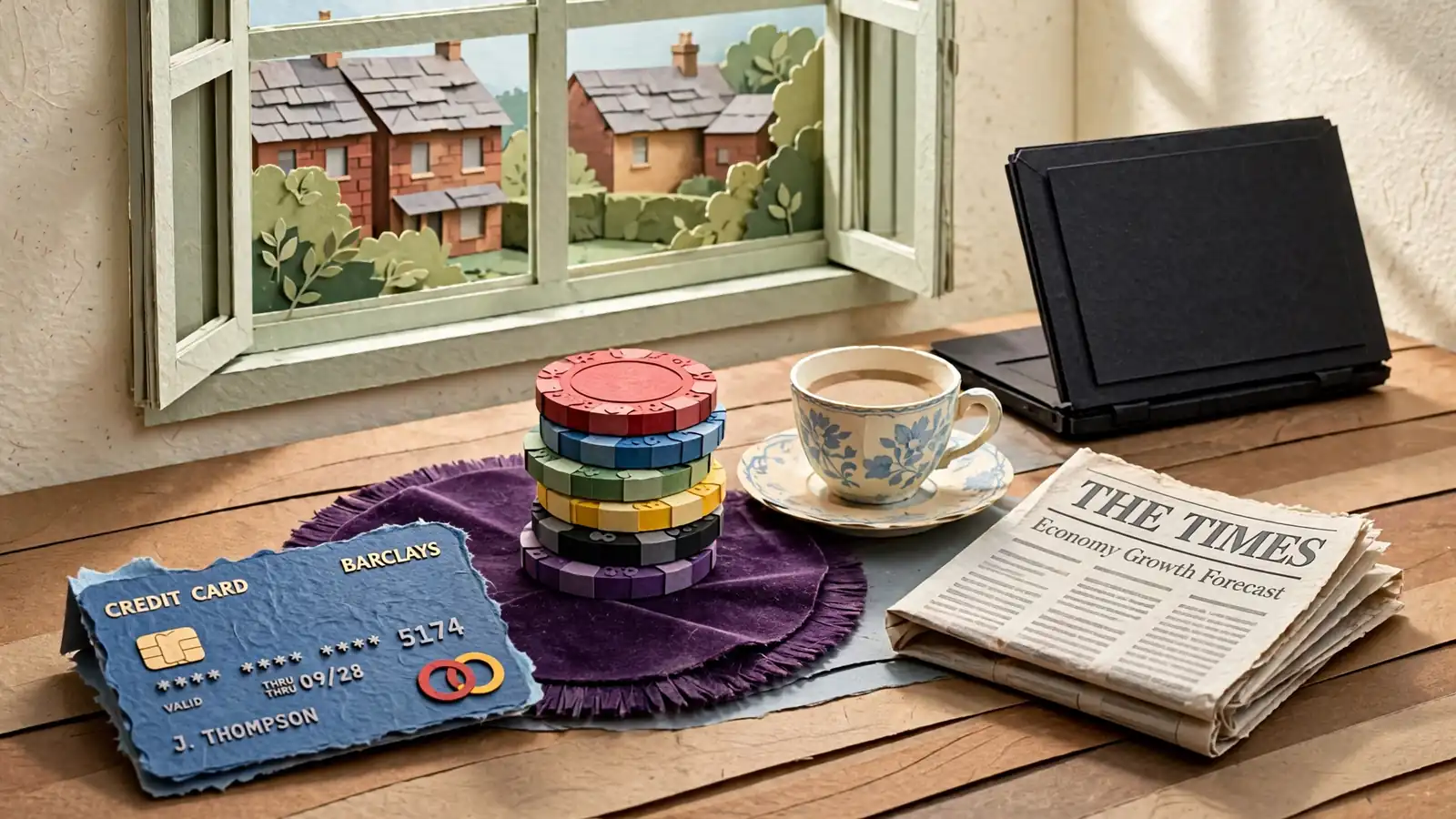
The credit-card ban applies to real-money gambling, while other card payments and deposit options depend on the casino and payment method.
Why UK Casinos No Longer Take Credit Cards
On 14 April 2020, the UK gambling regulator banned credit-card gambling. The decision covered remote gambling as well as other forms of betting and gaming, so a UK-licensed online casino cannot accept a credit card as a funding route for real-money play. The rule has not been relaxed.
That answers the practical question plainly: credit cards are not allowed for gambling at UK online casinos. A casino holding a UK Gambling Commission licence must refuse a credit-card deposit, even when the card itself is valid, the account is in the customer’s name and the issuer has approved the transaction.
The date matters because the change was not a temporary reaction to one operator or one payment provider. It was a regulatory decision that altered the boundaries of casino finance. Before the ban, a card could turn a gambling account into a small line of borrowed money: the deposit appeared immediately, while repayment belonged to a later date. The regulator treated that separation between play and payment as a public-risk issue.
The restriction applies to credit-card payments for gambling, not merely to a particular brand of card. It is therefore not a matter of finding a casino with a more accommodating cashier. UK remote gambling licensees cannot accept credit cards for deposits, and the prohibition also covers credit-card funding routed through a money service business. Sending the money through another financial door does not change what it is.
The same principle reaches digital wallets in a narrower but important way. A wallet cannot be used for gambling where it permits credit-card funds to be used for that purpose. The label on the payment screen is not decisive; the underlying source of the money remains relevant. A wallet does not become an acceptable substitute simply because the credit card is hidden behind it.
This is why lists of supposed credit-card casino sites need careful reading. A page may use the phrase “credit card casino” while describing casinos that accept cards generally, or it may confuse a credit card with a debit card. It may also discuss casinos outside the UK regulatory system, which is a different legal and practical category from a UK-licensed casino. For gambling supplied to customers in Great Britain, the relevant operator must hold the appropriate Gambling Commission licence, and that licensed operator cannot take credit-card payments for gambling.
Casino Payments in the UK: Methods Compared
The restriction does not depend on the game selected. A credit card is not made acceptable by choosing a table game, a live-dealer game or a slot. The payment prohibition concerns the source of the funds and the licensed gambling service, not the title or format of the game being played.
There is also no distinction based on whether the intended deposit is modest or substantial. The rule is not a threshold system in which a small credit-card payment is tolerated and a larger one is refused. UK-licensed casinos must exclude credit-card gambling as a category.
Nor does a successful authorisation from a bank override the rule. A payment may be technically approved by an issuer and still be unavailable at the casino cashier because the operator is required to follow the gambling regulations. Banking approval and gambling-law permission are separate questions. The first cannot manufacture the second.
The ban reflects a wider regulatory preference for keeping gambling expenditure tied to money that is available rather than borrowed. That does not make every payment problem disappear, nor does it turn a casino account into a budgeting tool. It does establish a firm boundary: licensed gambling businesses in the British market must not provide a route from credit into gambling.
The policy also explains why the wording around payment methods can be misleading. “Card accepted” is incomplete unless the card type is identified. Visa and Mastercard may appear in a cashier’s list, but a credit card and a debit card do not have the same regulatory status. The fact that a card network is displayed says nothing by itself about whether a particular card product may be used.
The clean reading of the rule is therefore less glamorous than the search for a loophole. Credit cards are banned for gambling in the UK; the ban began on 14 April 2020; and UK-licensed online casinos remain subject to it. A site promising a credit-card deposit for British play is not demonstrating a clever payment option. It is raising a question about its licence, its market and the way it handles the restriction.
Credit card acceptance Prohibited for gambling in the UK
Allowed method Debit cards (Visa/Mastercard)
Ban effective date 14 April 2020
The answer is firm.
Recommended online casinos
- BeOnBetBonus: 100% up to €500 + 100 FS · Payout speed: 1-3 business days
- NightWinBonus: £900 + 400 free spins · Payout speed: 1-3 business days
- ZombillionBonus: Welcome Pack 250% up to £4000 + 200 FS · Payout speed: 1-3 business days
- BritsinoBonus: Welcome Package – Get your £2,200 + 2,000 FS · Payout speed: 1-3 business days
- DieselwinBonus: Welcome Pack 250% up to £4000 + 200 FS · Payout speed: 1-3 business days
- Revery PlayBonus: 100% up to€1,000+ 100 FS · Payout speed: 1-3 business days
- x3betBonus: Welcome Pack 100% Up to £1.000 + 200 Free Spins · Payout speed: 1-3 business days
What Card Payments Can Still Do at a UK Casino
The phrase “credit card casino” still appears in searches, but it describes a payment arrangement that UK-licensed casinos cannot provide. A credit card cannot be used for gambling deposits, and changing the game does not alter that position. Slots, table games and live casino products sit on the same side of the payment rule.
What remains available is the ordinary debit card. That distinction is easy to miss because both cards may carry the Visa or Mastercard name, both may be entered through the same cashier screen, and both may look identical in a wallet. The money behind them is treated differently. A debit card draws on funds already held in a bank account; a credit card draws on borrowed funds. For gambling transactions, that difference is decisive.
Visa and Mastercard do not automatically mean credit
Visa and Mastercard are payment networks, not proof that a card is a credit card or a debit card. The same network mark may appear on products with entirely different functions. A Visa debit card is not transformed into a credit card by the logo on its face, and a Mastercard debit card does not become a borrowing facility merely because Mastercard also appears on credit products.
This is why a cashier’s card option should not be read as an invitation to use every card carrying that brand. A casino may display Visa or Mastercard among its payment symbols while accepting only eligible debit products for gambling deposits. The symbol identifies the network; it does not settle the card’s funding source.
Casinos That Accept Debit Cards in the UK
That small piece of financial taxonomy has practical consequences. A search for UK casinos that accept credit cards may lead to pages describing Visa and Mastercard, but those descriptions can be accurate only in the narrower sense that eligible debit cards using those networks may be supported. The headline is broader than the transaction.
What a debit card can do
A debit card can be used for a gambling deposit where the remote gambling licensee makes that card type available in its cashier. UK casinos commonly accept debit cards, including Visa and Mastercard. The card provides a direct route from a customer’s bank account to the casino balance, without the credit facility that the UK gambling restriction excludes.
The card itself is only one part of the arrangement. The account holder, the payment instrument and the casino account need to correspond. A payment route belonging to somebody else can create ownership questions even where the card is technically accepted. The cleanest arrangement is a card held by the same person whose casino account is being funded, with account information that agrees across the transaction.
This is not a decorative formality. Gambling payments sit alongside age checks, identity checks and anti-money-laundering controls. A card transaction may therefore be accepted as a deposit while the casino still requires information confirming who owns the account and the funds. The payment screen is not the whole relationship; it is merely the most visible doorway.
DO
- Use a debit card linked to your bank account
- Ensure the cardholder name matches the casino account
DON’T
- Attempt to use a credit card for deposits
- Use a card belonging to someone else
Why a credit card may appear to work
A payment page can be misleading without being deliberately deceptive. Payment brands are often presented at a general level, while the detailed eligibility check happens only after the card information is entered. A credit card may therefore appear to be a possible route until the transaction is declined or the cashier makes clear that the product is not permitted.
There is also a difference between a card being technically recognisable and a gambling transaction being authorised. The network can identify the card, the issuer can recognise the account, and the casino can still be unable to accept the deposit because the funding source is credit. A familiar logo is not a legal exception.
The same problem affects pages advertising “credit card casino sites in the UK”. If the phrase means casinos accepting deposits funded by borrowed money, it points in the wrong direction. If it is being used loosely for casinos accepting cards from the Visa or Mastercard family, it needs translating into the more accurate language of eligible debit-card payments.
A glossy payment badge is not a verdict.
The cashier is the current record
Payment information changes. A casino can alter the card types available to British customers, restrict a product after a policy update, or apply eligibility rules that are not obvious from a general payment-method page. For that reason, the cashier is more authoritative for a particular account and transaction than an old comparison table or a broad marketing statement.
A specialist review may list Visa and Mastercard among the cards associated with the sites it examines. That is useful as an indication of the payment brands discussed, but it does not establish that every UK customer can use every Visa or Mastercard product at the time of deposit. Current availability and card eligibility still need to be checked in the casino cashier.
The check should distinguish three questions:
- Is the card option displayed for the account?
- Is the card a debit product rather than a credit product?
- Is that particular card eligible for gambling deposits under the casino’s current rules?
Only the combination answers whether the transaction can proceed. Seeing a network logo answers none of these questions completely.
Credit-card alternatives are not disguised credit
The natural search for a credit-card alternative often ends with the debit card because it preserves the familiar card-shaped experience without using borrowed funds. The deposit is made from money held in the linked bank account, subject to the casino’s own acceptance and the card issuer’s handling of gambling transactions.
That does not make every card with a familiar brand acceptable. A prepaid card, a business card, a virtual card or a card linked to a special banking product may be treated differently by the casino or issuer. The important point is not the label printed on the plastic but the product’s funding source and the cashier’s decision.
Nor does routing money through another service make credit-card gambling permissible. A wallet or intermediary cannot turn a prohibited credit-funded gambling payment into an acceptable one where the wallet permits credit-card funds to be used for gambling. The route may change; the character of the funds does not.
This is where some apparent “credit card casino alternatives” collapse under inspection. An alternative must be an independently permitted funding route, not a second entrance for the same prohibited source.
Summary of Rules
- UK-licensed casinos cannot accept credit cards for gambling deposits
- Visa and Mastercard are networks that support both credit and debit products
- A debit card is the standard approved method for UK players
- The game type, such as slots, does not change the payment prohibition
Debit cards and casino promotions
A card can be accepted for a deposit without every promotional condition applying to it. Payment eligibility and bonus eligibility are separate questions. A casino may accept an eligible debit card while attaching promotion rules to the transaction, or while excluding a particular funding route from a promotion.
The distinction matters because promotional language can make a payment method sound more universal than it is. A deposit may be possible, yet the associated offer may not be available, or the account may need to satisfy separate terms before any promotional value is credited. The card is not necessarily the key that opens every part of the account.
The responsible reading is therefore plain: first establish whether the debit card may fund the gambling account; then examine any separate terms attached to the offer. Mixing those questions produces the familiar but unreliable promise of a “best credit card casino site”.
What this means for slot play
There are no special card permissions for slots. A debit card that the cashier accepts may fund a casino account from which slot play is available, but a credit card does not become acceptable because the intended game is a slot. The payment rule concerns credit-card payments for gambling, not the entertainment category selected after the deposit.
Casinos That Accept Wirecard in the UK: Payment Options
That also explains why phrases such as “slots that accept credit cards in the UK” are misleading. The slot does not accept the card. The casino’s payment system accepts, or refuses, a funding method before the game begins. The game title is downstream from that decision.
The same reasoning applies to a casino described as not being on a particular self-exclusion scheme. A different regulatory description cannot create permission for a credit-card deposit at a UK-licensed casino. Payment eligibility comes from the card and the operator’s rules, not from a promotional label.
A useful vocabulary correction
Several expressions are common but imprecise:
| Loose expression | More accurate meaning |
|---|---|
| Credit-card casino | A casino said to accept card payments, often meaning eligible debit cards |
| Visa casino | A casino whose cashier may support an eligible Visa card |
| Mastercard casino | A casino whose cashier may support an eligible Mastercard card |
| Credit-card deposit | A deposit funded through borrowed credit, which UK-licensed casinos cannot accept |
| Card casino alternative | A casino accepting an eligible non-credit card, subject to cashier availability |
The correction is more than pedantry. In financial services, the source of funds is part of the transaction’s meaning. Calling a debit-card deposit a credit-card deposit turns a prohibited route into an apparently available one and leaves the account holder to discover the difference at the cashier.
Before the card is used
The practical sequence is short. The casino account must belong to the person making the deposit, the card must be that person’s eligible debit card, and the cashier must display the payment option for that account. Visa and Mastercard may be listed, but the current UK availability of those brands and the eligibility of a particular card product require confirmation at the point of payment.
The search for UK casinos that accept credit card deposits therefore ends with a correction rather than a list of exceptions. UK-licensed casinos may accept eligible debit cards, including Visa and Mastercard products, but they cannot accept credit cards for gambling. The card logo is only the beginning of the check. The debit-credit distinction is the part that decides it.
Payment availability can change based on casino policy updates or specific account conditions, so always check the live cashier.
Depositing Without Credit: The Routes Casinos Offer
Once credit-card funding is removed from the picture, the cashier becomes less a doorway than a small map of the British payments system. Debit cards sit at its centre, while bank transfers, open banking, prepaid vouchers and electronic wallets occupy different, more conditional corners.
The important distinction is practical: a payment method may fund an account without being suitable for every later transaction or promotion. The cashier decides what is available to that account at that moment.
Debit cards remain the familiar route
UK casinos commonly accept debit cards carrying the Visa or Mastercard logo. They are not credit-card deposits in disguise: the money comes from the linked bank account rather than a credit facility. That difference is precisely what allows the method to remain within the rules applying to remote gambling in Britain.
Availability is not guaranteed merely because a casino displays a card logo on an information page. The card product, account details and current cashier configuration still matter. A card can be recognised by one operator and absent from another, while a displayed payment brand does not necessarily mean that every card issued under it will work.
Debit cards are therefore the ordinary first option, but not an invitation to assume that the route is universal. The cashier is the living document; everything else is historical material.
Casinos That Accept Citadel UK: Payment Options
Bank transfer and open banking
A bank transfer moves funds directly from a bank account to the casino. Open banking takes a related route through an authorised connection to the bank, allowing the payment to be approved within the banking environment rather than by entering card details into the casino’s form.
A specialist review reports that open banking and bank-transfer payments can produce immediate deposits and quick withdrawals at many sites. That observation belongs to the particular services and operators examined, not to every cashier in Britain. Processing can still depend on the bank, the operator and the payment arrangement shown at the time.
These methods may appeal to people who prefer a visible account-to-account trail. They also make the relationship between the gambling account and the funding account more apparent, which can reduce avoidable ownership questions when both belong to the same customer. The cleanest arrangement is often a single named account used consistently for funding and receiving money.
Bank transfers have their own quiet inconveniences. A payment can be affected by a bank’s cut-off time, weekends or currency conversion. A transfer that looks simple on the casino’s side may therefore be governed by the less theatrical timetable of ordinary banking.
Prepaid vouchers
Paysafecard is a prepaid voucher intended for deposits. It separates the gambling account from a bank card and can be useful where a player wants to spend an amount already loaded onto the voucher.
Its limitation is fundamental rather than technical: it is deposit-only. It should not be treated as a complete payment circle, because money deposited through it is not thereby made available for withdrawal through the same voucher.
Debit Cards
Direct route from your bank account to your casino balance.
Bank Transfers
Direct movement of funds, including options like open banking.
E-wallets
Digital wallets like Skrill or PayPal for convenient movement.
That distinction matters whenever a cashier presents several logos in a row. Logos create the impression of equal status; payment methods rarely enjoy it. One may fund an account, another may receive a payout, and a third may exist only for a particular customer or currency.
E-wallets and mobile payments
Electronic wallets provide another way to move money without presenting a credit card directly to the casino. Skrill and Neteller are available at some sites. A specialist review also describes these wallets as often excluded from promotional eligibility, so a deposit made through one may not qualify for a bonus or related offer. The promotional terms, not the wallet’s popularity, determine the result.
PayPal is another recognised payment method. A specialist review characterises it as popular for speed and convenience while noting that bonus eligibility may be excluded. That is a description of one reviewed set of arrangements, not a permanent rule for every British casino.
Some UK Gambling Commission-licensed casinos also accept Apple Pay for deposits. The service can make the payment feel like an extension of a phone or bank-card ecosystem, but that convenience does not alter the underlying gambling controls. The wallet must not be used where it permits credit-card funds to be used for gambling.
Jeton remains available at a handful of UK online casinos in 2026, according to a specialist review. That narrow availability is worth preserving in the wording: it is not a general replacement for the main banking and wallet routes.
Skrill is described by a specialist review as one of the most common deposit methods at UK-friendly casino sites in 2026. Again, the label says something about the sites examined and the period examined. Payment menus change; a method seen in a review may not appear after registration, or may be restricted by account conditions.
UK Casino Sites That Accept EcoPayz and Payz
Deposit minimums and promotional conditions
The first deposit is shaped not only by the route but also by its minimum. A specialist review places the starting point for many methods between £10 and £20, with the exact amount determined by the selected payment service. The figure is therefore a cashier detail, not a universal price of admission.
Maximum deposits also vary by method and account status. That makes a payment route a matter of fit rather than fashion: a method that accepts a small deposit may not offer the same practical capacity as another, while an account can have different conditions from a newly opened one.
Promotions add another layer. E-wallets such as Skrill and Neteller may be excluded from offers, and the same possibility has been reported for PayPal. A deposit can therefore succeed while failing to activate the promotion associated with it. Nothing has gone wrong; the two systems simply obey different rules.
The sensible order is to inspect the cashier, read the payment and promotional terms, and then choose a route whose role is clear. Debit cards, bank transfer, open banking, wallets and Paysafecard are not interchangeable tokens. Some are designed for a two-way movement of funds, some only for entry, and some carry a promotional footnote sharp enough to cut through the headline offer.
Paying by Card, Paying Out: The Transaction Is Not Symmetrical
A payment can travel into a casino more quickly than it travels back out. That asymmetry is easy to miss when the cashier presents both actions in the same neat row of buttons. A debit-card deposit may be confirmed almost immediately, while a withdrawal has to pass through checks that do not apply to the initial transfer. The screen looks balanced. The process is not.
Attention Deposits are often processed instantly, but withdrawals are subject to separate verification and internal approval stages.
This distinction matters especially when people search for an online casino credit card deposit in the UK. A credit card cannot be used for gambling deposits at a UK-licensed casino, so the relevant comparison is between a permitted debit-card payment and the later payout. The card brand does not turn the withdrawal into a mirror image of the deposit.
The money normally goes back along the route it came from
UK anti-money-laundering controls generally favour returning funds to the original payment source. This is part of the closed-loop principle: the casino establishes where the money entered and attempts to send the corresponding funds back through that route rather than treating every destination as interchangeable.
The rule serves more than administrative neatness. It helps remote gambling licensees identify the person behind the account and limits the use of a gambling account as a convenient passage between unrelated payment instruments. A debit card belonging to the account holder therefore has a different role from a bank account, e-wallet or card belonging to somebody else.
The cleanest arrangement is one named account used consistently for both sides of the transaction. Matching the account details with the payment route reduces the chance that basic ownership questions interrupt a withdrawal. It does not remove every KYC check, but it avoids creating an obvious puzzle for the payment team.
A request to withdraw through another method is not necessarily impossible. It may, however, lead to further checks before the casino releases the funds. Returning money to the original source is a familiar anti-fraud and AML safeguard; an alternative destination needs a clearer explanation of ownership and control. Convenience has to prove its identity.
Casinos That Accept Upaycard in the UK: Payment Guide
A deposit proves less than a withdrawal
A successful deposit confirms that the payment provider accepted the incoming transaction. It does not establish that the account is ready for a payout. Withdrawal approval can involve account checks, payment ownership checks and the casino’s own review of the request.
That is why a first withdrawal may take longer while verification is completed. The initial payment may have arrived without friction because the card authorisation was straightforward. A payout asks a broader question: whether the account, the person and the proposed destination satisfy the operator’s requirements. The two transactions share an account but not the same burden of proof.
A specialist review of payment performance notes that withdrawal timing includes the casino’s internal approval rather than only the delivery time after approval. That distinction is important. A displayed withdrawal request is not necessarily a payment already dispatched. The clock can contain an internal stage before the banking or card network receives anything.
KYC can also become more visible at this point. Documents or ownership information may be requested, particularly where the first withdrawal has not yet been assessed. Until the relevant checks are complete, the transaction may remain pending even though the deposit side of the account worked normally.
Instant in, slower out
A debit-card deposit can be instant, whereas a payout may take several business days. The difference is not evidence that the original deposit has vanished or that the withdrawal has been rejected. It reflects the separate approval and delivery stages attached to money leaving the account.
Deposit Checklist
- Verify the card is a debit product
- Confirm the cardholder name matches your account
- Check that the amount is within your set limits
- Ensure the account currency is set to GBP
The same specialist review describes withdrawal speed as dependent on the casino’s internal approval process and on whether the player’s account is fully verified. That is a more useful explanation than treating every delay as a property of the card itself. The card may be capable of rapid authorisation; it cannot dictate how quickly the operator completes its checks.
The route can also change during settlement. If the original card cannot receive the funds, the casino may request another payment destination or further information before using an alternative. That alternative may require additional verification because it no longer follows the most direct source-to-destination path.
For this reason, a casino displaying Visa or Mastercard for deposits should not be read as promising identical handling for withdrawals. The cashier determines what is available for the particular account, and the operator’s payment policy determines how the payout is processed. A logo is an invitation to inspect the conditions, not a timetable.
What the transaction record should show
A careful account history separates the deposit from the withdrawal and records their different statuses. The useful details are the amount requested, the payment route selected, whether the request is pending or approved, and whether the casino has asked for KYC information. Such records make it easier to distinguish an internal review from a banking delay.
The original source should also remain identifiable. A deposit made from a payment instrument in the account holder’s name creates a simpler ownership trail than a route connected to another person. Where the account information and payment method point to the same customer, fewer basic questions stand between the request and its assessment.
Casinos That Accept E-Checks in the UK: Payment Guide
The central point is plain: paying into a casino and receiving money from it are separate operations. A permitted debit-card deposit can be quick; a payout can wait for approval, verification and delivery through the relevant payment system. Those stages are not a contradiction. They are the price of making the exit route accountable as well as the entrance.
Limits, Availability and the Small Print in the Cashier
A payment logo is an invitation to inspect, not a promise that every account can use the method. A cashier may display familiar card brands while availability still depends on the casino’s current configuration, the account, and the particular payment product. This is why a deposit method has to be checked at the point of payment rather than inferred from a banner elsewhere on the site.
That distinction matters to anyone asking whether a credit card can be used at a UK online casino. UK-licensed casinos cannot accept credit cards for gambling, so the appearance of a card symbol does not change that rule. It may refer to an eligible debit-card payment instead. The game being played does not alter the position either; slots do not create a special exception.
The account limit comes first
Remote gambling licensees must prompt a new customer to set a financial limit before the first deposit. The account must also provide accessible controls for changing or reviewing that limit. It is a rather unglamorous interruption, but one that places a boundary around the account before money begins moving through it.
Financial Limits
Remote gambling licensees must prompt new customers to set a financial limit before their first deposit.
A financial limit is separate from the cashier’s technical deposit cap. The first concerns the customer’s chosen control on the gambling account; the second concerns what a payment method or operator will process. Confusing the two makes the cashier appear simpler than it is.
Deposit limits are not universal
The maximum accepted deposit can be set per transaction, per day, or per month. Which ceiling applies depends on the payment method and the account’s status. A method that appears available may therefore reject a particular amount without being unavailable altogether.
Account status can also affect the practical room for a transaction. The cashier may apply its own controls alongside those imposed by the payment provider. Limits can change as the account develops, so an earlier successful deposit is not evidence that the same amount will always be accepted.
The minimum deposit shown in a cashier can also differ by payment method. A figure commonly seen across UK casino payment pages is £10–£20, but the operative figure is the one attached to the selected method at the time of the transaction. Payment screens have little patience for general assumptions.
Currency deserves a separate check
GBP is listed as a supported currency on the relevant casino pages, but the account currency still needs confirmation before the first transaction. A mismatch can introduce currency conversion where a straightforward sterling payment was expected.
That check belongs before the deposit, not after it. Once a transaction has been processed, the exchange rate and any conversion spread may already have shaped the amount credited. The visible deposit figure and the sum leaving the bank account can then tell slightly different stories.
A short cashier check
Before confirming a deposit, the practical points are these:
- the displayed payment method is eligible for the account and intended card product;
- the amount falls within the transaction, daily, monthly and account controls shown;
- the financial limit has been set before the first deposit;
- the account currency is confirmed as GBP where sterling is intended;
- any restriction attached to the method is visible before confirmation.
This is the small print’s proper territory. The cashier is not merely a doorway for money; it is where eligibility, limits and currency meet. A card logo may open the conversation, but only the live account settings finish it.
Playing Slots Does Not Make a Credit Card Acceptable
A credit card cannot be used to play online slots at a UK-licensed casino. The rule is not tied to the table, reel or screen on which the gambling takes place. A slot remains gambling, whether it is presented as a familiar fruit machine, a themed video game or part of a broader casino lobby.
The prohibition on credit-card gambling took effect on 14 April 2020. It covers credit-card payments for gambling made directly or through arrangements intended to route the funds into a gambling account. The date matters because the restriction is sometimes treated as a temporary reaction to a particular moment. It is not. The rule has not been relaxed.
That leaves no special category for slot players. A casino cannot accept a credit card for a slot deposit simply because the account will be used for spins rather than roulette or blackjack. Nor does choosing a particular slot alter the payment rule. The game’s format is irrelevant to the source of the money.
This is also why the wording in a cashier can matter. A card brand may appear among the displayed payment symbols, but that does not turn every card product into an eligible gambling payment method. Credit and debit cards are treated differently, and the payment route must correspond to what the operator is permitted to accept.
Any apparent way around the restriction deserves the same caution. A wallet funded with a credit card cannot be used where that arrangement would provide credit-card funds for gambling. Changing the container does not change the contents. A financial rule is rarely impressed by costume.
For anyone looking specifically to play slots, the answer is therefore plain: credit-card funding is not available at a UK-licensed casino. The slot does not create an exception.
What is the fastest withdrawal method for UK casinos?
PayPal, open banking services and debit cards linked to fast payout systems are generally among the quickest. The payout still depends on the casino’s approval process and whether your account is verified.
Do UK casino withdrawals require verification?
Verification may be completed before a first withdrawal, and payouts can take longer while it is underway. Keeping your account details and payment route in your own name can help avoid delays over ownership checks.
Is Skrill available?
Yes, Skrill is available at some UK-friendly casino sites and remains a common deposit method. It may be excluded from promotions.
Why must withdrawals return to the deposit method?
Returning funds to the original payment source is a common anti-fraud and anti-money-laundering control. Using one named account for both deposit and withdrawal can reduce avoidable transaction checks.