
Casinos That Accept Revolut in the UK: How to Check
 Available in GB
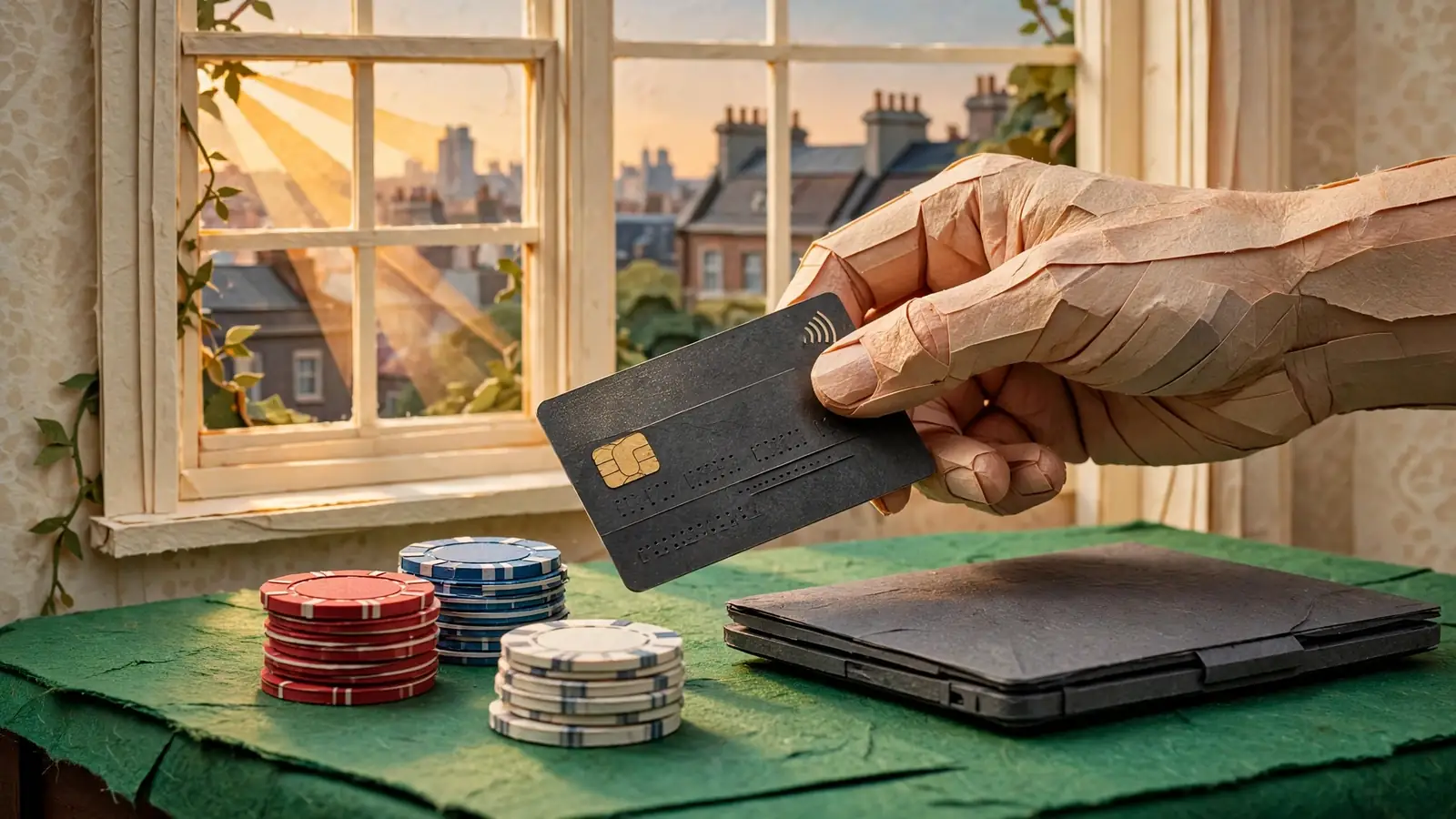
Casino payment options can vary by customer, jurisdiction and card product, so a general Visa or Mastercard listing may not confirm Revolut acceptance.
Revolut at UK Online Casinos: What the Cashier Actually Determines
Searching for casinos that accept Revolut in the UK can suggest a simple answer: find a site that lists Visa or Mastercard, then assume a Revolut card will pass. The cashier is less accommodating than the headline. It is the part of the account where the operator shows which payment routes are available at that moment, for that customer, in that jurisdiction, and for that particular card product.
A general payment page is therefore only an indication. An operator may describe its card facilities in broad terms, while the logged-in cashier presents a narrower selection. A specialist review may list Visa and Mastercard among the supplied sites’ payment methods, but current UK availability and card-product eligibility still need to be checked in the cashier. That distinction matters because Revolut is not itself a promise of acceptance. It is a route attached to a card or account, and the casino decides whether that route can be used.
Why a card brand is not the whole answer
Visa and Mastercard are payment networks, not a universal admission ticket. A casino displaying either logo is describing the network it supports, not necessarily every card issued through it. The relevant question is whether the cashier recognises the specific Revolut card and permits it for the intended transaction.
Several layers sit behind that apparently small distinction:
- the casino’s current payment configuration;
- the country and currency attached to the account;
- the card product presented by Revolut;
- the payment processor used by the operator;
- the account’s ownership information;
- any restrictions shown only after signing in.
That is why a page labelled as accepting cards cannot establish that every Revolut customer will receive the same result. Payment systems are built from permissions, routing decisions and risk checks rather than from the reassuring presence of a familiar logo. A logo is a beginning, not a verdict.
The cashier is also more useful than a general list because it reflects the customer’s actual account. A public payment page may be written for a wide market and may remain unchanged while the operator adjusts which routes are available to British customers. The logged-in screen is closer to the operational truth: it shows the methods the account can currently select, together with any displayed conditions before a transaction is attempted.
Revolut as a route, not a casino category
The phrase “Revolut casino” can make the payment provider sound like a type of gambling site. It is not. Revolut does not supply the casino games, determine which operators are available, or turn an account into a special class of casino account. The casino remains responsible for its cashier and its payment controls; Revolut remains the financial service through which a card payment may be presented.
Casinos That Accept Ripple XRP in the UK · Casinos That Accept Citadel UK: Payment Options
This also explains why there is no dependable master list of all Revolut casinos in the UK. Acceptance can change at the operator, processor or card-product level. A site that accepts one Revolut card may not accept another route presented through the same brand. A payment method visible on one account may not appear on another. Treating a past successful payment as a permanent rule would turn a transaction into a prophecy. Financial technology has enough drama without that.
The same principle applies to mobile searches and Android devices. A casino may be accessible through a phone, but the device does not decide whether Revolut appears in the funding screen. The payment route is determined by the account cashier and its available processing options, not by whether the games are opened on Android, a desktop computer or another supported device. The game interface and the financial interface may share a website, but they perform different jobs.
What to confirm before attempting payment
A sensible check is narrow and practical. After signing in, the account holder should open the deposit cashier and look for the relevant Revolut card route rather than relying on a promotional label or an old review. The visible method should match the card being used, and the account details should belong to the same customer.
Matching ownership information does not guarantee approval, but it reduces avoidable friction caused by basic inconsistencies. The name and account information held by the casino should correspond with the payment route being presented. A mismatch can prompt questions that have nothing to do with whether Revolut is technically supported.
Do
- Open the deposit cashier after signing in
- Ensure the visible method matches your Revolut card
- Confirm account details belong to the same customer
Don’t
- Rely on promotional labels or old reviews
- Assume a logo guarantees acceptance
- Test every possibility blindly
The cashier should also be read as a current statement, not as an invitation to test every possibility blindly. If Revolut is not shown, the absence is meaningful for that account at that time. If it is shown, the appearance establishes that the route is being offered for selection; it does not erase the operator’s checks at the point of payment.
For that reason, “the best Revolut casino” is not a fixed title that can be awarded independently of the account screen. Nor does a site calling itself new, mobile-friendly or generous with games alter the basic test. The useful distinction is between a casino that mentions card payments and a casino whose cashier actually presents an eligible Revolut route to the relevant UK account.
The practical answer to whether Revolut casinos are still available in the UK is therefore conditional rather than theatrical: availability is determined by the current cashier, while eligibility depends on the particular card and account. That is less satisfying than a permanent directory, but considerably more accurate.
Recommended online casinos
- BeOnBetBonus: 100% up to €500 + 100 FS · Payout speed: 1-3 business days
- NightWinBonus: £900 + 400 free spins · Payout speed: 1-3 business days
- ZombillionBonus: Welcome Pack 250% up to £4000 + 200 FS · Payout speed: 1-3 business days
- BritsinoBonus: Welcome Package – Get your £2,200 + 2,000 FS · Payout speed: 1-3 business days
- DieselwinBonus: Welcome Pack 250% up to £4000 + 200 FS · Payout speed: 1-3 business days
- Revery PlayBonus: 100% up to€1,000+ 100 FS · Payout speed: 1-3 business days
- x3betBonus: Welcome Pack 100% Up to £1.000 + 200 Free Spins · Payout speed: 1-3 business days
Deposits, Withdrawals and the Return-to-Source Rule
A Revolut deposit and a casino withdrawal are not two halves of one automatic transaction. They are separate stages, governed by the cashier’s available routes, the operator’s controls and the ownership information attached to the account. A payment can enter the balance without creating a matching button for money leaving it. The cashier, in its slightly bureaucratic wisdom, decides what happens next.
From deposit to withdrawal
When a player funds a UK casino account with Revolut, the payment is recorded against the gambling account and the payment source used. That record matters later. A withdrawal request is not simply a request to send money anywhere convenient; it is examined against the deposit history and the operator’s anti-fraud procedures.
Casinos That Accept Boku in the UK: What to Know
UK anti-money laundering controls commonly require winnings or returned funds to go back to the original payment source. This is often called the return-to-source principle. Its purpose is not to make the cashier awkward for sport. Returning funds to the source helps establish where the money came from and reduces the risk that a casino account is used to move funds between unrelated people or accounts.
For that reason, a Revolut deposit may lead to a Revolut-related withdrawal route only where the casino supports that route for payouts and the account passes its checks. If the cashier accepts Revolut for deposits but does not display it for withdrawals, the deposit approval has not created a right to use it for the payout. The available withdrawal route may instead be determined by the casino’s closed-loop rules, its payment-provider arrangements and the original funding record.
That distinction is important when assessing casinos that accept Revolut in the UK. “Accepts” can describe the deposit stage alone. It does not necessarily mean that Revolut is supported for withdrawals, that every Revolut product will qualify, or that the same route will appear after a request is made.
Why the payout can take longer
A card or payment-app deposit can be authorised quickly because the casino is receiving funds. A withdrawal reverses the direction of the money and usually triggers a more detailed review. The casino may need to confirm the account holder’s identity, check the payment source and establish that the requested destination belongs to the same customer.
Withdrawal processing includes the casino’s internal approval stage and identity verification, which can take longer than the initial deposit.
Withdrawal processing therefore contains more than the time taken by the payment provider. It includes the casino’s internal approval stage. A specialist review notes that first withdrawals can take longer while verification is completed; that observation should be treated as a report about the reviewed service, not as a universal timetable for every UK casino.
The first payout is often the point at which a payment history is examined most closely. A casino may request documents or other information before releasing funds. Until that process is complete, the payment provider cannot make the final journey on the casino’s behalf. A fast deposit says little about the speed of this stage.
The same principle applies when the account details and payment route do not align neatly. Using account information and a payment route belonging to the same customer reduces the possibility that basic ownership questions will interrupt a transaction. It does not remove the casino’s right to carry out KYC or to ask for further evidence, but it avoids one uncomplicated source of delay.
Casinos That Accept USDC in the UK: What to Check
When the original route is unavailable
A deposit method may be deposit-only at a particular casino. This can happen because the provider is configured to receive funds but not send them, because the casino’s cashier applies different rules to deposits and withdrawals, or because the original source cannot be used for the requested payout. In such cases, another route may be offered, but it should not be assumed to be an instant substitution.
Returning funds through an alternative can require additional verification. The casino may need to establish why the original source cannot receive the money, confirm ownership of the replacement account and review the transaction under its anti-money laundering procedures. The alternative route can therefore introduce another layer of checks rather than bypassing the first one.
A sensible payment journey is consequently less about finding a route that merely accepts a deposit and more about keeping the chain intelligible:
- the casino account is held in the customer’s name;
- the payment source belongs to that same customer;
- the deposit is visible in the account history;
- the withdrawal route shown by the cashier is checked before a request is submitted;
- any KYC request is completed before expecting approval.
This is not a promise that a payout will be immediate. It is a way of avoiding confusion between authorisation of a deposit and approval of a withdrawal. The two transactions may involve the same provider, yet remain subject to different decisions.
For anyone considering whether Revolut can be used at UK online casinos, the practical question is therefore twofold: can the cashier accept the Revolut payment for funding, and does it provide a compliant withdrawal path afterwards? The answer can change by casino, account and transaction history. A deposit arriving successfully settles only the first question.
Card Acceptance, Cashier Checks and Account Compatibility
A casino displaying Visa or Mastercard is describing a card network, not approving every card issued within it. That distinction matters for Revolut debit cards in the UK. Revolut may provide a Visa or Mastercard product, yet the relevant question is whether the particular casino cashier recognises that card and permits it for the particular account.
Card Acceptance
A card logo is an invitation to inspect, not a contract. A cashier may show a familiar logo while applying further rules at the point of transaction.
Acceptance is not guaranteed for:
- Every Revolut-issued card
- Every UK customer
- Every account currency
- Every transaction rule
Card acceptance therefore establishes only a starting point. It indicates that the operator has enabled a card route, but it does not prove that every issuer, card type, currency arrangement or customer account will pass the payment checks. A cashier may show a familiar logo while applying further rules at the point of transaction. The logo is an invitation to inspect, not a contract.
A specialist review may list Visa and Mastercard among the payment options found across the sites it examined. That kind of list can be useful as an indication of the networks encountered, but it cannot replace the live cashier. Current UK availability and eligibility for a specific card product still need to be checked there. Payment menus change; account settings can differ; financial services have an unfortunate talent for making a simple symbol carry several meanings.
What the card logo does not confirm
The presence of a card option does not, by itself, confirm:
- that a Revolut-issued card is eligible;
- that the route is enabled for every UK customer;
- that the same option is available in every account currency;
- that the card can be used under the operator’s current transaction rules;
- that a payment will be authorised merely because the card bears Visa or Mastercard.
This is why descriptions of “casinos accepting Revolut debit cards” should be treated as a shortlist for checking rather than a permanent catalogue. The useful evidence is the option displayed after signing in, when the cashier presents the payment methods attached to that account. A general payment page may describe the operator’s wider capabilities; the account cashier shows what is available at that moment.
The distinction also answers the recurring uncertainty over whether Revolut is still accepted by UK casinos. There is no single answer applying to every remote gambling licensee. Acceptance belongs to the relationship between the casino, its payment processor, the card product and the account. One operator may display a compatible card route while another may not; the same operator can alter its available routes without changing the appearance of its broader payment information.
Check the account before attempting payment
A sensible compatibility check is deliberately unglamorous:
- Open the cashier while logged into the relevant casino account.
- Identify the card route actually displayed for that account.
- Check whether the card type and account currency match the stated conditions.
- Review any on-screen eligibility message before entering payment details.
- Confirm the transaction details before authorising it.
This procedure does not turn a displayed option into a promise that the payment will succeed. It simply separates an available route from an assumption based on a logo or an old list. The cardholder’s account details and the payment route should belong to the same customer. Consistency reduces avoidable friction when basic ownership information is checked.
Searches for “no minimum deposit”, “no deposit bonus” or “free spins” attached to Revolut casinos raise a different issue from card compatibility. A card being accepted says nothing about promotional eligibility, and a promotional description says nothing about whether the cashier will accept a particular Revolut product. Those questions belong to separate checks. Payment and promotion are neighbouring rooms, not the same room.
The cleanest wording for the position is therefore modest: some UK casinos accept debit cards through Visa or Mastercard, but Revolut acceptance must be confirmed in the live cashier for the account concerned. A card network opens the door. The cashier decides whether it opens.
Practical Verification
Revolut acceptance must be confirmed in the live cashier for the specific account concerned.
Mobile Slots and the Payment Route
A mobile slot session and a casino deposit are separate events, even when they take place on the same phone. The game runs inside the casino’s mobile website or app; the payment route appears in the cashier. Revolut does not supply the reels, select the games or decide which titles can be played. It is simply a possible way to fund an account, subject to the payment options displayed for that particular account.
That distinction matters because the phrase “mobile slots with Revolut” can make the arrangement sound like a single product. It is not. The mobile device provides access to the casino and its games, while the cashier handles the money movement. A casino may offer a full mobile slots library but not show Revolut at the deposit stage. Another may display a card route that works with a Revolut card, subject to the casino’s current acceptance rules and the product’s eligibility. The screen where the transaction is prepared is therefore more informative than a general claim about mobile play.
The same logic applies to real-money slots. A game can be available for play without establishing that a particular payment route is available for deposits. “Online slots” describes the entertainment and betting format; it says nothing by itself about whether Revolut can be used at the cashier. Nor does a successful deposit turn Revolut into a game provider or create a special category of Revolut slots. The brand belongs to the payment side of the arrangement.
Casinos That Accept POLi in the UK: What to Check
Free play sits apart from this question too. A free-play mode may involve no deposit at all, so it does not demonstrate that the casino accepts Revolut for real-money transactions. Conversely, a cashier showing a Revolut-compatible route does not mean that every game is free, nor that the route changes the casino’s rules for play. Money and amusement happen to share a login. They remain different systems.
British regulation adds another layer. Remote gambling operators must ask new customers to set a financial limit before the first deposit. Account-level controls must remain accessible afterwards, so the payment journey is not treated as a door that opens once and then disappears into the wall. This requirement concerns how an account is funded and controlled, not which mobile games are offered.
Online slot play itself is also shaped by British rules. Autoplay is not permitted, and each online slot spin must last at least 2.5 seconds. The maximum stake per game cycle is £5 for customers aged 25 and over, and £2 for those aged 18 to 24. These are rules governing the game experience, not features supplied by Revolut. A payment brand cannot remove them, accelerate a spin or turn a mobile casino into a different regulatory category.
The clean separation is useful: the mobile screen hosts the game, the cashier handles the deposit, and British rules govern both the account and the play. Three parts, one balance.
Real-Money Slots: Deposits, Payouts and Verification
Real-money slot play has two separate financial events: money entering the casino account and approved winnings leaving it. They may involve the same Revolut card, yet they do not move through the same process at the same speed. A casino cashier can record a card deposit almost immediately, while a withdrawal still waits for review, account checks and payment processing.
Speed Discrepancy
Attention A fast deposit only proves the instruction was accepted; it does not guarantee an immediate or identical payout process.
That distinction matters when assessing casinos accepting Revolut for real-money slots. The card is a funding route, not a promise that every later transaction will be immediate. A fast deposit proves only that the payment instruction was accepted at that point. It says nothing conclusive about the timing or route of a subsequent payout.
Why deposits can appear instantly
A card deposit is an authorisation request. Once the casino and payment network accept it, the balance may become available for slot play without a lengthy manual review. This is why a Revolut payment can feel almost instantaneous when used at a compatible UK casino.
A withdrawal is different. The casino must first confirm that the request is valid, check the account and release the funds through its payment process. A specialist review source notes the practical contrast clearly: a card deposit may be instant, whereas the payout can take several business days. The word “instant” therefore belongs to the payment entry, not automatically to the complete cash journey.
Verification comes before the money moves
Withdrawal speed is tied to two matters that sit outside the spin itself: the casino’s internal approval process and the state of account verification. KYC may involve checking identity and other account information before funds are released. This is particularly relevant when a first withdrawal triggers a fuller review than routine deposits.
An account that has not completed the required checks can therefore show a successful balance and still leave a withdrawal pending. The delay is not created by the slot game or by the visual appearance of a Revolut slots app. It is an administrative stage attached to real-money transactions. Gambling software is wonderfully indifferent to paperwork; payment departments are not.
Casinos That Accept iDEAL in the UK: Payment Guide
The same principle applies to searches for Revolut slot games, slot machines or sites where slots can be played for money. The game determines how the balance is used. The cashier and verification process determine how funds enter and leave the account. A free-play mode also does not turn into a cash withdrawal merely because the same title is available in a real-money lobby.
Reading a pending withdrawal correctly
A pending status does not, by itself, establish that the payment has failed. It may mean that the operator has not completed its approval or that verification remains outstanding. Once approved, the payment still needs to pass through the selected route, so the time shown for a card deposit should not be treated as a payout forecast.
For Revolut users, the sensible record is therefore not just the deposit confirmation. The transaction history, verification messages and withdrawal status together show where the money stands. If the account is fully verified and the casino has approved the request, the remaining wait belongs to payment delivery rather than to the slot session.
The clean separation is simple: deposit speed concerns access to the balance; payout speed concerns approval, verification and release. One does not guarantee the other.
Debit Cards, Credit Cards and Casino Deposits
The important distinction is not whether a card carries the Revolut name, but what kind of card transaction is being attempted. At UK-licensed casinos, debit-card deposits are a permitted payment category, while credit-card payments for gambling are prohibited. UK casinos commonly support debit cards issued on Visa or Mastercard networks, although the particular Revolut card and the casino cashier still determine whether the transaction can proceed.
Credit Card Prohibition
Credit-card payments for gambling are prohibited at UK-licensed casinos and have been since April 2020.
The prohibition on credit-card gambling has applied since 14 April 2020 and has not been relaxed. It covers direct credit-card deposits and credit-card funding routed through a money service business. A payment route does not become acceptable merely because it appears inside a wallet or another financial application. The source of the funds remains relevant.
That makes descriptions such as “Revolut casino deposits” incomplete on their own. Revolut may provide a debit-card route, but the label must match the product actually being used. A Revolut account, a physical card and a virtual card can have different transaction characteristics; the casino cannot be expected to infer eligibility from the brand name alone. The cashier’s displayed option and the card’s own status do the less glamorous, more useful work.
For a UK casino deposit, the relevant checks are therefore straightforward:
- whether the card is a debit card rather than a credit card;
- whether the casino accepts the card network shown by the cashier;
- whether the card belongs to the same customer as the gambling account;
- whether the transaction is being funded from an allowed source rather than credit.
A successful debit-card deposit does not turn credit-card gambling into an acceptable alternative, nor does a failed Revolut transaction prove that all Revolut cards are excluded. It indicates only that the particular product, account, cashier setting or transaction has not been accepted at that moment.
The distinction also matters for searches about fast withdrawals or direct payouts. A debit card may be used for deposits, but that does not by itself establish that the same route is available for withdrawals. Deposit eligibility and payout eligibility are separate questions, even when the same card is involved.
Nor does the card type create a bonus entitlement. Promotional conditions belong to the casino’s terms and can treat payment methods differently; that issue sits apart from whether a debit-card deposit is legally permissible.
The sensible vocabulary is plain: debit-card deposit, not credit-card gambling. On this market, the wording carries consequences.
Bonuses and the Payment Method Fine Print
A casino cashier and a casino promotion are governed by different sets of conditions. A payment route may be available for an ordinary deposit while the welcome offer excludes deposits made through that route. The apparent contradiction is administrative rather than mysterious: the cashier answers whether money can enter the account, while the promotion terms decide whether that transaction qualifies for an incentive.
This distinction matters when considering casinos that accept Revolut in the UK. A Revolut deposit may be processed as an eligible card transaction, yet the associated bonus could require a different funding method, or exclude particular card and wallet payments. The presence of a Revolut button, card field or successful deposit therefore does not establish entitlement to a welcome bonus, free spins or another promotional benefit. Money in; bonus out? Not necessarily.
The wording tends to hide in places that receive less attention than the headline offer. Promotional terms may define eligible payment methods, exclude e-wallets, or state that a deposit must be made without a particular route. They can also separate the general availability of a method from its treatment under a specific campaign. A casino’s standard payment page and its bonus conditions should therefore be read as separate documents, even when they sit beside one another.
Bonus Eligibility
A successful Revolut deposit does not automatically guarantee entitlement to a welcome bonus or free spins, as promotional terms may exclude specific payment routes.
This is not unique to Revolut. A specialist affiliate review has reported that PayPal may be accepted for deposits while being left outside bonus eligibility. A separate specialist affiliate review has said that Skrill and Neteller are available at some sites but are often excluded from promotions. Those observations describe particular published material, not a permanent rule for every British casino. Payment policies change; promotional pages change more quietly.
The same caution applies to searches for real-money slots, welcome offers, bonus codes or no-deposit promotions connected with Revolut. A phrase linking the payment method to the offer does not turn the method into a qualification. The relevant conditions may require a first deposit, restrict the route used, or exclude the transaction altogether. A code can be entered and still fail to produce the advertised benefit if the payment record falls outside the campaign.
The cleanest check is made before depositing: identify the promotion, open its full terms, and look specifically for payment-method exclusions. The cashier confirms that a transaction can be made; the promotion rules confirm whether it counts. Two doors, different keys.
Small Deposits, Limits and Financial Controls
A low opening deposit does not automatically make a casino a suitable destination for a small Revolut payment. A specialist review may place the minimum deposit at £10–£20, with the exact threshold tied to the payment method selected. That range is a reported reference, not a permanent promise: the cashier can apply a different minimum when the account, currency or payment route changes.
Casinos That Accept Ethereum in the UK: Payments
This is why searches for a £5 Revolut deposit casino can produce a misleadingly simple answer. A £5 payment may be below the minimum even where Revolut appears among the available methods. The relevant figure is the minimum displayed for that particular transaction, not an old description on a comparison page. Small deposits are still deposits, and the same account controls apply.
The upper boundary is just as changeable. A specialist review notes that maximum deposits can be set per transaction, per day or per month, while the amount may also depend on the payment method and the account’s status. A mobile payment screen does not abolish those distinctions. It merely presents them in a smaller window, with less room for anyone to notice what has been accepted.
Account-level controls matter more than the adjective “small”. Remote gambling operators must ask a new customer to establish a financial limit before the first deposit. The limit-setting prompt is therefore part of the opening payment journey, not an optional decoration placed somewhere beneath the cashier. Operators must also make those controls available within the account, so that limits can be reviewed or adjusted through the relevant account tools.
That arrangement reflects a distinctly British suspicion of frictionless money. The question is not only whether a Revolut payment can pass, but whether the account has been given a boundary before funds enter it. A fast deposit does not outrank that boundary, and a low minimum does not turn financial control into a formality.
Deposit ceilings can also be shaped by the operator’s assessment of the account. A newly opened account and an established one may not present identical limits; the payment route can impose its own ceiling as well. None of this is evidence that Revolut is accepted, nor that a site outside GamStop follows British controls. Amount and eligibility are separate matters. Separate, and occasionally inconvenient.
Financial Safety Check
- Set a financial limit before your first deposit
- Confirm the minimum deposit threshold for your specific method
- Check the maximum deposit limits for your account
- Ensure your account controls are accessible and active
Alternatives When a Revolut Payment Is Unavailable
When Revolut is missing from a casino cashier, the sensible comparison is between payment categories, not brands crowned as universally superior. Availability changes from site to site, and a route suitable for deposits may not necessarily support withdrawals.
Debit cards remain a familiar category at UK casinos, with Visa and Mastercard listed by many operators. The decisive detail is still the cashier for the particular account: card availability, supported card products and transaction conditions can differ. Credit-card payments for gambling are not permitted at UK-licensed casinos, and the same restriction applies where credit is routed through a money service business.
Bank transfers and open banking form another route. A specialist review may describe open banking or bank transfers as providing instant deposits and fast withdrawals at many sites, but that is not a standing promise for every operator. Delivery can also be affected by cut-off times, weekends and currency conversion. The cashier and the casino’s banking terms remain the useful source of truth.
E-wallets include Skrill and Neteller, both available at some sites. A specialist review may characterise Skrill as one of the more common deposit methods at UK-friendly casino sites in 2026, but presence is not universal. E-wallets can also be left outside promotional eligibility, so the payment page and offer terms need to be read together. Operators cannot accept wallet payments where the wallet permits credit-card funds to be used for gambling.
Casinos That Accept E-Wallets in the UK
Prepaid vouchers serve a narrower purpose. Paysafecard is a deposit-only product: it can fund an account, but it is not a route for receiving a casino withdrawal. That distinction matters because a payment icon can look like a complete banking solution when it is only an entrance door.
Some UKGC-licensed casinos also accept Apple Pay for deposits. Other sites may list additional e-wallets or payment services, while a specialist review has noted Jeton at a handful of UK online casinos in 2026. Such references describe particular availability, not a permanent market-wide menu.
The most reliable alternative is therefore the one shown in the live cashier, with its deposit and withdrawal functions stated clearly and the account currency confirmed before payment. No single Revolut substitute wins every practical test. Payment systems dislike universal verdicts almost as much as casinos dislike ambiguity.
GamStop Status Does Not Change Payment Rules
Searching for casinos outside GamStop often mixes two separate questions: whether an operator participates in the national self-exclusion scheme, and whether its cashier offers Revolut. Those are not interchangeable facts. A Revolut deposit option describes a payment route; it says nothing, by itself, about an operator’s regulatory status, suitability, or relationship with GamStop.
Casinos That Accept Solana in the UK: What to Check
For gambling offered to customers in Great Britain, a remote operator must hold the relevant UK Gambling Commission licence. Offshore casinos sit outside that system and do not hold a UKGC licence. They may be accessible from the UK, and a payment page may display familiar brands, but payment compatibility does not turn an offshore site into a UK-licensed casino. Nor does being outside GamStop make a site an alternative approved by British safer-gambling arrangements.
That distinction matters particularly when self-exclusion is the reason for looking elsewhere. UKGC-licensed casinos must provide responsible-gambling protections, including self-exclusion, and those protections are not cancelled by the appearance of a Revolut logo in a cashier. A payment account can move funds; it cannot assess whether gambling is appropriate or override an existing exclusion.
The same separation applies to account controls. Before a new customer can make a first deposit, a remote operator must require a financial limit to be set. The account must also offer accessible controls for managing limits afterwards. This is a regulatory safeguard attached to the gambling account, not a feature supplied by Revolut and not a rule that disappears because a casino is described as “not on GamStop”.
A sensible status check therefore has two distinct parts: identify whether the operator holds a current UKGC licence, and examine the casino’s own self-exclusion and account-control arrangements. Only after that should the cashier be considered for payment compatibility. Familiar branding can make a site look reassuring. It is still only branding.
Why must withdrawals return to the deposit method?
Returning funds to the original payment source is a common anti-fraud and anti-money-laundering control. Using a different route may require additional verification.
What is the fastest withdrawal method for UK casinos?
PayPal, open banking services and debit cards linked to fast payout systems are generally among the quickest options. The casino’s approval process and whether your account is fully verified also affect how quickly funds arrive.
Which payment methods are accepted in Great Britain?
UK casinos commonly accept debit cards such as Visa and Mastercard; other available options include PayPal, open banking, bank transfers, Paysafecard, Skrill and Neteller. The cashier shows which methods are currently available for your account.
Can I deposit in GBP?
Yes, GBP is supported at the supplied sites. Check your account currency before depositing to avoid conversion.
What is the current minimum deposit?
The minimum deposit usually starts at £10–£20, depending on the payment method.
Which method has the lowest fees?
There is no universally lowest-fee method. Compare the casino’s charges, provider and bank fees, currency conversion spread and any network costs for your chosen amount.