
Casinos That Accept POLi in the UK: What to Check
 Available in GB
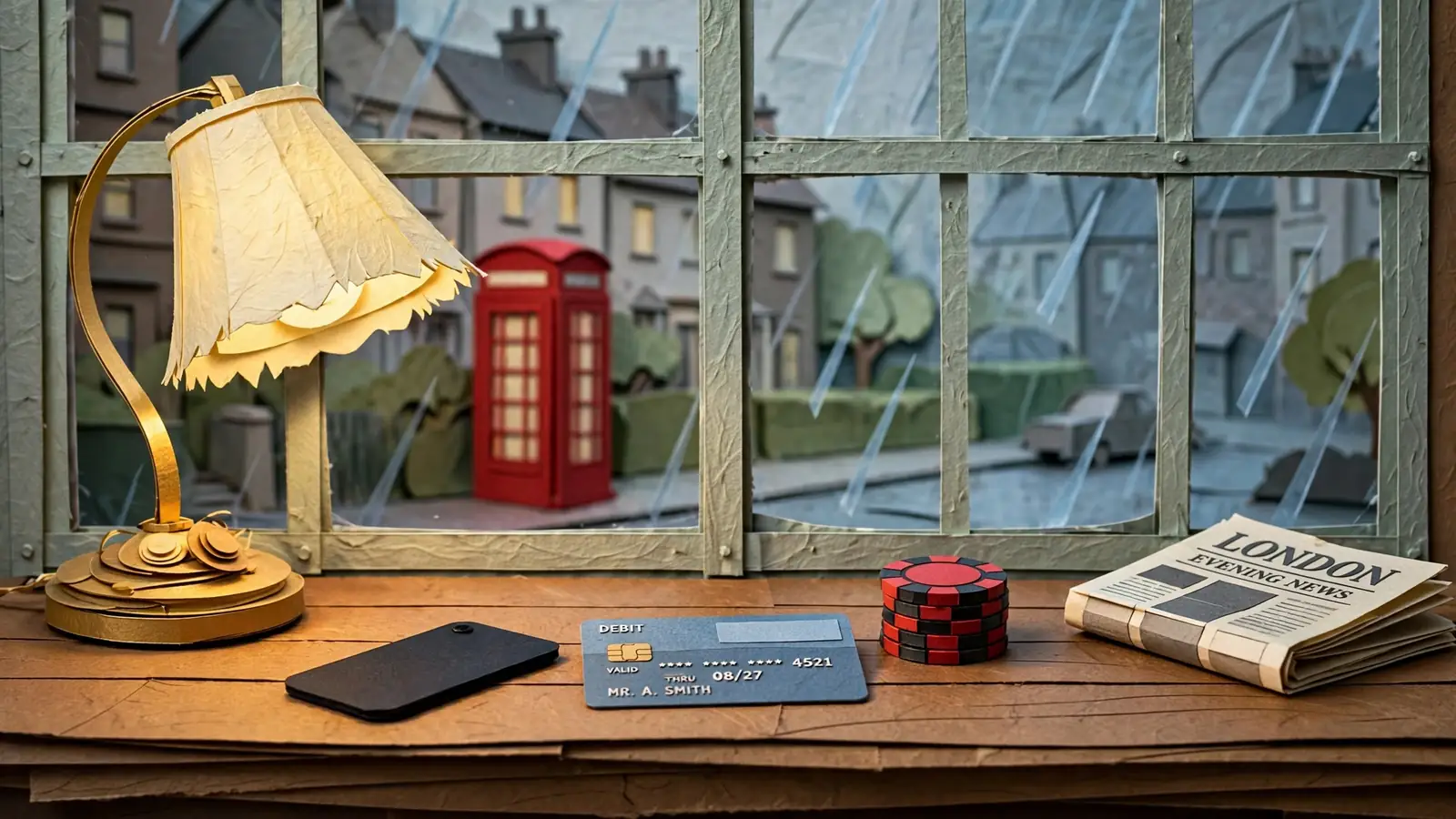
POLi availability depends on the operator, cashier configuration and account details, while deposit and withdrawal options may differ.
POLi and the UK Casino Cashier: What the Search Can—and Cannot—Confirm
POLi is often treated as though it were a permanent feature of the British casino cashier: a familiar logo, a bank-linked deposit route, and a reassuringly direct path from an account to a gambling balance. That assumption is too firm for a payment method whose availability depends on the operator, the cashier configuration and the customer’s account details.
The practical question is not whether POLi exists as a payment service. It is whether a particular UK-facing casino displays POLi for a particular account at the moment a deposit is being arranged. Those are different questions, and confusing them produces the sort of tidy answer that ages badly.
A casino page may describe a broad collection of banking options while the live cashier presents something narrower. A payment logo may appear in promotional material without being enabled for every customer. The position can also differ between depositing and withdrawing, because a route accepted for funding does not automatically become a route for taking money out. Payment names are not promises; they are invitations to inspect the conditions.
Casino Payments in the UK: Methods Compared
That matters for searches framed around casinos accepting POLi in the UK in 2026. No specific operator should be presented as a confirmed POLi casino merely because its name appears beside other banking brands on a general payment page or in a review. The responsible answer begins with the cashier, not the badge.
The cashier is the decisive point
The cashier is where several separate conditions meet:
- the operator’s current payment configuration;
- the customer’s location and account status;
- the currency supported by the account;
- the product or card eligibility presented by the payment provider;
- the distinction between deposit and withdrawal functions.
A payment method can therefore be discussed in general terms without being available in a live account. The reverse can also happen: a route may appear in the cashier even when a general information page gives it little attention. The cashier is less glamorous than a list of logos, but it has the advantage of being attached to an actual transaction.
This is particularly important with bank-linked services. The route is not simply a button labelled with a familiar name. It must connect the payment account, the casino account and the provider’s own eligibility checks. A mismatch can interrupt the process before any money reaches the gambling balance. The word “instant” does not remove those checks; it merely describes what may happen after they have been satisfied.
The same caution applies to mobile searches for Android casinos using POLi. An Android phone changes the shape of the screen, not the underlying payment relationship. A mobile cashier may display fewer options, open a separate banking window or require an additional confirmation step. A site that works in a desktop browser is not thereby confirmed as POLi-enabled on every mobile session.
Logos are useful, but provisional
General casino descriptions commonly mention Visa and Mastercard among their payment brands. A specialist review can therefore offer a useful first indication of the kinds of banking routes associated with a site, but it cannot settle current UK availability or confirm that every card product will be eligible. Those details belong to the live cashier and the payment terms attached to the account.
Casinos That Accept Revolut in the UK: How to Check · Casinos That Accept Dogecoin in the UK: What to Know
The distinction is more than editorial housekeeping. Visa and Mastercard are networks, not a guarantee that every card issued under those names will be accepted for gambling deposits. The issuing bank, the type of card and the operator’s configuration all matter. A logo tells a story about possibility; the cashier supplies the verb.
POLi should be treated with the same discipline. A reference to the service in an old review, a comparison page or a search result does not establish that the route remains active. Nor does the absence of a logo from a marketing page prove that the cashier will never show it. Payment systems are made of interfaces, contracts and compliance decisions, all of which are less stable than a paragraph written about them.
What can be established before the deposit screen
The broad shape of a casino’s banking arrangements can be assessed from its published terms and cashier information. It is reasonable to distinguish payment brands, deposit routes and withdrawal routes, and to note whether the operator explains any restrictions. It is also sensible to look for clear information about account currency and the identity of the payment account involved.
Before depositing, check the live cashier to confirm if POLi is currently enabled for your specific account and location.
What cannot be inferred is just as important. A site cannot be called one of the “best POLi casinos” simply because it offers a polished interface, a wide game catalogue or a generous-sounding promotion. Those qualities do not prove that POLi is available. Nor can a casino be described as a new POLi site, an Android POLi casino or a POLi casino with a bonus without a current cashier entry and matching terms.
The attraction of a single named method is understandable. It promises a neat answer to the untidy business of moving money. Yet the British casino cashier is built around eligibility, ownership and operator controls rather than search-friendly certainty. The sensible classification is narrower: POLi may be a route worth checking, but its presence must be established at the point of payment.
A cashier, not a slogan.
Recommended online casinos
- BeOnBetBonus: 100% up to €500 + 100 FS · Payout speed: 1-3 business days
- NightWinBonus: £900 + 400 free spins · Payout speed: 1-3 business days
- ZombillionBonus: Welcome Pack 250% up to £4000 + 200 FS · Payout speed: 1-3 business days
- BritsinoBonus: Welcome Package – Get your £2,200 + 2,000 FS · Payout speed: 1-3 business days
- DieselwinBonus: Welcome Pack 250% up to £4000 + 200 FS · Payout speed: 1-3 business days
- Revery PlayBonus: 100% up to€1,000+ 100 FS · Payout speed: 1-3 business days
- x3betBonus: Welcome Pack 100% Up to £1.000 + 200 Free Spins · Payout speed: 1-3 business days
If POLi Is Missing: The Payment Routes UK Casinos Do Use
A cashier does not become unusable merely because POLi is absent. British-facing casinos draw on a broader collection of payment routes, although the selection is decided by each operator and can change over time. The useful comparison is therefore not a hunt for one universal replacement, but an examination of what each route is designed to do.
Debit cards
Debit cards are among the most recognisable alternatives. UK casinos commonly display Visa and Mastercard debit cards, subject to the particular cashier and the card product being eligible for gambling transactions. A card route has the virtue of familiarity: the payment is made from a bank account rather than from a separate gambling wallet, and the method is easy to identify during the deposit process.
Casinos That Accept Solana in the UK: What to Check
That familiarity should not be confused with universal acceptance. A payment mark appearing on an information page does not settle whether the method is available to every customer at the moment of payment. The cashier remains the relevant place for checking the current option.
Credit-card payments for gambling are not an alternative in Britain. Remote gambling operators cannot accept them, and the restriction also covers credit-card funding channelled through a money service business. A debit-card symbol is therefore not a loose invitation to use any card bearing the same brand. The distinction is regulatory, not cosmetic.
Open banking and bank transfers
Open banking connects a casino payment to a bank account through the banking system, while a bank transfer moves funds through the account itself. Both routes can be useful where a player wants to avoid a card network or a separate e-wallet.
A specialist review reports that open banking and bank transfers can support instant deposits and fast withdrawals at many sites. That is a description of availability and performance reported in that kind of source, not a permanent promise attached to every cashier. The operator, banking provider, account status and transfer route still determine what actually appears.
Bank transfer is also a broad label rather than a single experience. A direct transfer and an open-banking payment may share the same financial infrastructure while presenting different steps, confirmation screens and processing arrangements. The cashier should make clear which one is being offered.
Prepaid vouchers
Paysafecard occupies a different corner of the payment landscape. It is a prepaid voucher intended for deposits only, so it should not be treated as a complete substitute where the requirement includes receiving money back through the same route.
Attention Paysafecard is a deposit-only method and cannot be used as a withdrawal route.
Its separation from a bank account can be attractive for budgeting, but the limitation is plain: the voucher funds an account; it does not provide the corresponding withdrawal channel. This is why a list of deposit methods can look more generous than the actual set of methods supporting the full movement of funds.
E-wallets
E-wallets place an additional account between the casino and the bank. PayPal is valued for speed and convenience, according to a specialist review, but that same type of source notes that it may be left out of bonus eligibility. Skrill and Neteller are available at some sites, and specialist reviews also report that they are often excluded from promotions. Those conditions belong to the individual offer rather than to the wallet in the abstract.
Skrill is still described by specialist reviews as one of the most common deposit methods at UK-friendly casino sites in 2026. Its presence, however, should not be mistaken for a guarantee that every site supports it for both directions of payment. Neteller has the same practical qualification: a familiar name does not replace a cashier check.
Jeton has a narrower footprint. A specialist review places it at a handful of UK online casinos in 2026, which makes it a possible route at selected sites rather than a mainstream substitute for POLi. The distinction matters because payment pages often collect well-known and niche methods into one impressive-looking row of logos. A logo is not a contract.
Apple Pay and other displayed methods
Some UKGC-licensed casinos accept Apple Pay for deposits. It is therefore another route that may appear in a British cashier, though its presence must be confirmed at the particular operator. The same principle applies to the wider collection reported across analysed websites: Visa, Mastercard, bank transfer, e-wallets and several cryptocurrencies are all mentioned in specialist reviews.
Casinos That Accept Bitcoin in the UK: Payment Guide
Cryptocurrency references deserve restraint. A method being listed by a site or review does not establish that it is available to every UK customer, that it supports withdrawals, or that it is suitable for a given account. Payment routes have two directions, and the deposit screen shows only one of them.
The practical comparison looks like this:
| Route | What it chiefly offers | Important qualification |
|---|---|---|
| Visa or Mastercard debit card | A familiar bank-account payment | Current acceptance depends on the cashier and eligible card product |
| Open banking | A bank-connected payment flow | Availability and speed vary by site and provider |
| Bank transfer | Direct movement through a bank account | The offered transfer route must be checked |
| Paysafecard | Prepaid depositing | Deposit-only |
| PayPal | An e-wallet option reported for speed and convenience | It may be excluded from bonus eligibility |
| Skrill or Neteller | E-wallet depositing at selected sites | Promotions may exclude these methods |
| Jeton | A less widely available e-wallet route | Reported at only a handful of UK sites in 2026 |
| Apple Pay | Deposits at some UKGC-licensed casinos | Presence is operator-specific |
The safest interpretation of a POLi alternative is therefore modest. Cards, bank-connected payments, prepaid vouchers and e-wallets occupy different positions in the cashier; none inherits POLi’s supposed role merely by appearing beside it. Deposit access, withdrawal access and promotional treatment are separate questions. Payment systems, like old railway timetables, are most reliable when checked at the station.
Deposits, Withdrawals and the Limits of a ‘Fast’ Payment
A deposit and a withdrawal are not opposite buttons performing the same operation in reverse. The first records money arriving in a gambling account; the second begins a controlled release of funds. That difference is why a payment route can appear immediate at the cashier while a winning balance takes longer to reach a bank account or wallet.
For deposits, the visible event is often simple: the payment provider authorises the transaction and the casino credits the account. Withdrawals add other stages. The remote gambling licensee may review the request, confirm the account holder’s identity and check that the requested destination complies with its payment controls. A specialist review notes that the approval stage and KYC status are part of the time taken, rather than an afterthought once the money has supposedly left.
Withdrawal Stages
While deposits are often immediate, withdrawals involve several additional layers of verification:
- The remote gambling licensee may review the request.
- Identity confirmation and KYC status checks.
- Ensuring the destination complies with payment controls.
Why the original source matters
UK anti-money-laundering controls generally point withdrawals back towards the payment source used for the deposit. This is not a quirk of a particular cashier. It is part of the wider effort to keep the movement of gambling funds traceable and to prevent an account from becoming a convenient transit point for somebody else’s money.
That principle is often described as a closed-loop arrangement. It does not mean that every payment method supports both directions, nor that an alternative destination will be accepted without questions. A deposit-only route cannot simply be treated as a withdrawal route because the balance is now available. Where the original source cannot receive the payout, the operator may request another method or additional evidence before proceeding.
The cleanest account history is therefore also the least theatrical one: the same customer details and the same payment route used consistently for money going in and, where supported, money coming out. Mismatched names, third-party accounts or an unexplained change of destination can turn an ordinary transaction into a verification case.
What “fast” actually measures
Payment language tends to compress several clocks into one adjective. A deposit may be credited as soon as the provider approves it. A withdrawal, by contrast, may involve:
- the casino’s internal approval;
- KYC checks, particularly when the first withdrawal is requested;
- confirmation that the payment source belongs to the account holder;
- processing by the chosen provider;
- delivery through the banking or wallet network.
A specialist review identifies internal approval and account verification as decisive factors in withdrawal speed. The method itself is only one part of the journey. PayPal, open-banking services and debit cards connected to fast payout systems are described in that type of review as among the quicker routes, but their timing still depends on the operator’s checks and the condition of the account.
That is why a fast deposit should not be read as a promise about the matching withdrawal. A card deposit can appear instantly, while the payout takes several business days. The contrast is not a contradiction: authorisation and settlement are different processes, handled by different parties and subject to different controls.
Where bank transfers lose time
Bank transfers have their own timetable. A specialist review points to cut-off times, weekends and currency conversion as factors that can affect delivery. The casino may approve a request promptly, yet the receiving bank may process it according to its own schedule. A transfer crossing currencies introduces another layer: the amount received may reflect the exchange rate applied along the route, not merely the balance shown in the casino account.
Bank transfers are subject to external factors such as cut-off times, weekends, and potential currency conversion delays.
The same caution applies to claims that a payment is “instant”. That word may refer only to the deposit being displayed in the account, not to the complete movement of money. A withdrawal remains pending until approval, verification and external delivery have all been dealt with. Money has clocks. Some of them belong to nobody in particular.
Mobile Slots and the Payment Step
A mobile slot session has two separate thresholds. The first is technical: whether the casino and its games work properly on a phone or tablet. The second is financial: whether the cashier offers a payment route that can be used for the intended transaction. A polished mobile interface cannot turn an unavailable method into an available one.
That distinction matters for searches about POLi mobile slots, online slots paid by POLi, or real-money slots using POLi. POLi, where offered, would be a cashier option rather than a feature of a particular slot. The game does not become “POLi-compatible” in its own right. The payment service belongs to the account’s deposit stage; the slot belongs to the casino’s gaming area. Two rather different rooms, connected by a rather ordinary door.
What happens on a phone
Mobile play normally brings the account, cashier and game into one small screen. A player may open the casino in a mobile browser or through a supported application, sign in, choose a slot and then leave the game temporarily to reach the deposit page. The important check is whether the cashier displays the desired method for that account and device at that moment.
Casinos That Accept Boku in the UK: What to Know
A payment logo seen on a promotional page is not enough to establish that the route can be selected during mobile checkout. The cashier is the operational point: it shows which methods the operator makes available, what transaction type each supports and whether the account has passed the required checks. This is especially relevant to phrases such as “online slots with POLi” because the meaningful question concerns the funding route, not a special class of games.
The same principle applies to free play. A free-play mode does not require a deposit, so it cannot demonstrate that a payment method works. A slot opened without real-money funding says something about game access, but nothing decisive about the cashier.
The deposit boundary
Before a first deposit, a remote gambling operator must prompt a new customer to set a financial limit. The control is part of the regulated account journey, not a decorative warning placed beside the game. Account-level limit tools must remain accessible, allowing the financial boundary to be managed outside the immediate excitement of a spin.
On mobile, that step can be easy to overlook because the cashier, account menu and game occupy separate screens. It still belongs to the deposit process. A player moving from a slot to the cashier is therefore crossing from entertainment into account administration: selecting a method, entering funds and confirming the relevant limit settings.
For anyone investigating POLi online slots in the UK, the sensible sequence is therefore plain: open the casino on the intended device, enter the cashier, inspect the currently displayed deposit methods and review the account controls before funding. No catalogue of “POLi slots” can replace that check. Availability is a property of the cashier and account, while mobile compatibility is a property of the site and game interface. Confusing the two produces a neat label and very little useful information.
Payment & Mobile
- A polished mobile interface does not guarantee a specific payment method is available.
- The cashier is the only operational point for confirming transaction types and eligibility.
- Free-play modes do not demonstrate whether a real-money payment method works.
Real-Money Slots: The Rules Around Each Spin
Real-money online slots in Britain are not governed only by the balance shown in the account or by the payment route attached to it. The play itself has conditions. A slot may be reached through a casino site, perhaps after a deposit made by an available method, but each spin still takes place within the rules applied to remote gambling.
The most visible restriction concerns pace. An online slot spin must last at least 2.5 seconds. That requirement changes the rhythm of play: a result cannot be followed by an immediate machine-like cascade of the next one. The pause is short, but deliberate. It places a small piece of time between stake and result, as though the law were trying to insert a breath into a system designed to remove one.
Autoplay is not permitted for online slots in Britain. A real-money session therefore requires each spin to be initiated separately rather than allowing a sequence to run unattended. This matters regardless of whether the game is opened on a desktop browser or a phone. Device access may alter the screen and controls; it does not remove the conditions attached to the game.
The stake is also subject to an age-based statutory ceiling. For customers aged 25 and over, the maximum stake per game cycle is £5. For customers aged 18 to 24, it is £2. The £5 limit for all adults came into force on 9 April 2025, while the lower limit remains relevant to younger adults. These are maximums, not recommended amounts, and a casino or individual game can apply a lower stake.
Casinos That Accept Zimpler in the UK: Payment Guide
That distinction is useful when language around “slots for money” becomes too loose. A game may be described as real-money play only where an actual gambling balance is involved, but the presence of real funds does not turn every requested feature into an available one. A payment brand does not define the game’s rules, and a slot cannot be treated as a special category merely because someone hoped to fund it through POLi.
Nor does a phrase such as “no deposit” erase the regulatory boundary. If a promotion or other balance permits play without a fresh deposit, the activity remains gambling when it involves real-money stakes. The rules on spin duration, autoplay and maximum stake concern the remote slot product, not the marketing label attached to the balance.
The same principle applies to mobile slot applications and browser play. An app may make access feel immediate, but immediacy is not an exemption. The game must still enforce the minimum spin duration, prevent autoplay and respect the applicable stake cap. The screen can be smaller; the rulebook is not.
Card Deposits, Payouts and the Credit-Card Ban
A card symbol in a casino cashier does not mean that every kind of card is acceptable. In Britain, the distinction is decisive: debit cards may be offered for gambling deposits, while credit-card payments for gambling are prohibited. Visa and Mastercard debit cards are among the card types commonly listed by UK casinos, although the current cashier remains the place where eligibility is settled.
The prohibition is not a recent cashier preference or a temporary policy. The regulator introduced the ban on 14 April 2020, and it has not been relaxed. It also covers credit-card funding routed through a money service business. A payment route cannot be made acceptable merely by placing another financial service between the card issuer and the gambling account.
Credit Card Ban
Remote gambling operators in Britain are prohibited from accepting credit-card payments for gambling.
That matters for searches framed around POLi and credit cards. POLi is a banking route rather than a licence to use borrowed funds, and the presence of a bank-payment option does not override the credit-card restriction. The relevant question is how the money was funded and which payment instruments the remote gambling licensee accepts, not how many logos appear on the deposit page. Financial language has always been good at making a prohibition look like a technicality.
Why a debit deposit is not a debit-card payout
A debit-card deposit and a withdrawal are separate stages, controlled by different checks. A deposit may be authorised immediately, so the balance appears ready for play without an appreciable pause. The return journey can take several business days. A specialist review gives that contrast as a practical payment expectation, but it is not a promise applying to every casino, card issuer or account.
The delay may reflect the casino’s processing rather than the card itself. A withdrawal can require internal approval, ownership checks or confirmation that the account information is complete. Consequently, “instant deposit” describes the arrival of funds at the gambling account; it says nothing conclusive about when winnings leave it.
Closed-loop rules also shape the route. UK anti-money-laundering controls generally direct a payout back to the original payment source where that route can receive it. A debit card that works for the deposit therefore does not guarantee a direct, equally rapid withdrawal. The cashier may direct the funds through another permitted route or request additional information before processing the payment.
Casinos That Accept iDEAL in the UK: Payment Guide
For the same reason, a card logo should never be read as a promise of a POLi deposit, a POLi withdrawal, or a bonus attached to either. Those are separate cashier and promotion questions. The safe distinction is plain: debit-card eligibility concerns depositing; payout speed concerns processing, verification and the route available for returning funds. Instant is not reciprocal.
Bonuses and Payment Methods: Read the Conditions Together
A payment method is not always a neutral doorway into a promotion. The cashier may accept a deposit while the bonus terms quietly place that same route outside the offer. This is particularly relevant when comparing a possible POLi welcome bonus with the general payment conditions at UK casinos: no POLi-specific welcome offer, bonus code or no-deposit promotion should be assumed without a current operator term confirming it.
The distinction is simple but easy to miss. A casino can permit a payment route for real-money play and still exclude deposits made through it from promotional eligibility. The account receives funds; the bonus balance does not necessarily follow. Marketing prefers the first half of that sentence.
Payment eligibility is a separate question
PayPal illustrates the point. A specialist review describes it as valued for speed and convenience, while also noting that it may be excluded from bonus eligibility. That is not a permanent rule for every operator, but it is a reason to read the promotion’s payment clause rather than treating a familiar brand as automatically qualifying.
The same caution applies to Skrill and Neteller. A specialist review reports that both are available at some sites and are often left out of promotions. Availability in the cashier therefore answers only whether a deposit route exists. It does not settle whether the transaction counts towards a welcome offer, reload promotion or free-spins arrangement.
Bonus Eligibility
Some payment methods may be excluded from specific promotions:
- Certain e-wallets like Skrill or Neteller may be excluded from bonuses.
- PayPal may be subject to specific eligibility terms.
- Always check the payment clause in the promotion’s terms and conditions.
For a promotion connected with slot play, the relevant wording may sit in several places: the offer page, the general bonus terms, the payment section or the exclusions applying to particular wallets. The practical check is whether the selected payment method is listed among qualifying deposits, rather than merely appearing among the cashier icons.
What this means for a POLi search
A page describing casinos that accept POLi in the UK cannot, by that description alone, establish a POLi slots bonus or a bonus code. The payment name and the promotion name are separate claims. Where POLi is being considered, the sensible order is to establish that the cashier presents it, then inspect the current offer terms for payment exclusions and any conditions attached to the promotion.
The same reading applies to “no deposit” language. A no-deposit offer may have its own eligibility rules and need not be connected to POLi at all. A deposit made through an accepted route may also fail to qualify if the terms exclude that route.
Payment accepted. Bonus undecided.
Minimum Deposits, Account Limits and Financial Controls
A cashier’s minimum is not a national rule. It is a condition attached to the selected payment route, and the amount can change when the route changes. A specialist review puts the common starting range at £10–£20, but that should be treated as a reported cashier detail, not as a promise applying to every British casino or to a POLi deposit in particular.
That distinction matters when a small deposit is the point of the search. A £5 POLi deposit, for instance, cannot be assumed merely because a casino presents POLi, open banking or another bank-linked option. The minimum is set by the cashier at the time of the transaction. It may also differ between mobile and desktop presentation if the payment interface serves different options, although the device itself does not create a universal minimum.
Do
- Check the cashier for the specific minimum deposit amount.
- Set an account-level financial limit before your first deposit.
- Confirm the maximum transaction limits allowed by the operator.
Don’t
- Assume a general site description applies to your specific account.
- Confuse cashier minimums with mandatory national financial limits.
- Rely on marketing labels to determine deposit or withdrawal availability.
The same separation applies to maximums. A specialist review notes that a casino may set maximum deposit amounts per transaction, day or month, with the applicable ceiling affected by both the payment method and the account’s status. A payment wallet can therefore have one threshold, a bank route another, and an account subject to additional checks a different one again. The figure displayed in the cashier is the operative detail; a general description of a payment method cannot replace it.
These cashier thresholds are commercial and technical controls. They are not the same thing as the financial-limit system required by the UK Gambling Commission. Remote gambling licensees must ask a new customer to set a financial limit before the first deposit. The prompt belongs before money enters the gambling account, not after a payment has already been made. A site must also make account-level limit controls accessible, so limits can be managed within the account rather than hidden in a payment screen.
The two mechanisms serve different purposes:
- the cashier minimum determines how little a chosen payment route will accept;
- the cashier maximum determines how much that route or account may process under its applicable conditions;
- the account-level financial limit is a customer control required before the first deposit and kept accessible thereafter.
A POLi-branded button, where one appears, would not override any of these controls. Nor would a claim about an instant deposit, a non-GamStop site or a mobile payment route explain the minimum or maximum until the account’s own cashier shows the terms. Payment labels are not financial policy.
Choosing a Practical Alternative Without Guessing at ‘Best’
A practical substitute for POLi cannot be crowned in the abstract. The cost depends on the route, the amount and the currency in which the casino account is held. A payment that looks inexpensive at the cashier may acquire extra charges elsewhere: the casino, the payment provider, the card issuer or bank, and the network can all form part of the final cost. Banking, with its talent for multiplying small print.
The visible fee is not the whole calculation. Currency conversion can add an exchange-rate spread, and that spread may cost more than a flat charge shown before confirmation. This matters when the payment account and the gambling account use different currencies. The amount leaving the bank account is therefore more useful than a headline such as “free deposit”.
A fair comparison has four parts:
- any fee charged by the casino;
- the payment provider’s charge;
- bank, issuer or network costs;
- the exchange rate applied to the transaction.
The same route may produce a different result for a different amount. A small fixed charge weighs more heavily on a small transaction, while a percentage-based conversion spread follows the value of the payment. A route that appears cheapest in one case may not remain so when the amount or currency changes.
Account currency deserves attention before a payment is made. That simple check can prevent an avoidable conversion at the point where money crosses from a payment service into the casino balance.
The sensible meaning of “best POLi alternative” is therefore narrower than the phrase suggests: the route with the clearest total cost for the particular account, currency and transaction. No single deposit method can be named as the lowest-fee option for every UK casino player. The comparison must be made against the final amount charged, not merely against the cashier’s first line.
This also explains why a site advertising several familiar payment brands does not settle the question by itself. Availability, charges and currency treatment belong to the individual cashier and account. A substitute is useful only when its full cost is understood before confirmation. Otherwise, it is merely another logo in a payment row.
Payment Safety, Verification and GamStop Claims
Payment security begins with a simple question of ownership: does the casino account belong to the same person as the payment account? Matching those details reduces avoidable friction when a transaction is reviewed. A deposit made from a third party’s account can turn an ordinary payment into a request for explanations, documents or another verification step.
Casinos That Accept Monzo: Payment Options Explained
The cleanest arrangement is often one named account used consistently for both depositing and withdrawing. This does not make every transaction automatic, nor does it replace KYC. It simply keeps the basic identity trail coherent: the gambling account, the payment route and the person receiving funds point in the same direction.
Closed-loop rules add another layer. Returning funds to the original payment source is a common anti-fraud and AML control, rather than a special condition attached to POLi. Where a payout cannot follow that route, an alternative may require additional verification. The payment method therefore does not decide whether an account is trusted; the operator’s checks and the ownership evidence do.
That distinction matters when POLi is mentioned alongside claims about casinos not connected to GamStop. A payment route is only a way of moving funds. It does not make a casino part of, or separate from, a self-exclusion scheme, and it does not alter the operator’s regulatory position. A site’s payment badge cannot serve as proof of its GamStop status.
The same restraint applies to descriptions of “POLi slots”. POLi, where displayed by a cashier, concerns the funding stage; it is not a category of slot game and does not attach a special status to the games themselves. Nor does a deposit route establish that a casino is outside the UK system or that its customers are unaffected by self-exclusion arrangements.
For a safer transaction trail, the relevant checks are practical: account ownership, the named payment source and the route offered for returning funds. Payment branding is only one small part of that picture. A logo is not a licence, and a cashier is not a self-exclusion register.
What is the fastest withdrawal method for UK casinos?
PayPal, open banking services and debit cards linked to fast payout systems are generally among the quickest options. The casino’s approval process and your verification status also affect how soon you receive the money.
Do UK casino withdrawals require verification?
Verification may be required, particularly for a first withdrawal. UK casinos also commonly return winnings to the original payment source, and using payment details in your own name can help avoid ownership-related delays.
Which method has the lowest fees?
There is no universally cheapest method. Compare the casino’s charges, provider or bank fees, currency-conversion spread and any network costs for the specific transaction.
Is Skrill available?
Yes, Skrill remains a common deposit option at UK-friendly casino sites, though availability varies by site and it may be excluded from promotions. Check the casino’s cashier for current options.
Can I use a credit card at 333 Casino in Great Britain?
No. UK rules have prohibited credit-card gambling since 14 April 2020, and the ban remains in force.
Why can a fast payout casino still delay my withdrawal?
Fast payout claims do not remove the casino’s internal approval checks. A withdrawal may take longer if your account is not fully verified, or if the payment route requires additional checks.
Are fast casino withdrawals guaranteed?
No. Withdrawal speed depends on the casino’s approval process and your verification status; bank transfers can also be affected by cut-off times, weekends and currency conversion.