
Live Casino Lightning Roulette in the UK: How It Works
 Available in GB
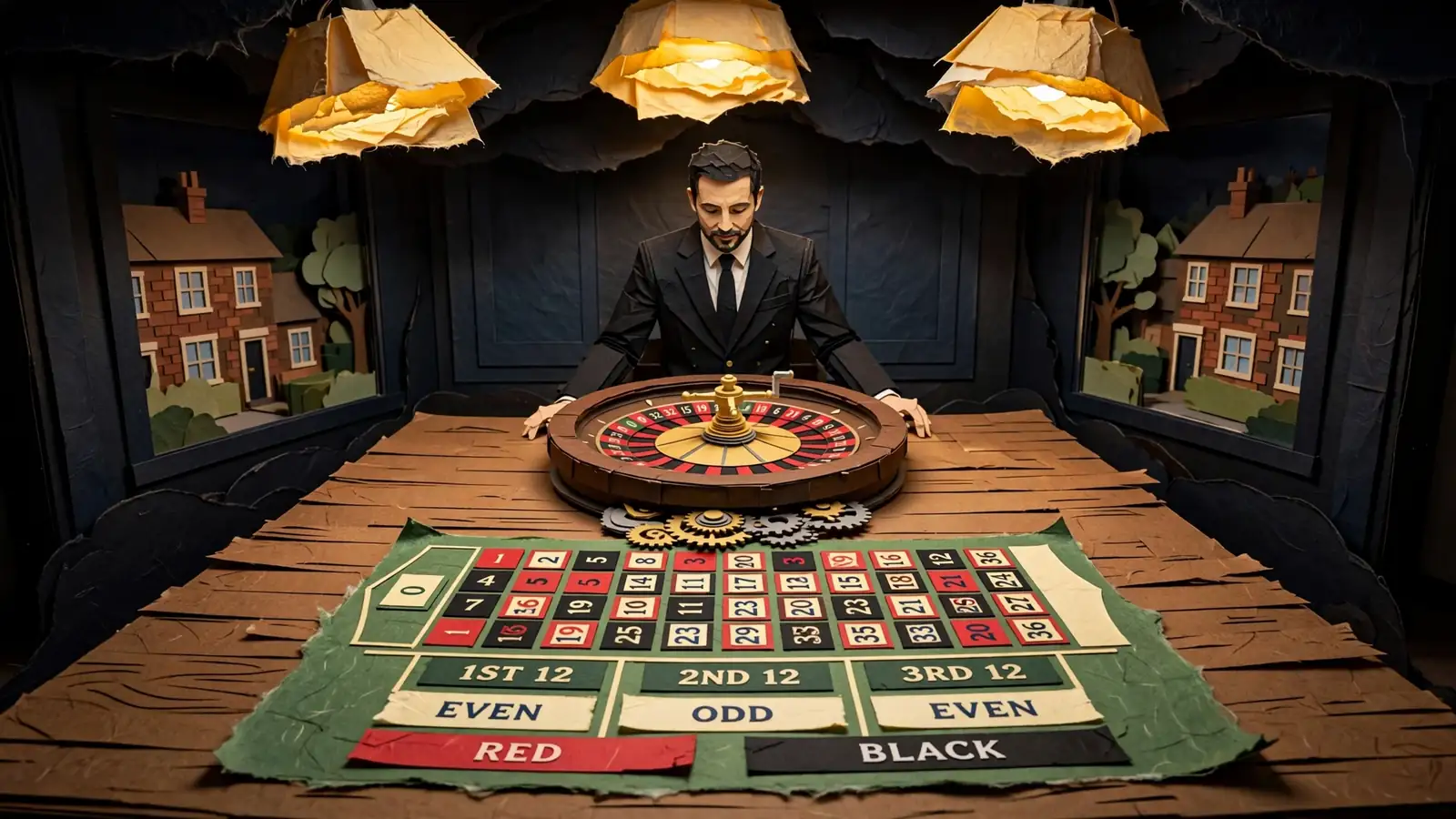
See how the dealer, broadcast and roulette wheel shape the experience, and what to weigh when choosing a casino or playing online.
What Lightning Roulette Adds to a Live Casino
Lightning Roulette belongs to the live-casino side of online gambling: the setting is built around a roulette table, a dealer and a broadcast rather than a purely digital wheel. Its attraction lies partly in that change of atmosphere. The game resembles the roulette familiar from a traditional casino, while the live format places the table at the centre of the screen and makes the session feel like an event being conducted somewhere else.
That distinction matters. “Live casino” describes the environment in which a game is presented; it does not, by itself, name a separate kind of roulette. Lightning Roulette remains roulette, with its numbered layout and the basic drama of waiting for the ball to settle. The live element supplies the human setting around it. A dealer manages the table, the wheel is visible, and the rhythm follows a hosted game rather than a solitary software animation.
Within a British online casino, that places it alongside the familiar table-game repertoire. Blackjack has its own tradition of decisions and card counting. Texas Hold’em brings the social vocabulary of poker, even when the player is not seated among other people. Roulette is quieter and more ceremonial: a layout, a wheel, a ball, and a result that arrives after a short pause. Live casino Lightning Roulette uses that recognisable structure while giving it the heightened presentation suggested by its name.
Online American Roulette in the UK: How It Works
The wider live-casino idea is not a novelty invented for one roulette table. Grosvenor first introduced its live casino games in 2013, with a selection that included Blackjack, Texas Hold’em and Roulette. That launch reflects a broader movement in online gambling: the casino was no longer represented only by reels, menus and animated symbols, but also by a dealer-led table reproduced through a screen. The old room acquired a camera.
Lightning Roulette therefore makes most sense as part of a family rather than as an isolated curiosity. It can sit near live blackjack, poker tables and other casino games, but its identity comes from the combination of roulette’s established form and the live setting. The name does not turn every feature into something wholly unfamiliar. It signals a particular presentation of a game whose cultural history is much older than online gambling.
There is also an institutional side to this atmosphere. In Great Britain, commercial gambling is regulated by the UK Gambling Commission, which is the country’s sole regulator for that activity. Its remit includes online casinos and remote gambling offered to consumers in Great Britain, irrespective of where the equipment running the service is located. The studio may be elsewhere; the regulatory question follows the market being served.
The Commission issues operating licences to businesses and personal licences to individuals working in the British gambling sector. That division quietly explains why a live table is more than a stream with a wheel in front of it. Behind the dealer and the polished set stands an organisation, its permissions and its obligations. The theatrical surface depends on administrative machinery that is less glamorous but rather more consequential.
For that reason, Lightning Roulette in a UK live casino is best understood through three layers: roulette as the underlying table game, live presentation as the social and visual setting, and regulation as the framework around the commercial service. Confusing those layers makes the game seem either more mysterious or more revolutionary than it is.
A familiar wheel, newly staged.
Game Type Live Casino
Format Roulette
Regulation UK Gambling Commission
Recommended online casinos
- BeOnBetBonus: 100% up to €500 + 100 FS · Payout speed: 1-3 business days
- NightWinBonus: £900 + 400 free spins · Payout speed: 1-3 business days
- ZombillionBonus: Welcome Pack 250% up to £4000 + 200 FS · Payout speed: 1-3 business days
- BritsinoBonus: Welcome Package – Get your £2,200 + 2,000 FS · Payout speed: 1-3 business days
- DieselwinBonus: Welcome Pack 250% up to £4000 + 200 FS · Payout speed: 1-3 business days
- Revery PlayBonus: 100% up to€1,000+ 100 FS · Payout speed: 1-3 business days
- x3betBonus: Welcome Pack 100% Up to £1.000 + 200 Free Spins · Payout speed: 1-3 business days
Finding Lightning Roulette at an Online Casino
Finding Lightning Roulette at an online casino is a two-part task. The first part is confirming that the game appears in the casino’s actual live-game catalogue. The second, more important part is establishing that the business is entitled to offer remote gambling to customers in Great Britain. A game can be prominently advertised and still leave the operator’s legal status unclear. Bright graphics are not evidence.
Start with the casino’s own live-game catalogue
A casino offering Lightning Roulette should identify it among its live casino games, rather than mentioning roulette only in a general description of the site. The title may appear beside other live products, such as blackjack or roulette variants, and the game provider may also be shown. That information helps distinguish a genuinely available table from a page assembled around a popular phrase.
The useful checks are straightforward:
- search the casino’s live casino section for Lightning Roulette;
- open the game page rather than relying on a banner or promotional tile;
- confirm that the page belongs to the same operator as the account area;
- check whether the game is available to customers in Great Britain;
- look for a clear route from the game page to the casino’s terms, licensing information and account registration.
Availability can change. A catalogue may contain games that are temporarily unavailable, restricted to particular jurisdictions or visible only after registration. None of those situations should be silently treated as proof that a playable table is available. The wording around the game matters: “featured”, “coming soon” and “available in selected markets” do not mean the same thing.
A listing is only the beginning.
The licence comes before the deposit
The Gambling Commission requires remote operators serving consumers in Great Britain to hold the relevant operating licence. That requirement applies to the operator, not merely to the game provider. Evolution may supply a live game, but a provider’s name cannot substitute for the casino’s own authorisation.
Before depositing, the operator’s licence number should be checked on the public register of the UK Gambling Commission. The register is the place to establish whether the business holds a current licence for the activity it offers, rather than accepting a badge, logo or sentence on an affiliate page. The legal name shown there may differ from the brand used on the casino website, so both names deserve attention.
The comparison should be made carefully:
- Identify the company named in the casino’s terms and conditions.
- Find that company, or its stated trading relationship, on the Commission’s register.
- Confirm that the licence covers remote gambling offered to Great Britain consumers.
- Compare the registered details with the website, domain and customer-support information.
- Stop if the casino cannot explain the relationship between its brand and the licensed business.
This process is less glamorous than choosing a roulette table. It is also the part that determines whether the site belongs inside the regulated British market.
Brand names are not proof of identity
Several online casinos can use similar language for their live sections, while a single brand may operate through a corporate entity with a different name. That makes the footer, terms and privacy information more useful than a slogan promising a “leading” or “trusted” experience. Such descriptions are advertising, not verification.
The same caution applies to lists of lightning roulette casinos. A directory can indicate where people claim the game is available, but it cannot establish that every listed business is licensed or that every entry remains current. A recommendation becomes meaningful only after the operator behind it has been identified and checked independently.
A casino may also place the game behind an account login. That does not remove the need for verification. The licence should be checked before money enters the account, not after a problem has arisen with withdrawals, identity checks or a complaint.
When the information does not line up
A mismatch between the casino brand and the company named on the register is not automatically unlawful, but it is a reason to pause. The site should make the relationship intelligible through its terms and licensing details. If the operator name, domain and licence information point in different directions, the uncertainty is material.
The public register is also more reliable for this purpose than a badge copied into a webpage. A badge may be outdated, refer to another company or create the impression of approval without showing what activity is covered. The register provides the relevant institutional reference: the Commission is the regulator responsible for commercial gambling in Great Britain, and it issues operating licences to businesses serving that market.
The distinction between a licensed operator and an attractive game page is therefore fundamental. Lightning Roulette may be the reason for opening a casino catalogue, but it is not the reason to overlook the identity of the business behind it. A table can be live while the surrounding information remains uncertain. That is precisely when the deposit should wait.
Online Casino Tournaments in the UK: Rules and Prizes
Online Casinos with Lightning Roulette: What to Check
A casino offering Lightning Roulette should be judged by the account surrounding the table, not merely by the game’s presence in a lobby. The same title can sit inside very different arrangements for age checks, deposits, complaints and self-exclusion. A polished table is not a consumer-protection system.
The first question is whether the operator is permitted to serve the British market. Remote gambling offered to consumers in Great Britain falls under the UK Gambling Commission, and an operator selling real-money casino play into that market must hold the relevant operating licence. The licence number should be checked on the Commission’s public register before an account is funded. A logo, footer statement or badge supplied by the casino is not the register itself.
That check establishes the operator’s regulatory position, but it does not settle every practical question. The account still needs to be examined as an arrangement in which money, identity and risk controls meet.
Age verification before depositing
A UK-facing online casino must verify a customer’s age before allowing funds to be deposited into a gambling account. This is more than a tick box during registration. An account may be created before all checks are complete, but depositing should not be available until the required age verification has taken place.
The significance is easy to miss when the game is presented as entertainment rather than gambling. Lightning Roulette remains a real-money casino game when wagers are placed through an online account. The format may resemble a televised table, but the regulatory question concerns what the account permits.
The operator should also explain what happens if identity or age information cannot be confirmed. Vague references to “verification” are less useful than a clear account process describing which documents may be requested, how restrictions are applied and how unresolved checks affect withdrawals. An attractive welcome page is not evidence of a sound process. The dull paperwork matters.
Financial limits at account level
Remote operators must prompt new customers to set a financial limit before the first deposit. They must also provide accessible account-level controls for changing or reviewing limits. These tools belong to the account, rather than to Lightning Roulette alone, so they remain relevant when activity moves between different casino games.
Financial limits should be set at the account level and remain accessible across different casino games.
A sensible assessment looks for controls that are visible without an expedition through obscure menus. The important point is not whether the interface looks modern, but whether the account makes spending boundaries possible before play begins. A limit that exists only in a help article is a weak form of assistance.
Responsible gambling tools should be available through a UK-licensed casino, including self-exclusion. Self-exclusion is not a decorative statement of intent; it is an account protection that should be explained in operational terms. The site should indicate how it is activated and what access it affects. GAMSTOP is also part of the British self-exclusion landscape, but an operator’s own information should not be treated as a substitute for understanding the available arrangements.
Any account assessment should sit beside one plain rule: gambling funds should be money that can be afforded to lose. No limit turns a loss into an affordable one by magic.
Payment restrictions are part of the check
Payment methods reveal whether a casino’s promises have been translated into controls. UK-licensed casinos cannot accept credit cards for gambling. The restriction also covers credit-card funding routed through a money service business, and a wallet cannot be used where its arrangement allows credit-card funds to finance gambling.
Consequently, a list of familiar logos is not enough. The terms should explain which payment routes are available for deposits and withdrawals, whether a method has conditions attached, and what happens when a funding source is not permitted. A casino that describes every route as equally suitable may be simplifying a matter that is not simple.
Payment information should also be read alongside verification requirements. Requests for identity documents can affect the handling of an account, especially when money is moving in or out. That is an account-control issue, not a special feature of the online Lightning Roulette casino game.
Complaints and independent review
A UKGC licensee must provide an internal complaints process and access to an approved Alternative Dispute Resolution service. This gives the account a route beyond customer-support chat when a disagreement cannot be settled directly.
The complaints page should identify the stages clearly: how a complaint is submitted, how the operator handles it, and when an approved ADR service may become relevant. The exact route depends on the operator’s arrangements, so a generic promise to “resolve issues quickly” says little. In regulatory matters, the existence of a procedure is more meaningful than the warmth of its wording.
These checks do not produce a ranking of online casinos with Lightning Roulette. They establish whether the surrounding account offers the basic protections expected in Britain: verified age before depositing, limits before the first deposit, lawful payment routes, responsible-gambling controls and a recognised path for complaints. The roulette table is only one room in the building.
Choosing a Lightning Roulette Casino Without a Fake ‘Best’ List
The phrase “best Lightning Roulette casino” sounds decisive, but a defensible choice needs more than the game’s name on a lobby page. The useful question is whether the casino is a legitimate place to play in Britain and whether its treatment of the game suits the account holder. A polished banner proves very little. It may show a table; it does not establish who operates the site or under which authority.
Check Operator Identity A polished brand or banner is not evidence of a valid license; always verify the business on the official register.
The first check is the operator’s identity. The casino should state the business responsible for the gambling service, not merely display a memorable brand. That name can then be matched with the public register of the UK Gambling Commission. The licence number matters more than a badge copied into a footer: it should correspond to the business and the service being offered. The register is the point at which an attractive claim becomes something that can be tested.
This is particularly important when a site is presented as a leading UK destination without a clear regulatory trail. A specialist review reported that a register check dated 26 September 2026 found no LuckyPays entry under that brand or its stated domain, including luckypays.io. That observation is tied to the date and the particular check; it is not a permanent description of every future register. It does, however, show why a recommendation should never substitute for verification.
What makes a comparison meaningful
Once the licence has been confirmed, the game itself is only one part of the assessment. A sensible comparison considers whether the casino clearly identifies its operator, explains its account conditions and makes its player-protection arrangements visible. The presence of Lightning Roulette is a starting point, not a title earned by the surrounding website.
A serious assessment also separates evidence from advertising language. “Exclusive”, “trusted” and “best” are labels supplied by the promoter unless supported by something independently checkable. A casino may be suitable for one person because its account arrangements are clear, while another may reject it for reasons unrelated to the roulette table. There is no universal crown hiding behind the adjective.
The responsible method is less theatrical: identify the operator, verify the licence number on the Commission’s register before depositing, and treat unsupported rankings as marketing rather than judgement. A recommendation that cannot survive those checks is not a recommendation. It is decoration.
A ‘Best’ Casino Depends on More Than the Game
A claim that one operator is the best Lightning Roulette casino UK players can use sounds precise, but the word “best” conceals several different judgements. It might refer to the table’s availability, the quality of the surrounding account, the clarity of the rules, the handling of payments, or the protection offered when play stops being entertaining. These are not interchangeable virtues.
A defensible comparison would first need to establish that each named casino is genuinely offering the same product. A familiar game title is not enough. The comparison would have to distinguish the game provider, the live-table arrangement and the conditions attached to real-money play. Without that, an attractive label may compare unlike things while pretending to measure one.
The operator’s legal status would be equally important. Remote gambling offered to consumers in Great Britain falls under the Gambling Commission’s licensing system, and a lawful online casino serving that market must hold the relevant operating licence. The Commission is the sole regulator for commercial gambling in Great Britain. A serious comparison would therefore verify each operator’s licence number on the public register, rather than treating a logo, a review badge or a polished website as evidence.
Online Bingo UK: Rooms, Slots and Cash Play
That verification is not a decorative footnote. The register dated 26 September 2026, as reported in a specialist review, does not show a LuckyPays entry under that brand or its stated domain, including luckypays.io. Such a result illustrates why a ranking must be checked at operator level and at a particular point in time. A name appearing in promotional material proves little.
The financial side would also resist a single winner. A useful comparison would examine whether customers can set account limits before depositing, whether responsible-gambling controls are accessible, and whether self-exclusion is available. It would record the complaints process and access to an approved Alternative Dispute Resolution service. Payment restrictions matter too: licensed casinos cannot accept credit cards for gambling, including certain wallet routes that use credit-card funds.
None of this produces a permanent champion. An operator may offer the desired table while providing a less suitable account framework; another may make limits and complaints routes clearer without being the right choice for every player. “Best” is therefore a conclusion that requires current, comparable evidence—not a crown waiting to be placed on the most visible name.
The First-Person View and the Live Table
A first-person presentation changes the position from which a live casino game is seen. Instead of looking at a distant diagram or an abstract digital board, the player appears to occupy the place of someone seated at the table. The image is organised around the participant’s perspective: the dealer, the wheel and the betting area belong to one continuous scene rather than to separate pieces of a software menu.
That perspective is the attraction of first-person Lightning Roulette. It gives the game a sense of presence without changing what the game is. The viewpoint is visual; the roulette game remains roulette, and the live table remains the setting supplied by the operator and its game provider. A change in camera position cannot turn one into the other.
This distinction matters because casino language often allows presentation to borrow the authority of substance. A first-person casino game may look more immediate, more social or more physical, yet those impressions describe the way the table is shown. They do not establish different rules, a different outcome or a different standard of oversight. The wheel does not become more generous because it is seen from the player’s side.
Seeing the table from the participant’s place
The first-person angle is best understood as an arrangement of attention. The table occupies the foreground, while the dealer’s actions form the human centre of the scene. Such a view can make the pauses, gestures and sequence of a live round feel less like the progress of an application and more like participation in a public ritual.
There is something old-fashioned in that promise. Casinos have always sold proximity: the feeling of being close to the wheel, the cards or the person dealing them. Digital play cannot reproduce the room itself, but it can frame the game so that the distance between spectator and table seems smaller. The screen becomes a seat, at least symbolically.
That symbolism should not be confused with proof of quality. A first-person Lightning Roulette casino may present the game in a polished manner, but the perspective alone says nothing about the operator behind the account, the provider supplying the table or the arrangements governing the session. Those are separate questions, and the camera cannot answer them.
Understanding First-Person View
A first-person perspective is a visual mode that changes the player’s viewpoint but does not alter the game rules or the operator’s legal obligations.
Presentation is not the operator
The game title identifies the product. The first-person label identifies a way of viewing it. The casino identifies the business through which the game is made available. These three layers can sit together in one description while remaining different things.
This is especially useful when phrases such as “play first-person Lightning Roulette” are treated as if they named a special class of casino. They do not necessarily do so. The wording may refer to a visual mode, a particular table presentation or simply the experience of facing the game from the participant’s side. It should not be read as a guarantee about the company offering it.
For a British audience, the setting still belongs to the wider regulated online-casino environment. The UK Gambling Commission regulates online casinos and remote gambling offered to consumers in Great Britain, while licences attach to businesses and relevant individuals rather than to a camera angle or a screen layout. The perspective can be intimate. The legal identity remains institutional.
A convincing view, then, is only the beginning of the experience. It supplies atmosphere and orientation; it does not settle the more serious questions surrounding the table. The scene may look close. The distinctions remain.
Playing Lightning Roulette Online in Britain
Lightning Roulette sits within the legal category of online casino gambling in Britain: a roulette game offered through a remote gambling service, rather than a separate form of entertainment with its own national licence. The relevant boundary is the operator’s status. Remote businesses serving consumers in Great Britain must hold the appropriate Gambling Commission operating licence, wherever their technical equipment is located.
The regulator’s authority comes from the wider British gambling framework. The UK Gambling Commission oversees online casinos and remote gambling offered to people in Great Britain, while the Gambling Act 2005 provides the principal legal structure in England, Wales and Scotland. Northern Ireland has a separate legal position. The Commission also issues personal licences to individuals working in regulated gambling businesses, alongside operating licences for companies.
That makes a licensed Lightning Roulette casino game part of an established consumer market, not an unregulated corner of the internet. The game’s distinctive presentation does not alter the operator’s basic obligations. A roulette table remains a roulette table, even when its graphics, presenters and special-number mechanics give it a more theatrical character.
The distinction from online slots matters here. Great Britain has specific stake rules for online slots: the maximum per game cycle is £5 for customers aged 25 and over and £2 for customers aged 18 to 24. Those limits concern slots, not roulette or blackjack. A specialist review makes that distinction, but it should not be turned into a timeless slogan: gambling regulation changes, and the applicable position belongs to the rules in force at the time of play.
This difference is more than a technical footnote. Slot controls address a particular class of games built around repeated automated cycles. Roulette is organised around a wheel outcome and a table wager, whether the wheel is shown through a live broadcast or represented digitally. Treating every casino game as though it followed the same rulebook would be convenient, but convenience is not legal analysis.
Slot stake limits apply specifically to online slots and do not govern roulette or blackjack games.
Age remains the basic threshold for lawful online gambling in the British market. Players must be at least 18, and an operator has to verify age before allowing funds to be deposited into a gambling account. The licence therefore matters twice: it identifies the legal framework around the casino and connects the game to the consumer protections imposed on that licensed business.
For anyone looking to play Lightning Roulette in Britain, the sensible description is consequently modest. It is a regulated online roulette option when supplied by a properly licensed operator, subject to the rules applying to remote gambling and to the ordinary risks of wagering. The dramatic branding changes the atmosphere, not the mathematics.
Trying a Demo Before Playing for Money
A demo version of Lightning Roulette, where available, offers a way to become familiar with the game without turning the session into gambling. The distinction matters. A simulated round may resemble the real-money table in appearance and sequence, yet it does not create a wager, a win or a loss. It is an introduction, not a rehearsal with financial consequences.
Availability should not be assumed. Some casino sites may present a practice mode, while others may show only a real-money table. The wording around the game can also vary: “demo”, “play for fun” and “practice” may describe a non-cash version, but the terms attached to it still need attention. A page should make clear whether funds are involved before any play begins.
For someone exploring a Lightning Roulette demo in the UK, the useful questions are modest but important:
- Is the session explicitly free of real-money wagering?
- Does it require an account?
- Are any promotional funds involved?
- Does the display explain that simulated results have no cash value?
- Is the game offered by the same operator as the real-money version?
The last question is less trivial than it looks. A familiar game title does not, by itself, establish who operates the table or under which conditions a real-money version would be supplied. Demo play can explain the rhythm of a game, but it cannot substitute for checking the status and terms of a casino account.
Nor should practice play be mistaken for evidence of future results. Random outcomes remain random, and a sequence seen in a free session says nothing reliable about what might happen during a later wager. The psychological distance is useful: without money at stake, the game can be considered as a piece of casino design rather than as a proposed source of income.
A demo may also help reveal whether the format suits the player. The pace, presentation and live-table atmosphere will not appeal to everyone. Discovering that before depositing is a cheaper form of knowledge than discovering it after funds have been committed.
If real-money play follows, the legal setting changes immediately. Operators serving Great Britain must hold the relevant Gambling Commission licence, verify age before allowing deposits and provide account-level financial controls. A demo does not remove those obligations where an account later becomes a gambling account.
Practice is still practice. It is not free credit, a prediction tool or a promise of advantage. Any later gambling should involve only money that can be afforded to lose.
Responsible Gambling Only gamble with money that you can afford to lose.
The Dealer, the Table and the Live Casino Tradition
A live casino is built around a person as much as a game. The dealer turns the abstract machinery of online gambling into a recognisable social scene: a table, a wheel or cards, a sequence of gestures, and a formal rhythm that existed long before the screen arrived. In Lightning Roulette, the dealer remains part of that arrangement even though the game adds its own distinctive feature to the roulette format.
That presence matters because roulette has always depended on ceremony. The wheel is set in motion, the ball travels, the table waits, and the result is announced. A live dealer does not alter the underlying chance, but gives the event a visible human setting. The distinction is important. A dealer is not an oracle, and a polished table is not evidence of a favourable outcome. It is presentation, with history attached.
Grosvenor offers a useful British marker for that history. The operator first introduced its live casino games in 2013, bringing together card and casino games that included Blackjack, Texas Hold’em and Roulette. Live casino gambling was therefore not presented as a single novelty, but as an online continuation of the familiar casino repertoire. The dealer connected the digital venue with the institution it was borrowing from.
Lightning Roulette sits naturally within that tradition because its identity still begins with the roulette table. The live-dealer setting supplies the human framework; the game’s special mechanics supply the variation. Those are separate layers, and confusing them can make a casino product seem more mysterious than it is.
The broader live-casino tradition also explains why the format continues to appeal across different games. Some players are drawn to the pace of cards, others to the formal patience of the wheel. The common element is the table as a public performance: orderly, observed and repeated. Online gambling did not invent that theatre. It merely found a way to put it behind glass.
A dealer, then, is part of the setting—not a guarantee. A useful distinction.
Online Slot Payout Percentages: What They Mean
Playing Online: Limits, Payments and the Cost of Risk
Before an online casino accepts a deposit, it must establish that the customer is at least 18. The first deposit is also preceded by a prompt to set a financial limit, with account controls available for changing that limit later. These measures do not turn gambling into household budgeting, but they make the boundary visible before money reaches the table.
Payment rules draw another boundary. Remote gambling operators cannot take credit-card payments, including credit-card funding passed through a money-service business. A digital wallet is also unsuitable where its structure allows credit-card money to be used for gambling. For a Lightning Roulette session, that means checking the funding method rather than assuming that every familiar payment route is acceptable.
Account protection continues after registration. UK-licensed casinos must provide responsible-gambling tools, including self-exclusion. They must also operate an internal complaints procedure and offer access to an approved Alternative Dispute Resolution service. The Research, Education and Treatment levy is part of the licensing framework as well; regulation is not merely a badge placed beside a logo.
A distinction often blurred in casino writing concerns slots. A specialist review describes Great Britain’s slot stake rules as setting a maximum of £5 per game cycle for customers aged 25 and over, and £2 for those aged 18 to 24. The same review notes that these limits do not govern roulette or blackjack. They should not be presented as restrictions on Lightning Roulette.
Other slot-specific controls are equally separate. Autoplay is prohibited for online slots, and at least 2.5 seconds must pass between the start of one slot game cycle and the beginning of the next. Neither rule converts a roulette table into a slot product.
The remaining principle is less technical and more important: only money that can genuinely be afforded to lose belongs in gambling. A live table can make each decision feel social and immediate; the account balance remains stubbornly private. That is where the cost sits.
Are online casino games licensed and regulated?
Yes. The UK Gambling Commission regulates online casinos and remote gambling offered to consumers in Great Britain, and operators serving those customers must hold the relevant operating licence.
What are the online slot stake limits in Great Britain?
The limit is £5 per game cycle for adults aged 25 and over, and £2 for adults aged 18 to 24. These limits apply to online slots, not roulette or blackjack.
Is LuckyPays licensed by the UK Gambling Commission?
The Commission’s public register dated 26 September 2026 does not list LuckyPays under its brand or stated domain, including luckypays.io.