
Crazy Time Live Casino Game Show in the UK
 Available in GB
A practical guide to Crazy Time’s live-show format, UK casino options, game rules, free play and the limits of strategies.
What Makes Crazy Time a Live Casino Game Show
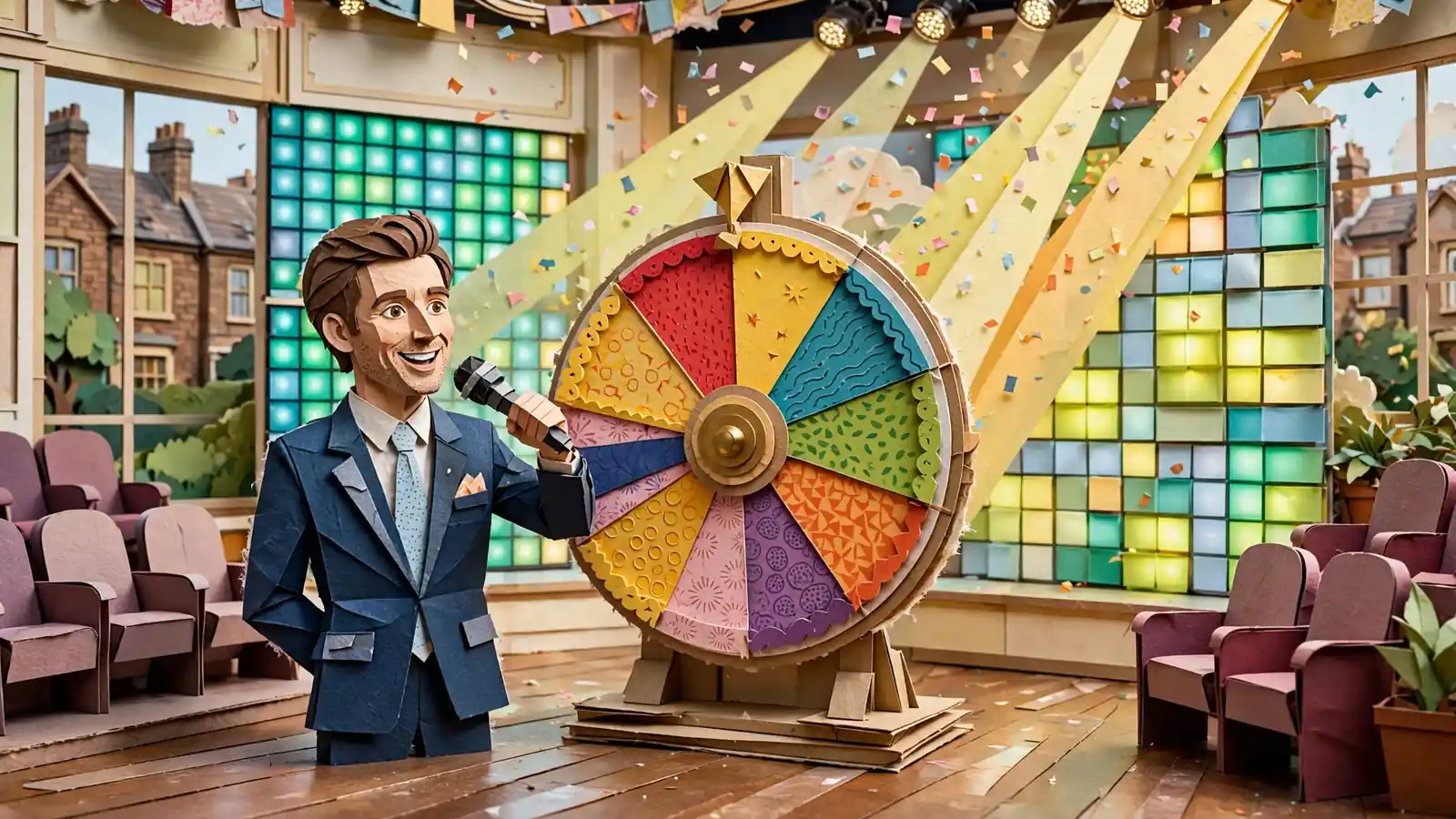
Crazy Time is a live casino game built in the shape of a television game show. It has a studio, a presenter, a large central wheel and the visible sense that a scheduled performance is taking place rather than a quiet transaction at a virtual table. For anyone looking for a Crazy Time casino in the UK, that distinction is more useful than the word “live” alone. The game is not merely a digital version of a familiar casino ritual with a human dealer added to the screen.
Traditional live casino tables tend to organise attention around cards, a ball or a dealer’s hands. Blackjack asks for decisions against the house; roulette places the wheel and its numbered layout at the centre; poker tables establish their own vocabulary of seats, cards and exchanges. The setting may be polished, but the structure remains recognisable from a physical casino. Crazy Time borrows the live studio atmosphere and turns it into the main event.
The presenter is therefore part of the format, not decorative furniture. The wheel gives the round a conspicuous physical object, while the studio presentation creates a rhythm closer to a broadcast than to a private table. There is an audience-facing energy to it: the action is staged, announced and visually framed. Even before considering any individual result, the experience is built around watching an event unfold.
That is why “game show” matters. It describes the relationship between the player and the game. A conventional table generally narrows attention to a betting layout and the immediate dealing or spinning procedure. Crazy Time widens it across the set, the presenter, the wheel and the reveal. The casino remains present, but it is dressed as entertainment television. A little theatricality does a great deal of work.
Deal or No Deal Casino UK: Slots and Variants
This format also changes the social impression of live gambling. A roulette table can feel like an instrument: precise, repetitive and almost architectural. Crazy Time feels more like a programme with an established stage language. The presenter guides the pace, the visual design marks the transitions and the wheel supplies a shared focal point. It is still a casino product, but one that has learned from broadcasting how to make waiting look like part of the entertainment.
For British players, the phrase “Crazy Time live casino” can therefore mean more than access to a streamed table. It points to a particular category of online casino experience: a real studio presentation delivered through the casino interface, with the game show’s ceremony placed between the wager and the outcome. That ceremony does not turn chance into skill, nor does it make the result more predictable. It changes the manner in which chance is presented.
The distinction is worth keeping clear when comparing Crazy Time with other live casino games. Blackjack and roulette belong to long-established table traditions, while Crazy Time presents the casino through the grammar of a televised show. One is arranged around the table; the other makes the studio itself part of the attraction.
Same casino, different stage.
Recommended online casinos
- BeOnBetBonus: 100% up to €500 + 100 FS · Payout speed: 1-3 business days
- NightWinBonus: £900 + 400 free spins · Payout speed: 1-3 business days
- ZombillionBonus: Welcome Pack 250% up to £4000 + 200 FS · Payout speed: 1-3 business days
- BritsinoBonus: Welcome Package – Get your £2,200 + 2,000 FS · Payout speed: 1-3 business days
- DieselwinBonus: Welcome Pack 250% up to £4000 + 200 FS · Payout speed: 1-3 business days
- Revery PlayBonus: 100% up to€1,000+ 100 FS · Payout speed: 1-3 business days
- x3betBonus: Welcome Pack 100% Up to £1.000 + 200 Free Spins · Payout speed: 1-3 business days
Crazy Time in UK Live Casino Line-ups
A casino’s live section is not a decorative annex to its main lobby. It is a separate part of the service, often organised around tables, studios, presenters and game formats rather than the reels and instant results of online slots. Crazy Time belongs in that setting, so its presence has to be established in the live-casino lobby itself rather than inferred from a general claim that an operator offers “live games”.
Crash Casino Games in the UK: Rules and Risks
That distinction matters because casino menus are elastic things. A brand may advertise a broad live selection while making only some tables available in the United Kingdom, or it may show a game in a promotional area without making it available to every account, device or jurisdiction. A careful check begins with the operator’s own live-casino section and the game’s individual page. The title should be visible there, with an option to open the game or view its table information. A banner alone is not enough.
What to inspect in a live lobby
The first useful question is whether Crazy Time appears among the currently available live games, not whether it is mentioned somewhere on a casino’s homepage. Menus may divide the offer into categories such as game shows, roulette, blackjack and other tables. Crazy Time would normally be sought in the game-show or live-entertainment part of that structure, while conventional card and wheel games sit elsewhere.
The second question concerns access. A game can be listed but unavailable at a particular moment, perhaps because its table is closed, full or restricted by the account’s location. The lobby should make the distinction between a listed title and an open table reasonably clear. A casino that offers several versions or tables may also display different minimum-stake options, though those details should be read on the operator’s own page rather than borrowed from a review written at another time.
The wider selection deserves attention as well. A live lobby with Crazy Time but no recognisable alternatives may be less useful to someone comparing the character of an operator’s service. The established table categories give a clearer picture: blackjack and roulette remain familiar reference points, while a provider may also offer formats such as Infinite Blackjack or Lightning Roulette. These names describe products, not a guarantee that every UK-facing casino carries them. Availability belongs to the individual operator.
French Roulette Online Casinos in the UK
That is why a responsible description of Crazy Time casinos UK should avoid presenting a permanent shortlist as if casino menus were carved in stone. Games are added, removed, renamed or placed behind regional restrictions. A title visible in one market may not appear in another. The relevant evidence is the live lobby connected with the account and the terms governing access.
A longer British live-casino tradition
The British live-casino scene did not begin with game-show formats. Grosvenor first introduced its live casino games in 2013, presenting a selection of card and casino games that included Blackjack, Texas Hold’em and Roulette. That history places modern live products in a longer commercial tradition: the studio, the dealer and the table were already familiar forms before the industry began borrowing more openly from television entertainment.
There is a small cultural shift in that movement. Traditional casino games present themselves as games of concentration and routine; game-show titles add spectacle, pacing and the visible labour of presentation. Yet both are offered through the same digital doorway. The live lobby is therefore less a single genre than a catalogue of different ways to package wagering, from the quiet geometry of a roulette wheel to the brightly staged rhythm of a game show.
Grosvenor’s early range is also a reminder not to confuse a casino’s age in the market with the precise contents of its present lobby. A historical launch tells something about the development of live gambling in Britain; it does not establish that every named game remains available today. Current access needs current confirmation.
Comparing the surrounding offer
When checking online casinos for Crazy Time, it is useful to record more than the presence of the title. The following points reveal how substantial the live section actually is:
- whether Crazy Time has its own clearly labelled entry;
- whether the lobby separates live game shows from blackjack, roulette and other tables;
- whether alternative tables are available when the preferred game is closed;
- whether the operator explains table availability, access conditions and any regional restrictions;
- whether the game opens through the same UK-facing account area rather than an unrelated promotional page.
This is not a ranking exercise. A large menu is not automatically a better one, and a small menu is not automatically deficient. The point is to distinguish a functioning live-casino offer from a page assembled around attractive names. Common Draw and Dream Catcher may appear in a game-show category at one operator, while Infinite Blackjack or Lightning Roulette may define another operator’s emphasis. The useful comparison is between what is actually presented and what is merely promised.
Casino Games: Slots, Live Tables and More
A casino’s live line-up is, in the end, a statement about its priorities. Some businesses build around familiar tables; others lean into studio productions and branded entertainment. Crazy Time sits at the intersection of those approaches, which explains both its visibility and the need to check its precise place in the lobby. The name may be widely recognised. The table still has to be there.
Finding Crazy Time Online in Britain
Finding Crazy Time on the internet involves two separate questions, and confusing them is how a bright game becomes a murky purchase. The first is practical: whether an online casino has placed the game in its live lobby. The second is legal: whether the business is permitted to offer remote gambling to people in Great Britain.
A game can be visible online without the site behind it having the authorisation required for the British market. Its presence on a website therefore says little about the operator’s standing. The sensible order is to identify the business offering the game, then check that business rather than treating the game’s availability as proof of legitimacy.
For anyone looking for an online casino with Crazy Time, this distinction matters because the product and the operator are not the same thing. Crazy Time belongs to its game provider; the casino supplies the account, accepts wagers and operates the customer relationship. A search for an online casino Crazy Time UK players can access may return pages, brands and domains, but only the operator’s regulatory position answers whether the arrangement is lawful for the market.
Online Casino Games for Real Cash in the UK
What the British licence covers
The UK Gambling Commission is the sole regulator of commercial gambling in Great Britain. Its remit includes online casinos and other forms of remote gambling offered to consumers in the jurisdiction. The location of the company’s equipment does not remove that responsibility: a remote operator serving Great Britain must hold the relevant Gambling Commission licence even when key systems are situated elsewhere.
That rule places the emphasis on the operator, not on the casino game. A company may describe itself as international, host its website abroad or present a familiar live-casino catalogue; none of those details replaces the required British authorisation. For an online casino Crazy Time service aimed at Britain, the relevant question is whether the business is licensed to provide remote gambling to Great Britain consumers.
The Commission issues operating licences to businesses and personal licences to individuals working in relevant gambling roles. These are different forms of permission. The operating licence is the central point for checking whether a company may run the gambling service; a personal licence concerns an individual’s suitability and role within the industry. A page displaying general compliance language, a badge or a licence reference should not be treated as self-authenticating.
DO
- Check the operator’s actual legal business name.
- Verify details against the public Gambling Commission register.
- Confirm that the permission relates to remote gambling in Great Britain.
DON’T
- Rely on a website logo or a copied licence number.
- Assume a game’s availability proves an operator’s legitimacy.
- Mistake a brand name for a corporate legal name.
How to check an online casino offering
The public Gambling Commission register is the proper place to verify the position before an account is funded. The check should be made against the operator’s actual legal business name and the domain through which the Crazy Time casino online service is being offered. Brand names can differ from corporate names, while a domain can lead to a separate business from the one suggested by the page design.
A useful check has several parts:
- Identify the operator named in the site’s terms, footer or licensing information.
- Open the Gambling Commission’s public register rather than relying on a logo or copied licence number.
- Search for the operator and compare the registered details with the website and domain.
- Confirm that the permission relates to remote gambling and to the relevant Great Britain market.
- Treat discrepancies in the company name, domain or licence information as a reason to pause before depositing.
This is not bureaucracy added around the game as an afterthought. The licence determines which regulator has oversight of the operator’s commercial activity. It also separates a casino offering Crazy Time through a recognised British framework from an offshore site that merely makes the game technically accessible.
Availability is not authorisation
An offshore casino may be reachable from Britain without holding a Gambling Commission operating licence. That accessibility can create a misleading impression: if the page loads, the service may appear to be available in the same sense as a licensed British casino. In reality, technical access and lawful authorisation are different conditions.
The distinction is particularly important for phrases such as “Crazy Time online casino sites”. A collection of sites may list the game, but a list cannot establish that each operator is licensed for Great Britain. Nor does the fact that a game provider is established or widely known transfer regulatory responsibility to every casino that displays its games.
The British system places that responsibility on the remote operator serving local consumers. The game may travel across borders with ease; the licence does not. A few minutes spent comparing the operator’s identity and domain with the public register is therefore more informative than a polished lobby or a long catalogue of live games. Availability is the beginning of the check, not the end.
Casino Dice Games in the UK: Formats and Risks
Choosing a Casino for Crazy Time Without a False ‘Best’ List
A label such as “best Crazy Time casino” suggests a settled ranking, but a meaningful choice depends on details that change from one operator to another and from one account to the next. Access to the game is only the first test. The more revealing questions concern account safeguards, payment rules, complaint handling and the operator’s status in Great Britain.
A casino offering real-money play to customers in England, Scotland or Wales must hold the appropriate operating licence from the UK Gambling Commission. The Commission regulates remote gambling for people in Great Britain even when the operator’s essential equipment is located elsewhere. It also grants personal licences to relevant individuals, alongside operating licences for businesses. That division matters: a polished website is not a substitute for regulatory permission.
The licence number should be checked on the Commission’s public register before an account is funded. This is a practical verification step, not decorative paperwork. A site can display familiar language, attractive branding and a page devoted to Crazy Time while still failing the basic test for lawful British-facing operation. Offshore casinos sit outside the UKGC system; their accessibility does not turn them into UK-licensed services.
Responsibility and Access
A UK-licensed casino must provide responsible-gambling tools, including self-exclusion, and internal complaints procedures.
Account protections before the game
Age verification is part of the entry process. Operators must confirm that a customer is old enough before allowing money to be deposited into a gambling account, and legal online gambling in the UK is restricted to players aged eighteen or over when the operator holds the necessary Commission licence. A casino that treats verification as an inconvenience to be postponed is revealing something about its priorities.
Financial controls deserve similar attention. New customers must be prompted to set a financial limit before making their first deposit, while account-level controls must remain accessible afterwards. These tools are more useful when considered before the excitement of a live lobby begins. The relevant question is not whether a site advertises “responsible gambling”, but whether limits can be found, changed and understood without a small expedition through the account menu.
Self-exclusion is another essential safeguard. UK-licensed casinos must provide responsible-gambling tools that include self-exclusion, allowing access to gambling to be closed rather than merely made less convenient. GAMSTOP is also part of the British self-exclusion landscape. Such measures are deliberately unglamorous. That is their virtue.
Payments, complaints and incentives
Credit cards cannot be used for gambling through UK-licensed casinos. The restriction also reaches arrangements in which a money service business routes credit-card funding towards gambling, and wallets cannot be used where their credit-card balance can finance gambling. Payment availability should therefore be assessed by its funding route, not just by the logos shown at the cashier.
Promotions labelled as Crazy Time bonuses need the same careful treatment as any other gambling offer. A bonus headline cannot establish value by itself; the account conditions, permitted payment method and withdrawal rules determine what the offer actually does. Those details belong beside the licence and limit checks, not in a separate mental drawer marked “marketing”.
If something goes wrong, a UKGC-licensed casino must provide its own internal complaints procedure and access to an approved Alternative Dispute Resolution service. This creates a route beyond a support chat that simply repeats prepared phrases. The wider framework is funded in part through the Research, Education and Treatment levy, to which operators are required to contribute. Regulation, in other words, is not only a badge placed on the front door.
Mines Casino Game UK: How the Grid and Randomness Work
Results from Crazy Time rounds and ideas about strategies may matter to someone studying the game, but neither can compensate for weak account protection or uncertain complaint arrangements. The sensible comparison is therefore not a podium of supposedly superior casinos. It is a check of whether the operator makes lawful access, financial limits, self-exclusion, payment restrictions and redress visible before money enters the account. And the standing warning remains plain: gambling should involve only money that can be afforded to lose.
Where to Play: From Crazy Time to the Live Tables
A casino’s live lobby is the natural starting point for locating Crazy Time. It is the part of the site where streamed tables, studio games and game-show formats are gathered, although every operator arranges the furniture differently. One lobby may place the newest titles first; another may separate game shows from traditional tables; a third may rely on a search field that treats a wheel game as just another catalogue entry.
The useful distinction is between the lobby and the individual game. The lobby shows what the casino currently makes available. Selecting a title opens its own game window, with the studio feed, controls, account balance and wagering interface. This means that finding a Crazy Time wheel casino is not a matter of looking through every roulette table. It is a matter of identifying the relevant live-game category or searching the catalogue by the game’s name.
The word “live” can be slightly deceptive. It describes the streamed, presenter-led setting, not a promise that every title resembles a conventional casino table. Blackjack and roulette are live casino games in the familiar sense: a dealer, a table and a sequence of rounds. Crazy Time belongs to the same broad lobby but presents itself as a televised wheel game. The lobby is therefore less like a single room than a building with several theatrical stages.
Reading the live-casino menu
A well-ordered lobby commonly gives visual or textual clues about the type of game being opened. Categories may distinguish:
- game-show formats and wheel games;
- blackjack tables;
- roulette tables;
- poker-based tables;
- other live studio games.
The labels are not universal, so the title and thumbnail matter more than assumptions about where a wheel game “ought” to appear. Crazy Time may sit under a live-games heading, a game-show heading or a provider-led collection. If a casino offers a favourites function, it can also be used to keep a known title visible without confusing it with a table game.
The same lobby may contain products with closely related presentation styles. A wheel beside Crazy Time does not necessarily indicate the same rules, the same interface or the same wagering choices. A name such as Dream Catcher, for instance, belongs to the live catalogue but should not be treated as an alternative label for Crazy Time. Catalogue browsing rewards a little literalism.
From the wheel to the tables
Traditional tables remain the historical backbone of many live-casino menus. Grosvenor introduced its live casino offering in 2013, with card and casino games including Blackjack, Texas Hold’em and Roulette. That history helps explain why a modern live lobby can contain both the polished studio spectacle of a wheel game and the comparatively spare setting of a blackjack table.
Chicken Road Game Casino UK: How It Works
The practical navigation is simple: open the live section, identify the category or title, and check that the game window corresponds to the intended product before any wager is placed. A roulette table displays a roulette interface; a blackjack table displays cards and dealer information; Crazy Time presents its own wheel-centred format. Similar streaming technology does not make the games interchangeable.
This is also why “where to play Crazy Time live casino UK” should be understood as a navigation question before it becomes a choice between operators. The immediate task is to locate the title in the live lobby, confirm its identity and distinguish it from neighbouring products. The surrounding catalogue supplies context, not a reason to treat every bright studio screen as the same game.
A little patience saves a great deal of theatrical confusion.
Strategies, Stakes and the Limits of Control
A strategy can organise a wager; it cannot organise the result. That distinction matters particularly in a game built around a wheel, where the next outcome is not made more obedient by a longer session, a spreadsheet or an especially solemn expression. A Crazy Time casino strategy may determine which available option receives a stake and how a budget is divided, but it does not turn chance into a schedule.
Spin Timing
A spin must last at least 2.5 seconds from the start of one game cycle before the next can begin.
Some players look for a tracker that records previous rounds, searching for a pattern in the history of Crazy Time or hoping that a casino tracker will reveal what is due next. A record can describe what has happened. It cannot establish what will happen in the following round. Earlier outcomes do not create an obligation for a particular segment, multiplier or bonus feature to appear. The tracker is an instrument of memory, not a forecasting machine.
That is the useful boundary for any live casino strategy. It may help keep decisions consistent, prevent a hurried increase after a loss, or make a session’s spending visible. Those are forms of discipline rather than prediction. Claims that a strategy, tracker or sequence can guarantee a return should be treated as sales language, not as a property of the game.
What the British slot limits say
A specialist gambling review reports the following Great Britain limits for online slots:
- For adults aged 25 and over, the maximum stake is £5 per game cycle.
- For adults aged 18 to 24, the maximum stake is £2 per game cycle.
The limits concern online slot games, so they should not be casually transferred to every product in a casino lobby. The same specialist review makes clear that these slot limits do not apply to roulette or blackjack. That distinction is important when a live casino offers several categories under one account: a single set of numbers does not govern every table and wheel.
Crazy Time’s classification should therefore be checked in the operator’s presentation and terms rather than guessed from its bright lights or studio setting. The word “live” describes the format and presentation; it does not, by itself, settle which regulatory stake rules apply.
British rules also place timing controls on online slots. A spin must last at least 2.5 seconds from the start of one game cycle before the next can begin. Autoplay is banned for online slots in Britain. These restrictions remove two familiar ways of accelerating a session: letting software repeat the action and compressing successive spins into a blur. Neither restriction supplies a winning method. It simply gives the clock, rather than impatience, a larger role.
The same caution remains necessary when a game is live-hosted. A wager is still a financial decision, and a strategy is still only a method of arranging it. The sensible ceiling is personal: only money that can be afforded to lose belongs in gambling at all. A tracker may show the damage; it cannot undo it.
The history of the game, the language of systems and the neat rows of recorded results can make random play look more legible than it is. That is one of gambling’s oldest talents. Dry, but expensive.
Free Play and the Difference Between Practice and Gambling
A free mode can make an unfamiliar live game less opaque. Without money at stake, the interface becomes easier to inspect: the position of the wager controls, the way a round begins, the appearance of any bonus feature and the information shown after the result. That kind of trial is useful for learning the rhythm of the table rather than trying to learn luck.
Benefits of Demo Mode
A free mode allows you to inspect the interface, the position of wager controls, and the rhythm of the round without financial commitment.
The distinction matters. A free or demo version does not involve a deposit, and it does not create a cash balance that can be withdrawn. Any result remains part of the demonstration. A winning-looking outcome in a free game is therefore not evidence of a winning opportunity with money, just as a losing sequence does not prove that a paid round is “due” to change. Chance has no memory; interfaces do.
The phrase “free spins” can also be misleading in this setting. It may describe a promotional feature attached to a particular offer, or it may be used loosely for a no-cost demonstration. Those are not the same thing. A free-play mode requires no financial commitment, while promotional spins may be subject to conditions connected with an account, a bonus or a specific operator. The wording must be read in context rather than treated as a promise of withdrawable funds.
Availability is equally specific. A casino review may mention a free version, but that does not establish that every UK-facing casino carries one, nor that a particular operator provides a demo of Crazy Time. The sensible distinction is between the game itself being viewable or testable somewhere and an operator offering a verified, money-free mode. The latter has to be checked at the relevant casino.
Practice can answer modest questions: whether the layout is comprehensible, whether the pace feels manageable and whether the game is suited to the way a person prefers to follow a live table. It cannot establish a personal advantage, predict outcomes or turn a game-show format into a safer form of gambling.
Once real money enters the account, the character of the activity changes. A demo may familiarise; it cannot rehearse the financial consequences. Only what can be afforded to lose should ever be gambled. That boundary is plain, and useful.
JetX Casino Game in the UK: How It Works
Bonuses, Deposits and the Small Print
A Crazy Time casino bonus can look like a useful addition to a first deposit, but the label says very little on its own. A welcome offer, a deposit match, free spins or a no-deposit promotion each depends on its terms. Those terms may define which games qualify, when the offer expires, whether winnings from bonus funds are restricted and how withdrawals are handled. The phrase “Crazy Time bonus” is therefore not evidence that the game itself is eligible, nor that any particular casino has made such an offer available.
The same scrutiny belongs beside the deposit conditions. An offer may require a qualifying payment method, exclude certain account types or impose rules that affect the ability to withdraw. References to Crazy Time casino payouts should be treated similarly: a promotional page cannot replace the operator’s full payment, verification and withdrawal information. A bonus is an arrangement, not free money. There is always a small print.
Payment method matters before any promotion is considered. UK gambling operators cannot accept credit-card payments for gambling. The restriction also covers credit-card funding routed through a money service business. A wallet is not an escape route: operators cannot accept wallet payments where credit-card funds can be used for gambling. Debit-funded methods and other available options still need to be assessed against the casino’s own conditions.
Before a first deposit, a remote operator must prompt a new customer to set a financial limit. Account-level limit controls must remain accessible afterwards, so the arrangement is not a one-time screen hidden during registration. Age verification is also required before funds can be deposited into a gambling account. These checks are part of the account structure, not optional decoration attached to a bonus page.
Any advertised promotion should be read together with the casino’s licensing and consumer-protection information. A UK-licensed operator must provide responsible-gambling tools, including self-exclusion, and an internal complaints process with access to an approved Alternative Dispute Resolution service. Operators also contribute to the Research, Education and Treatment levy. The sensible order is plain: inspect the account limits and payment rules first, then read the bonus terms, and only afterwards decide whether depositing fits the available budget. Only gamble what can be afforded to lose.
Crazy Time Rules, Scores and Multipliers
Understanding the rules of Crazy Time matters less as a search for a secret formula than as a way of reading what is happening on screen. A live game can look simple: a presenter, a wheel, a result and changing figures. Yet each element carries a different meaning. The rules explain how a round is organised, which outcomes are available and when a score or multiplier belongs to the result rather than to the amount wagered.
That distinction is useful when comparing descriptions of Crazy Time in UK casinos. Promotional language often gives the numbers the starring role, while the rules remain in the wings. A multiplier is not, by itself, a promise of a profitable outcome. It is a value attached to a particular result under the game’s stated conditions. The payout must therefore be read together with the applicable selection and the round’s settlement.
“Scores” can also be misunderstood. In a live casino context, the term may refer to the result shown for a round, not to a running league table or a measure of a player’s skill. Crazy Time is a game of chance, so a high displayed figure does not demonstrate that a player has made a better decision. It records what the game has produced.
The sensible order is therefore plain:
- Read the rules governing the round.
- Identify what the displayed result represents.
- Check how any multiplier is applied.
- Treat the resulting score as information about that round, not as a forecast of the next one.
This approach makes the interface easier to follow and keeps arithmetic from being mistaken for control. Rules explain the mechanism; scores describe the outcome; multipliers alter the stated settlement where the rules provide for them. None turns uncertainty into certainty. Numbers remain numbers.
A Demo Before a Deposit
A Crazy Time demo casino can be useful for one modest purpose: checking how the game presents itself before money enters the picture. It is an inspection stage, not evidence that a paid session will feel the same.
The first thing to examine is the interface. A demo should make it possible to identify the betting area, available controls, round information and any displayed outcomes without having to guess what each panel means. On a live casino screen, visual movement can make a simple layout seem busier than it is. A quiet trial reveals whether the essential information remains readable.
Following a complete round matters more than pressing buttons at random. The sequence of the wheel, the on-screen announcements and the settlement of the result show how the table communicates with its players. This is where a Crazy Time live casino demo earns its keep: it allows the rhythm of the presentation to be observed without turning unfamiliarity into an immediate financial decision.
A demo slot label may also appear around Crazy Time, but terminology alone does not establish that the mode reproduces every condition of real-money play. The available interface, rules display and round flow should be treated as the objects of inspection, not as a promise of identical paid play.
The sensible boundary is clear. No deposit should be made merely because the demo looks polished, and a demonstration cannot turn chance into a controllable process. If the interface is unclear, the responsible response is to stop there. No money required.