
Casinos That Accept Click2Pay in the UK: What to Check
 Available in GB
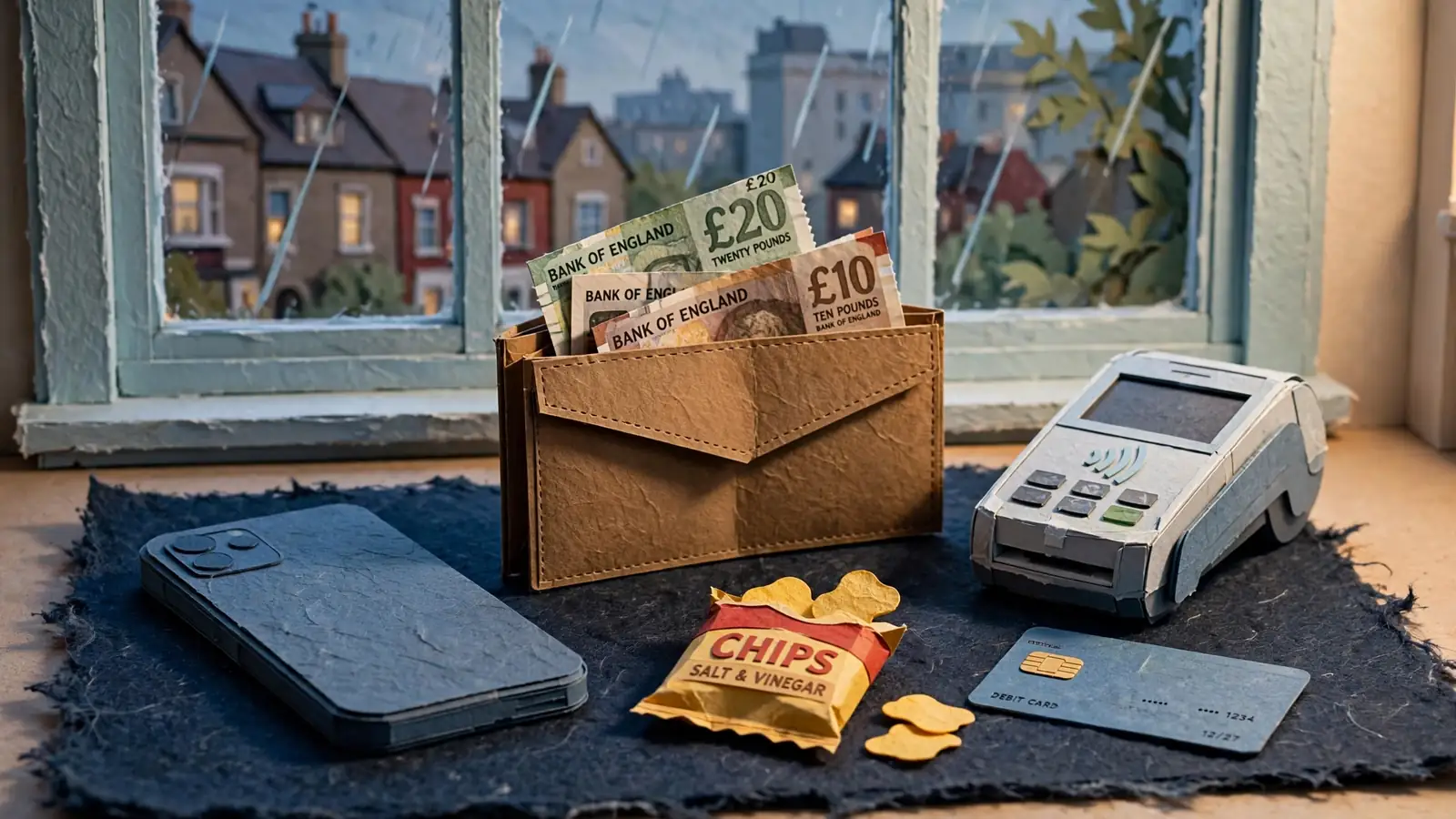
Click2Pay availability can vary by account, so the cashier—not an old review or homepage logo—is the evidence to check.
Click2Pay’s Place in the UK Casino Cashier
Click2Pay belongs to the payment question, not to a special class of casino. A site does not become a “Click2Pay casino” because its games run on Android, because it advertises a new-player promotion, or because its cashier lists several familiar brands. The relevant point is narrower: whether Click2Pay is displayed as an available payment route for a particular UK account at the moment a deposit is arranged.
That distinction matters in 2026 because cashiers are not permanent catalogues. Payment arrangements can change, products can be withdrawn, and an option shown in an old review may not appear after registration. A page carrying a broad list of casinos therefore cannot, by itself, establish that every named operator accepts Click2Pay now. The cashier is the living document. Everything else is commentary.
What the cashier actually proves
A payment logo on a homepage, a banner, or an editorial description is only an indication that the method has been associated with the site. It is not the same as seeing Click2Pay among the methods offered to the account. The decisive evidence appears after the casino account has been opened, age checks have been completed, and the deposit screen has been reached.
The cashier should be read as a set of separate permissions:
- whether Click2Pay is shown for deposits;
- whether it is enabled for the account’s country and currency;
- whether the route is available to the particular account after login;
- whether the same route is offered for withdrawals;
- whether any conditions appear before the transaction is confirmed.
The last two points are easily blurred. A cashier may display a brand under “deposit” while directing withdrawals elsewhere. In that case, Click2Pay is a deposit method, not a complete deposit-and-payout route. The distinction is not pedantry. Money has a habit of turning small labels into large delays.
A method listed on the withdrawal page gives a different assurance: the casino has made that route available for sending funds back, subject to its account checks and transaction rules. Even then, the presence of a button does not remove the need to read the instructions. A payment provider may require a matching account, additional information, or a different route for funds that cannot be returned through the original channel.
How to check current availability
The most reliable check is a short inspection of the logged-in cashier rather than a search through old promotional material.
First, the casino’s British registration and account area should be reached through the operator’s current website. The deposit page should then be opened and its payment icons or method list examined. If Click2Pay is absent, it should not be treated as available merely because an article, forum post, or cached page mentions it.
If Click2Pay appears, the next step is to open the method rather than stopping at the logo. The resulting panel may reveal the supported currency, the account details required, and whether the route is restricted to deposits. The withdrawal area should be checked separately. A method shown in one place does not automatically inherit the permissions of the other.
This is also where card information deserves care. A specialist review may list Visa and Mastercard as accepted methods, but current UK availability and eligibility for a particular card product still belong to the cashier. A brand name is not a guarantee that every card carrying that brand will work. Payment systems enjoy distinctions that marketing copy tends to flatten.
DO
- Inspect the logged-in cashier directly
- Check both deposit and withdrawal screens separately
- Ensure account details match the payment provider
DON’T
- Trust a payment logo on a homepage or banner
- Assume a method is available based on old reviews
- Assume deposit methods work for withdrawals
The same principle applies when a cashier is viewed on a phone or tablet. An Android casino is not a separate payment universe. The mobile site or application connects to the casino account, and the account’s cashier determines which methods are offered. A method missing from the mobile view should be checked against the full account area, but it should not be invented from the fact that the desktop version once displayed it.
Deposit availability is not withdrawal availability
The cleanest arrangement is often a single named payment account used consistently for both deposit and withdrawal. Matching the casino account information with the payment route belonging to the same customer can reduce avoidable friction over ownership. It also makes the transaction trail easier to understand when the casino reviews an account.
That does not mean every cashier will return funds through Click2Pay. Some methods are designed only to put money into a gambling account; others may accept deposits but not handle the return of winnings. The practical question is therefore not simply, “Can Click2Pay be used here?” It is two questions:
- Can it fund the account?
- Can it receive a payout from that account?
Only the cashier’s current deposit and withdrawal screens can answer both for a particular operator. If the first answer is yes and the second is no, the method remains usable, but its role is limited. The withdrawal route must then be assessed on its own terms, including any account-matching or verification requirements displayed by the casino.
The phrase “best Click2Pay casino” quietly assumes that availability, convenience, promotion and game choice all travel together. They do not. A payment method may be present without being withdrawal-capable; a bonus may have separate eligibility rules; and a casino’s game catalogue says nothing about its cashier. The sensible order is less glamorous: confirm the operator’s current status, open the cashier, check Click2Pay under deposits, check it again under withdrawals, and keep the account and payment identity aligned.
Recommended online casinos
- BeOnBetBonus: 100% up to €500 + 100 FS · Payout speed: 1-3 business days
- NightWinBonus: £900 + 400 free spins · Payout speed: 1-3 business days
- ZombillionBonus: Welcome Pack 250% up to £4000 + 200 FS · Payout speed: 1-3 business days
- BritsinoBonus: Welcome Package – Get your £2,200 + 2,000 FS · Payout speed: 1-3 business days
- DieselwinBonus: Welcome Pack 250% up to £4000 + 200 FS · Payout speed: 1-3 business days
- Revery PlayBonus: 100% up to€1,000+ 100 FS · Payout speed: 1-3 business days
- x3betBonus: Welcome Pack 100% Up to £1.000 + 200 Free Spins · Payout speed: 1-3 business days
When Click2Pay Is Not on the Payment Menu
A missing Click2Pay logo does not leave a British casino cashier empty. The practical question is not which payment brand sounds closest to it, but which route the particular cashier displays for the account, accepts for the intended transaction and handles under its current terms. Payment menus are commercial arrangements, not permanent monuments. A method may disappear, appear only after registration or be restricted to deposits.
The broad alternatives fall into four families: debit cards, electronic wallets, bank-based payments and prepaid vouchers. Each represents a different relationship with the casino. A card connects the cashier to a bank account; an e-wallet places another account between the player and the operator; open banking moves money through a bank-authentication flow; a voucher turns cash into a prepaid code. The names are familiar. The conditions are not interchangeable.
Casinos That Accept ClickandBuy in the UK
Debit cards: the ordinary route
UK casinos commonly show Visa and Mastercard debit cards among their payment choices. This is the most recognisable substitute for a specialised payment service, because the transaction is tied directly to the cardholder’s bank account rather than to a separate wallet.
That convenience has a boundary. A UK-licensed casino cannot accept credit-card payments for gambling, and the restriction also reaches credit-card funding routed through a money service business. A wallet cannot be used where its structure permits credit-card funds to finance gambling. The label on the cashier is therefore not enough: the underlying card and funding path matter.
A debit-card symbol is also not a permanent promise of availability. Current card-product eligibility belongs to the cashier and may depend on the account, the issuing bank or the operator’s payment arrangements. The sensible comparison is therefore between the methods actually presented after account access, not between an old list copied onto a review page.
E-wallets and the second account
Skrill and Neteller are available at some UK casino sites. Skrill is still described as one of the most common deposit methods at UK-friendly casino sites in 2026, although that observation comes from a specialist review rather than a rule that binds every operator. The distinction matters: popularity in market commentary cannot turn a brand into a guaranteed option at a particular cashier.
An e-wallet can be useful where the casino supports it and the wallet account belongs to the same customer. It adds a separate balance, login and set of conditions, which can make the payment experience feel tidier while also creating another place where identity and funding details must align. The casino may ask for information about the wallet, especially when a transaction does not fit its ordinary pattern.
Debit Cards
Commonly Visa and Mastercard; tied directly to a bank account.
E-wallets
Services like Skrill and Neteller; adds a separate balance and login.
Open Banking
Uses banking relationships for instant deposits and fast withdrawals.
Vouchers
Prepaid options like Paysafecard; typically for deposits only.
Promotion rules are another dividing line. A specialist review reports that Skrill and Neteller are often excluded from promotions. That is not a universal condition, and it is not a reason to treat a payment method as a bonus feature. The cashier and the promotion’s own terms decide whether a route qualifies.
Open banking and bank-based payments
Open banking and bank transfers offer a different alternative to Click2Pay because they use the banking relationship itself rather than a card network or a stored-value wallet. A specialist review describes these routes as capable of producing instant deposits and fast withdrawals at many sites. The wording belongs to that type of source, not to every casino in Britain: the actual cashier remains decisive.
Open banking may send the account holder through a bank-authentication page, while a conventional transfer may require the casino’s banking details and a reference. Both approaches make ownership particularly important. A payment account and casino account held by the same person reduce the chance that basic ownership checks become an unnecessary obstacle.
Bank-based methods also bring their own practical variables. Cut-off times, weekends and currency conversion can affect when a transfer reaches its destination. That is why “bank transfer” is not a single experience, even when two cashiers use the same words. The route, the bank and the operator’s process all form part of the transaction.
Casinos That Accept Giropay in the UK: Payment Facts
Vouchers: simple funding, narrow function
Paysafecard belongs to a more limited category. It is a prepaid voucher for deposits only, not a general-purpose route for receiving casino funds. That makes it distinct from a bank method or an e-wallet: money can enter the gambling account through the voucher, but the voucher is not a route back for a payout.
This arrangement may appeal to people who prefer a prepaid instrument and do not want to enter card details into a cashier. It also removes any temptation to treat every displayed logo as a complete deposit-and-withdrawal solution. A deposit-only method has a clear boundary from the beginning.
Reading the cashier without guessing
A careful comparison of alternatives asks several plain questions:
- Is the method visible in the live deposit menu?
- Does the cashier support it for the required type of transaction?
- Is it deposit-only, or does the operator describe a payout route as well?
- Does the account holder’s name match the payment account?
- Are the method’s terms separate from the casino’s general cashier terms?
- Does a promotion attach conditions to that payment route?
This approach is less glamorous than a ranking of “best” Click2Pay casinos, but it is more accurate. A named payment method cannot prove that a particular casino accepts it, and a casino’s general list cannot prove that every customer will see the same options. Even the most established alternative remains a live cashier question.
The British payment landscape is therefore a patchwork rather than a podium. Cards may be familiar, wallets may be available only at some sites, bank-based routes may depend on the banking flow, and Paysafecard is expressly deposit-only. The missing logo is not a mystery to solve with a louder list. It is a prompt to inspect the cashier carefully.
Deposits, Withdrawals and the Route Back
A payment method has two possible roles in a casino cashier, and they are not automatically joined. One route may be available when money enters the account but absent when winnings leave it. That distinction matters when assessing whether Click2Pay is still accepted by a UK casino, including searches for Click2Pay debit-card deposits.
Attention A payment method available for deposits is not automatically available for withdrawals.
The first stage is therefore the deposit screen. A listed method indicates that the cashier can request funds through it under the conditions shown there. It does not, by itself, establish that the same account can receive a withdrawal. The withdrawal screen, payment terms or customer-support response must confirm the second part of the journey.
This is where the neat little picture of a card being used in both directions begins to fray.
Why deposit access is not withdrawal access
Casinos handle incoming and outgoing payments under different controls. A deposit can be authorised as a purchase or account funding transaction, while a payout may need to follow closed-loop rules and anti-fraud checks. The provider may support deposits only, the casino may route withdrawals through another channel, or the payment instrument may not be configured to receive funds.
Paysafecard illustrates the clearest version of that separation: it is deposit-only. A casino can accept the voucher for funding without treating it as a destination for winnings. Other payment services may appear in both parts of a cashier, but that still requires confirmation at the particular casino and for the particular account.
For Click2Pay, the practical question is not simply whether its name appears beside the deposit button. The relevant sequence is:
- Check whether the cashier displays Click2Pay as a deposit method.
- Review the withdrawal methods separately.
- Confirm whether a Click2Pay-funded account can receive a payout through that service.
- Check whether another route would require extra ownership or identity evidence.
- Keep the account details and payment account aligned.
Using payment information belonging to the same customer as the casino account reduces avoidable friction over basic ownership. It does not remove KYC or guarantee that the payment provider will be accepted for withdrawals.
Why the money often travels back
UK anti-money-laundering controls commonly point winnings back towards the payment source used for the deposit. Returning funds to that source is also an anti-fraud measure: it makes the movement of money easier to connect with the account holder and harder to use as an anonymous transfer.
That does not mean every withdrawal will be completed through the same technical channel. Where the original method cannot receive funds, the casino may propose an alternative. Such a change can bring additional verification, because the operator must establish that the replacement destination also belongs to the customer and is suitable for the payment.
The cleanest route is often one named account used consistently for depositing and withdrawing, subject to the cashier’s rules. A mixed trail of cards, wallets and other services can make the route less obvious, particularly when the first payout triggers checks that were not needed for the initial deposit.
What happens after a withdrawal request
A withdrawal is not necessarily a direct transfer from the casino balance to a bank or payment account. It passes through the casino’s internal approval process, and the account may need to be fully verified before that approval is granted. First withdrawals can take longer when identity or ownership checks are still being completed; a specialist review describes this as part of the processing path rather than a property of one particular payment brand.
Casinos That Accept E-Checks in the UK: Payment Guide
The eventual delivery time therefore depends on more than the label attached to the cashier button. The casino’s approval procedure and the state of the player’s verification both affect withdrawal speed, according to that type of specialist review. A payment service may be capable of receiving funds quickly, yet the transfer will not begin until the operator releases it.
This explains why a deposit can look straightforward while the return journey feels more deliberate. Entry is an authorisation; exit is a controlled payout. For anyone investigating casinos that accept Click2Pay in the UK, both ends of the route deserve equal attention.
Mobile Slots and the Payment Question
A phone screen does not create a separate class of Click2Pay games. The payment route belongs to the casino’s cashier, while the slot itself belongs to the casino’s gaming catalogue and software supplier. Those are neighbouring systems, not one product. A casino may offer mobile access to its slots while showing a particular payment method only on its deposit page—or not showing it at all.
That distinction matters because phrases such as “Click2Pay mobile slots” and “online slots paid by Click2Pay” can suggest that the payment service is built into the game. It is not. If Click2Pay appears in a casino cashier, the transaction takes place through that cashier. The slot session begins only after funds have been credited to the casino account, subject to the operator’s checks and conditions.
The same applies across phones, tablets and desktop computers. A mobile site or casino app does not automatically inherit every payment option associated with the wider account. The relevant evidence is the payment panel displayed for the account and jurisdiction at the time of the transaction. A general payment badge, an old review or a logo on a promotional page cannot establish that a particular cashier currently supports the method.
Casinos That Accept POLi in the UK: What to Check
This is also why the wording “Click2Pay slots” can be misleading. There is no need for a separate catalogue of games using that payment service. The meaningful questions concern the casino account: whether the cashier lists Click2Pay, whether the account can be funded through it, and what conditions apply to any later transaction. The game remains a casino game, not a Click2Pay product.
Mobile play in Britain also sits within rules that have nothing to do with the payment brand. Online slot autoplay is prohibited, so a player must initiate each spin rather than leave the software running by itself. Each online slot spin must last at least 2.5 seconds. The rule is attached to the remote gambling service and the game experience, not to the device used to access it.
Stake limits apply as well. For customers aged 25 and over, the maximum stake per online slot game cycle is £5. For customers aged 18 to 24, it is £2. The £5 limit for all adults began on 9 April 2025. A payment method cannot increase those limits, nor can a mobile interface turn a restricted stake into a permitted one.
Age and account controls remain part of the setting too. Remote gambling operators must verify a customer’s age before allowing a deposit, and new customers must be prompted to set a financial limit before making the first deposit. Account-level limit controls must remain accessible. The cashier is therefore more than a doorway for money: it is one part of the operator’s compliance structure.
In the UK, online slot autoplay is prohibited, and each spin must last at least 2.5 seconds.
A phone makes the screen smaller. It does not make the rules smaller.
Real-Money Play Without Imaginary Click2Pay Apps
A request for real-money slots paid for with Click2Pay contains two separate ideas. One concerns the casino account: how money reaches the cashier and, where permitted, how it leaves again. The other concerns the slot software: the games made available after the account has been funded. These are not the same product, and payment branding does not turn a collection of games into a special Click2Pay edition.
That distinction matters because phrases such as “Click2Pay slots app” or “slots using Click2Pay” can suggest that a dedicated application exists. The sensible interpretation is narrower: a person is looking for a casino whose cashier might support that payment route, then wants to play the casino’s real-money slots there. The software remains the casino’s offering; the payment method remains a cashier function.
What “real money” changes
Free-play mode and real-money play may appear beside each other, but they serve different purposes. A demonstration mode does not establish that a casino accepts a particular payment method, nor does it confirm that winnings can be withdrawn. Real-money play begins only after a gambling account has passed the operator’s required checks and the cashier has accepted a deposit.
Casinos That Accept Google Pay in the UK
Remote gambling operators must verify age before allowing funds to be deposited. In Britain, the account also sits within a framework of financial controls: new customers must be prompted to set a financial limit before the first deposit, and account-level limit tools must remain accessible. The limit belongs to the gambling account, not to an individual slot and not to a payment application.
The same separation applies to a “no deposit” search. A no-deposit arrangement, where offered, would be a promotional condition attached to an operator’s terms. It would not prove that Click2Pay is supported, and it would not create a Click2Pay version of any slot. Payment acceptance and promotional eligibility are different questions.
The casino account is the point of entry
A real-money slot session normally follows this order:
- An eligible customer opens a gambling account.
- The casino displays its current cashier options.
- A permitted payment route is selected, if available.
- Funds are credited to the casino balance.
- The slots are accessed through the casino’s website or software environment.
Nothing in that sequence requires a separate Click2Pay slots app. Nor does the name of a payment service identify which games a casino supplies. Two casinos could offer different slot libraries while displaying the same cashier method; another could offer similar software with a different payment menu.
That is why a review of a supposed Click2Pay slots site should be read as an assessment of the casino account and its cashier, not as evidence of a separate game platform. The useful details are whether the payment option is actually shown after account access, whether the account is eligible for real-money play, and what controls govern deposits and play. A logo on a page is not a transaction.
The search for “slots that accept Click2Pay” therefore ends at the cashier, not inside the slot itself. The game has no opinion on the route by which the balance arrived. A rather bureaucratic arrangement, but an honest one.
UK Stake Limits
For customers aged 25 and over, the maximum stake per online slot game cycle is £5. For customers aged 18 to 24, it is £2.
Cards, Fast Payouts and the Credit-Card Line
A card-related payment label can conceal an important distinction. At a UK-licensed casino, a debit card may be available for funding an account, while a credit card cannot be used for gambling deposits. Visa and Mastercard debit cards are commonly found in British casino cashiers, but the current cashier remains the place where acceptance is confirmed. A logo on an old comparison page proves very little.
The credit-card boundary is not a matter of a particular casino’s preference. The regulator prohibited credit-card gambling on 14 April 2020, and that prohibition has not been relaxed. It also covers credit-card funding routed through a money service business. A wallet cannot be treated as a workaround where it permits credit-card funds to be used for gambling. The route may change; the nature of the money does not.
That distinction matters when Click2Pay appears in a payment search. A service described in connection with cards or electronic payments is not automatically a credit card, a debit card, or an approved casino method. The cashier must show the method, and its terms must clarify whether it is accepted for the intended transaction. A deposit option is not thereby a promise of direct withdrawal.
Speed creates another small trap. A debit-card deposit can receive rapid authorisation: the casino may register the funds almost immediately after the payment is approved. The reverse journey is different. A withdrawal must pass through the casino’s processing procedure, and the payment route may not deliver it with the same immediacy as a deposit. A specialist review source describes card deposits as instant in some cases while payouts can take several business days; that is a reported comparison, not a timetable for every cashier.
The phrase “fast withdrawal” therefore needs careful reading. It can refer to the operator’s approval queue, the payment provider’s delivery stage, or both. Neither a card icon nor a Click2Pay reference turns a card into a guaranteed instant payout channel. The cashier’s withdrawal instructions, account verification requirements and available destination determine what happens after a withdrawal request is submitted.
Casinos That Accept Apple Pay in the UK: What to Know
“Instant” belongs to the first step, not necessarily the last.
Bonuses Are Not a Payment Feature
A welcome bonus belongs to the casino’s promotional terms, while Click2Pay—if it appears in a cashier at all—belongs to the payment layer. The two questions may sit beside one another on a registration page, but they are not the same question. A cashier can display a payment route without making that route eligible for a promotion; equally, promotional terms can describe a bonus without confirming that Click2Pay is accepted for deposits.
This distinction matters when a casino is being considered for real-money slot play. The software, the account, the cashier and the promotion are separate parts of the arrangement. A “Click2Pay casino welcome bonus” is therefore not a single product waiting to be found. It would mean a casino that accepts a particular payment method and separately offers a welcome promotion whose terms do not exclude that method. Both conditions need checking.
Casinos That Accept AstroPay in the UK: What to Check
The same applies to no-deposit promotions. “No deposit” describes how a promotional balance is issued, not how a Click2Pay account works. It does not establish that Click2Pay can fund the account, withdraw winnings, or qualify for any later offer. Nor does the presence of a bonus code prove that the cashier supports the payment method. Codes activate terms; they do not add buttons to a cashier.
Payment exclusions are not unusual in promotional wording. A specialist review has reported that PayPal can be left outside bonus eligibility, while another specialist review has described Skrill and Neteller as available at some sites but often excluded from promotions. These observations are not permanent rules for every remote gambling licensee. The deciding language is the operator’s current bonus page, the terms attached to the specific offer, and any payment-method clause shown at activation.
A sensible check separates three points:
- whether Click2Pay is displayed among the available deposit methods;
- whether the chosen welcome or no-deposit promotion permits that method;
- whether the promotion imposes separate conditions on withdrawals or eligibility.
The wording may be less exciting than a bright bonus banner. It is also more useful. A payment icon is not a promotional promise, and a promotional promise is not evidence of payment acceptance. The cashier and the bonus terms must each earn their place.
Minimum Deposits, Limits and the Small-Print Arithmetic
A £5 deposit sounds like a simple test of whether a casino accepts a particular payment route. In practice, the cashier treats the amount as one part of a larger arrangement. The minimum can change with the selected method, the account’s status and the operator’s current settings. A low figure in a search result therefore cannot establish that the same figure will appear in a Click2Pay cashier.
A specialist review source places the starting range for minimum deposits at £10–£20, while also noting that the selected payment method affects the threshold. That makes a £5 deposit possible only where the cashier explicitly permits it; it is not a safe assumption attached to Click2Pay, mobile payments or any other brand. The relevant figure is the one displayed after the account has been opened and the method chosen, not an old comparison-table entry.
Is Click2Pay a type of casino?
No, Click2Pay is a payment method, not a class of casino.
Can I use credit cards for gambling in the UK?
No, UK-licensed casinos cannot accept credit-card payments for gambling.
Does a payment logo guarantee availability?
No, a logo is only an indication; actual availability must be confirmed in the live cashier.
The distinction between a minimum and a limit matters. The minimum is the smallest permitted deposit for a transaction. A maximum deposit limit restricts how much can be paid in one transaction, within a day or within a month. Those ceilings may vary according to the payment method and the player’s account status. A cashier can therefore accept a method while applying a different boundary to a newly created or partly verified account.
Account-level controls sit beside payment-provider limits. UKGC rules require remote gambling licensees to ask new customers to set a financial limit before the first deposit. They must also make account-level limit controls accessible afterwards. This is not a promotional setting and not a technical trick for making a small deposit: it is part of the financial-control structure surrounding the account.
The arithmetic becomes less mysterious when the labels are kept separate:
- Minimum deposit: the lowest amount the cashier will accept for the chosen method.
- Transaction limit: the permitted ceiling for one payment.
- Period limit: a ceiling applied across a day or month.
- Account limit: a control set within the gambling account, which may restrict deposits below the provider’s own allowance.
The figures can change without the payment brand changing. A method may remain visible while its threshold, account conditions or permitted limits are revised. Small print, rather than the name printed on the button, decides whether a £5 deposit is actually available.
Comparing Alternatives by Speed, Cost and Currency
A sensible alternative to Click2Pay is not automatically the one with the most familiar name. The useful comparison is between the entire payment route and the casino cashier’s handling of it. Deposit authorisation, withdrawal approval and the eventual arrival of funds are separate stages, and a method that looks quick at the first stage may be less suitable when money is returned.
A specialist review identifies PayPal, open banking services and debit cards connected to fast payout systems among the quicker withdrawal routes. That is a current observation, not a permanent ranking: casino approval and account verification remain part of the timetable. Bank transfer has its own moving parts. Cut-off times, weekends and currency conversion can all affect when the money arrives. Banking is orderly; it is not always punctual.
Speed should therefore be compared in two columns:
- how quickly a deposit is authorised;
- how the casino processes and sends a withdrawal.
The second column matters more when the purpose of the account is to withdraw winnings rather than merely fund play.
Cost needs the same wider view. A payment route can involve a casino charge, a fee from the payment provider, an issuer or bank fee, an exchange-rate spread, and a network charge. A visible flat fee is easy to notice; the exchange-rate spread can be less obvious and may cost more. The cheapest-looking alternative is not necessarily the least expensive for the transaction being made.
For a fair comparison, the calculation should include:
- any fee shown by the casino;
- the payment provider’s charge;
- bank or card-issuer costs;
- the exchange rate applied to the transfer;
- any network cost attached to the route.
The account currency belongs in the same check. GBP is supported on the relevant casino pages, but the account’s selected currency should be confirmed before the first payment. If the account and payment route use different currencies, conversion can enter the transaction before any withdrawal is requested. The arithmetic is small only until it is not.
This framework also clarifies searches for the best Click2Pay alternative for UK slots. The payment method does not make a slot site better, and no payment brand is universally cheapest or fastest. The meaningful choice is the route whose withdrawal handling, total cost and currency match the account. Availability is only the beginning.
Payment Choice Does Not Change GamStop Status
A payment method and a self-exclusion system answer different questions. Click2Pay, if displayed in a cashier, describes how funds may be handled. It does not establish whether an operator is connected to GamStop, whether a customer’s self-exclusion remains active, or whether the casino follows the responsible-gambling framework expected of a British remote gambling operator.
That distinction matters when searches combine Click2Pay with casinos described as “not on GamStop”. Payment acceptance is not evidence of a site’s regulatory position. Nor does a cashier provide a legitimate route around a self-exclusion decision. A brand may advertise a particular deposit method while operating outside the UKGC system; that fact alone says nothing about protection, account controls or suitability for someone who has chosen to stop gambling.
Ukash Casinos in the UK: Payment Status and Alternatives
For Great Britain, remote gambling operators serving consumers must hold the relevant Gambling Commission licence. Offshore casinos sit outside that UKGC system. The player is not criminally liable merely for using an offshore site, but the absence of local regulation removes the framework attached to a UKGC licence. Payment convenience cannot replace it. A wallet is still only a wallet.
A responsible operator’s duties extend beyond the payment screen. UKGC rules require a new customer to be prompted to set a financial limit before making a first deposit. The account must also offer accessible controls for adjusting financial limits. Those controls belong to the gambling account and its operator, not to Click2Pay or any other payment route.
Self-exclusion is similarly an operator-level matter. A deposit button, a casino logo or a named cashier method does not show how an account will respond to GamStop, what checks will be made, or which safeguards apply. Treating a payment logo as a certificate of responsible gambling confuses the envelope with the institution.
The sensible separation is therefore simple: verify the operator’s status independently, then assess its account controls and self-exclusion arrangements. Click2Pay can be considered only as a payment question. It cannot turn a non-GamStop site into a UKGC-regulated one, and it cannot make gambling appropriate during an active self-exclusion period.
Why can a fast payout casino still delay my withdrawal?
A casino’s internal approval and account checks can delay a payout, particularly on a first withdrawal while verification is completed. The payment provider, cut-off times, weekends and currency conversion can also affect delivery.
Are fast casino withdrawals guaranteed?
No. Even with a fast payment method, the casino must approve the withdrawal, and verification or payment processing can take longer.
Which payment methods are accepted in Great Britain?
UK casinos commonly accept Visa and Mastercard debit cards, and many offer PayPal, bank transfers or open banking. Skrill, Neteller, Paysafecard and other methods are available at some sites; check the cashier for current account-specific options.
Which method has the lowest fees?
There is no universally cheapest method. Compare any casino and provider charges, bank or issuer fees, currency-conversion spread and network costs for the payment amount.
Is Skrill available?
Yes, Skrill is offered at some UK-friendly casino sites, though availability and bonus eligibility can vary.
What is the fastest withdrawal method for UK casinos?
PayPal, open banking and debit cards connected to fast-payout systems are generally among the quickest options. The casino’s approval process and your verification status still affect how soon funds arrive.