
Mines Casino Game UK: How the Grid and Randomness Work
 Available in GB
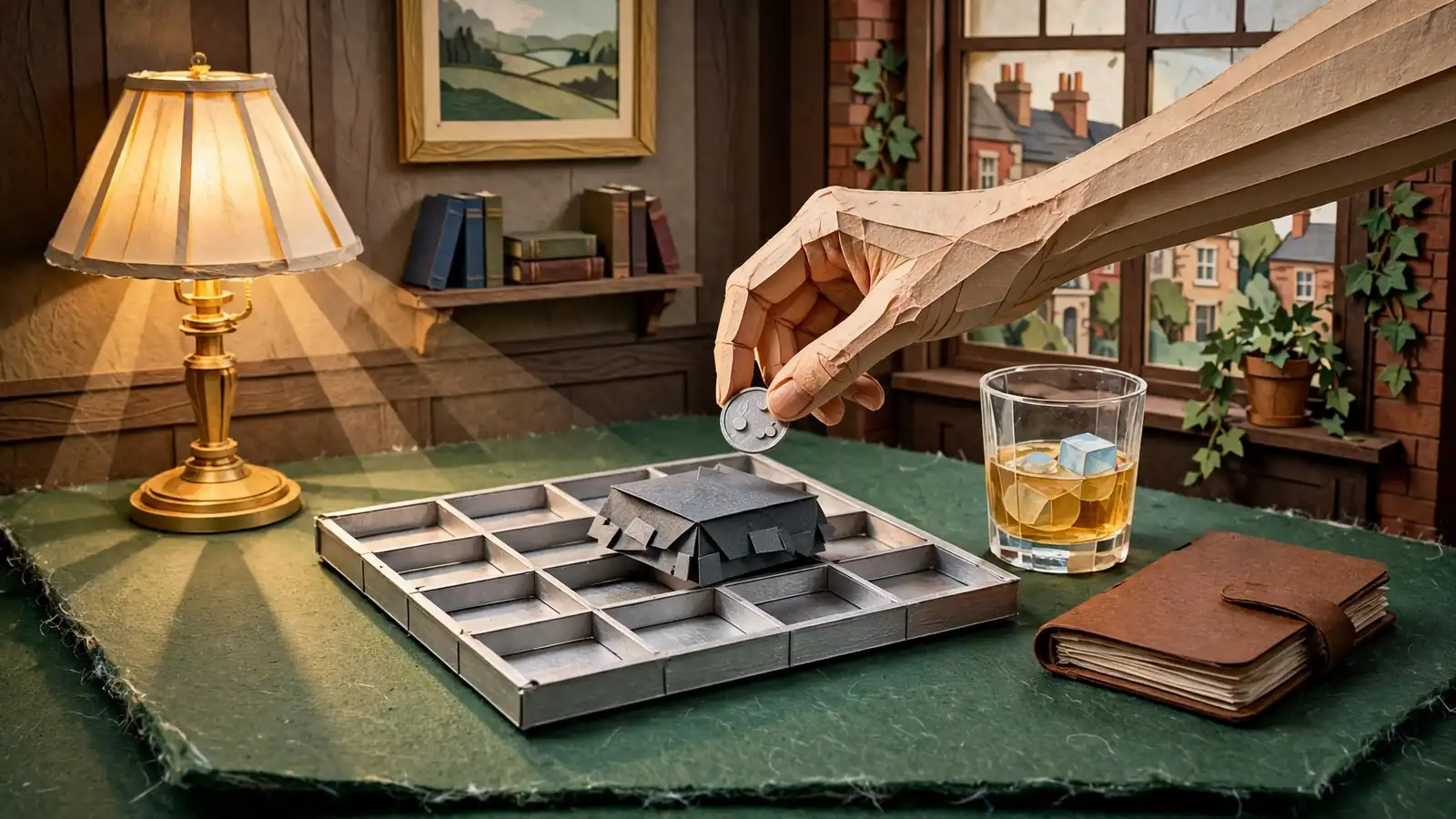
Mines presents random outcomes through a grid, where each selection creates a choice to continue or stop without revealing what comes next.
How Mines Turns a Casino Game into a Sequence of Choices
Mines belongs to the casino-game family, but it borrows the visual language of a puzzle. A grid appears on screen, and covered spaces wait to be selected. Some conceal mines; others do not. The player chooses a space, observes the result, and decides whether to continue or stop. The attraction lies in that small interval between one decision and the next, where caution and curiosity occupy the same square.
The underlying arrangement is less mysterious than the presentation suggests. Casino games ask players to stake cash or chips on possible random outcomes, or on combinations of outcomes. Mines does precisely this through a sequence of selections. The grid gives the game a sense of movement, yet the relevant event is still a random result produced by the game’s equipment.
That distinction matters. A safe-looking run does not become evidence that the next space is safe, and a mine found earlier does not make another square more or less obliged to contain one. The board is not a landscape with clues hidden in its design. It is an interface for presenting selected random numbers generated by a computer or other gaming equipment.
A game of individual decisions
The format is notably solitary. There is no dealer turning cards across a felt table, no croupier announcing a result, and no opposing player whose decision changes the immediate shape of the round. Mines is generally played by one person at a time, with the software handling the result and displaying it on the screen.
That makes the game feel more private than many traditional casino forms. The player controls the timing of selections and the moment at which the sequence ends, while the system controls which spaces produce the relevant outcomes. The visible choice is human; the uncertainty behind it is automated.
This is the same broad separation found in other gambling machines. They do not normally require casino-employee involvement, because the machine supplies the event, records the result and settles the round. Mines adds a layer of apparent deliberation, but the presence of a decision does not turn it into a contest of skill against a dealer. It remains a casino game built around random outcomes.
Monopoly Live Casino UK: How the Game Works
Table games belong to a different social arrangement. Players compete against the casino rather than against one another, and the action is usually conducted by croupiers or dealers. Their physical presence gives the game a ceremonial rhythm: cards are dealt, wheels are spun, and decisions happen in public view. Mines strips away that theatre. Its stage is a screen, its attendant is software, and its drama is compressed into a series of clicks.
Neither format is inherently more honest because one has a dealer and the other has an algorithm. The difference is organisational rather than moral. A dealer makes a procedure visible; a random-number game makes it computational. In both cases, the casino format rests on rules that define possible outcomes and on an arrangement designed to favour the operator over the long term.
Why the sequence feels different
Mines turns one wager into several moments of apparent agency. A single opening selection can become a chain of further choices, each one carrying the possibility of ending the round or extending it. That structure gives the game its particular tempo. It is not the stillness of a slot result, nor the conversation of a table. It is a private negotiation with uncertainty.
The player may experience a short-term gain, because casino games allow that possibility. Yet the broader economics remain unchanged: casino games typically give the casino a predictable long-term advantage. The sequence can feel personal without becoming predictable.
That is the small trick of the format. Choice supplies the suspense; randomness supplies the result.
Recommended online casinos
- BeOnBetBonus: 100% up to €500 + 100 FS · Payout speed: 1-3 business days
- NightWinBonus: £900 + 400 free spins · Payout speed: 1-3 business days
- ZombillionBonus: Welcome Pack 250% up to £4000 + 200 FS · Payout speed: 1-3 business days
- BritsinoBonus: Welcome Package – Get your £2,200 + 2,000 FS · Payout speed: 1-3 business days
- DieselwinBonus: Welcome Pack 250% up to £4000 + 200 FS · Payout speed: 1-3 business days
- Revery PlayBonus: 100% up to€1,000+ 100 FS · Payout speed: 1-3 business days
- x3betBonus: Welcome Pack 100% Up to £1.000 + 200 Free Spins · Payout speed: 1-3 business days
Trying Mines in Demo Mode: Play Without a Cash Stake
A demo version of Mines is the game presented without a cash stake. The board, the concealed squares and the act of revealing them can be encountered in a setting where no money is placed on the outcome. That distinction is the entire point. The appearance may resemble a casino game, but the financial event that normally gives casino play its consequence is absent.
Demo play allows you to experience the rhythm of risk and the game’s interface without any financial consequence or cash stake.
Casino games are built around possible random outcomes, with players ordinarily gambling cash or chips on what may happen. Demo play removes that wager while retaining enough of the visible structure to show how the format feels. A grid appears. Squares are selected. Some selections may allow the sequence to continue; another may end it. The screen can therefore demonstrate the rhythm of risk without turning each click into a debit or a credit.
That makes a Mines casino demo different from a free-money promotion. In a demo, the balance is not a bonus balance waiting to be withdrawn. It is part of the practice environment. No deposit is being converted into bonus funds, and no promotional condition is being attached to the activity merely because the game is open. The word “free” does a great deal of work in casino advertising, sometimes more than it deserves. Here it should mean free of a cash stake, not automatically a source of withdrawable winnings.
What the demo actually shows
The clearest use of a demo is familiarity with the game’s presentation. A person can see how the Mines casino game grid is arranged, how selected squares are marked and how the result of a reveal is displayed. The experience is immediate rather than theoretical: the rules become a sequence of visible events instead of a paragraph of casino vocabulary.
It can also show how the game handles a completed or unsuccessful round. That matters because the interface is part of the experience. Controls, symbols, balance displays and confirmation buttons may look simple, yet a short practice session makes their order apparent. The demo separates uncertainty about the screen from uncertainty about the outcome. Only the latter belongs to the game itself.
Casino Dice Games in the UK: Formats and Risks
A free Mines casino game may also make the pace more noticeable. Some people find the appeal in the quiet concentration of choosing one square at a time; others find the repetition thin once the novelty has gone. Demo mode allows that judgement to form without a financial stake pressing it forward. A casino format does not become more interesting merely because money has been added. Sometimes money only makes the boredom expensive.
The mode can be useful for understanding the difference between an individual game and a social table. Mines is encountered through a personal interface rather than through a dealer or a group gathered around a physical table. The demo preserves that solitary character while removing the cash element. It is a small rehearsal of the setting, not a miniature gambling account.
What “free” does not establish
A free casino Mines version does not, by itself, establish that the same interface, rules or availability will apply in every setting. Casino games are available online where permitted by law, but a demonstration page is not proof that a particular real-money service is authorised, available in a given jurisdiction or suitable for cash gambling. Those are separate questions, and combining them is how a harmless practice label acquires an unjustified air of approval.
Nor does demo play turn random outcomes into an educational sequence with a predictable lesson. A run of favourable or unfavourable results in practice remains a run of results in practice. The display may reveal how the game is organised, but it does not make the next concealed square legible. A demonstration board has no obligation to teach a pattern, and a player’s memory is very good at inventing one afterwards.
Notional Balances
A figure shown on a demo screen is a display convention and cannot be treated as cash or a promise of future winnings.
The same caution applies to any apparent balance. A notional figure on a demo screen is a display convention, not money held for the player. It cannot be treated as a cash result, a promise of future winnings or evidence that a later deposit would reproduce the same path. The demo’s value lies in observation: seeing the sequence, recognising the controls and deciding whether the format is worth further attention.
A quiet boundary
The boundary between demo and cash play is therefore practical as well as financial. Demo mode permits contact with the game without staking cash. Real-money mode introduces a separate decision, with legal and account conditions attached to it. Those matters belong to the act of gambling, not to the existence of a free demonstration.
For a person curious about the casino Mines grid, that boundary is useful. The game can be viewed at its plainest: a set of concealed outcomes arranged behind a clean interface. No dealer performs ceremony, no table supplies conversation, and no payment turns a click into a financial claim. What remains is the format itself—and sometimes that is enough to explain the attraction.
Mines Online: The Game in the Casino’s Wider Landscape
An online casino is less a single room than a catalogue of different arrangements for gambling. The screen replaces the physical floor, but the distinctions between games remain visible. Some formats are built around cards, some around reels, some around a sequence of selections, and some around a live dealer whose presence imitates the atmosphere of a traditional casino. Mines belongs to the digital end of that spectrum: a compact casino game presented through software rather than through a table, croupier or machine in a physical venue.
JetX Casino Game in the UK: How It Works
That setting matters because the phrase “Mines online casino” can describe two things at once. It may mean a Mines-style game encountered within an online casino, or it may refer more broadly to the search for a casino website where such a game forms part of the available catalogue. The first meaning concerns the game’s format. The second concerns the architecture of online gambling, where many unrelated games sit beside one another under the same account and payment system.
A casino catalogue, not a single genre
Online casinos bring together several established families of games. Slots use reels and symbols. Table games reproduce formats associated with cards, wheels or dice. Live casino titles place a streamed dealer at the centre of the action. Other games use simple interfaces in which the player makes selections and receives a result from the software.
Mines sits comfortably in this last group. Its visual language may borrow from a grid, but its social character is unlike a table game. There is no croupier explaining the rules, dealing cards or announcing the next round. Nor is there an opponent across the table. The relationship is between one player, the interface and the outcome produced by the game’s underlying system.
That solitary quality is one reason the game fits naturally into the online casino landscape. A physical casino has to allocate space, equipment and staff. An online casino can place a small, self-contained title alongside many others in a menu. The digital catalogue is indifferent to whether a game looks elaborate or almost bare. A polished live table and a modest grid can occupy neighbouring tiles, although they belong to very different traditions.
Slots
Use reels and symbols to determine outcomes.
Table Games
Reproduce formats associated with cards, wheels, or dice.
Live Casino
Feature a streamed dealer at the centre of the action.
Where Mines sits beside table games
Table games are usually organised around a dealer or croupier. Players compete against the casino rather than against one another, while the dealer conducts the visible procedure: cards are dealt, bets are settled and the pace of the round is controlled. In a live online version, the same idea is carried through video and streaming technology.
Mines has no such performance. Its procedure is compressed into buttons, cells and result indicators. The game does not need an employee to narrate each stage, and its rhythm is determined by the interface. This makes it closer to the automated style of gambling machines than to the theatre of a gaming table, even when the screen gives it a more interactive appearance.
The distinction is not merely cosmetic. A dealer creates a public ritual, with pauses and gestures that make chance feel social. An automated game turns chance into a private sequence of clicks. The online casino contains both experiences, but they ask for different kinds of attention. One is watched as an event; the other is operated as a mechanism.
Mines among card and number games
The wider online market also includes games whose rules are expressed through prediction. In hi-lo, the central choice is whether the next card will be high, low or the same. The format is simple, but the simplicity does not make it identical to Mines. Hi-lo is organised around a card comparison, whereas Mines uses a concealed grid and the decision to continue or stop belongs to a different visual and procedural language.
Crash Casino Games in the UK: Rules and Risks
Such comparisons help explain why “Mines casino game online” is not a description of one universal product. The name points to a family resemblance rather than a single standard interface. Different online casinos may arrange their catalogues differently, use different software, or present similar ideas under different labels. The surrounding categories therefore matter: a player browsing an online casino is moving through a collection of formats, not entering one fixed game hall.
The British online context
Casino games are available through online casinos where the law permits them. In Britain, that context is shaped by a licensing system, so the phrase “Mines casinos UK” refers to a market with a particular legal framework rather than to an unregulated digital frontier. The game’s presence on a website is therefore only one part of the question. The nature of the operator and the status of the service belong to the wider setting in which online gambling takes place.
This is why an online casino with Mines should not be understood in isolation from the rest of its catalogue. A site may also contain automated games, table formats, card-based titles and live-dealer rooms, each with its own presentation and rules. Mines is one piece in that arrangement, notable for its directness and lack of ceremony.
The online casino’s great promise was variety, and its small irony is that variety can make every game look interchangeable. Mines resists that fate slightly. Its grid announces a different kind of encounter: no dealer, no opponent, no elaborate stage, just a digital field in which the game’s next event is hidden until a choice reveals it. That is not a new form of chance. It is an old habit, given a cleaner interface.
Digital Landscape
Mines is a compact, automated game that fits into the digital end of the online casino spectrum.
Casinos Offering Mines and the UK’s Two Gambling Worlds
For anyone looking for online casinos with Mines, the important distinction is not merely whether a colourful grid appears on the screen. It is the legal world behind the account. In 2026, the British online casino market is described in a specialist review as divided between the UKGC sector, with its close domestic supervision, and offshore platforms operating beyond that regulator’s system. The split is practical rather than decorative: it affects which operator may lawfully target British customers and what regulatory framework stands behind real-money play.
A casino licensed by the UK Gambling Commission sits inside the British system. The Gambling Act 2005 governs gambling in England, Wales and Scotland, while Northern Ireland has a separate legal position. For operators taking bets from British residents, the Gambling (Licensing and Advertising) Act 2014 established a clear requirement: a licence is needed to do so. In England, Scotland and Wales, an operator offering real-money gambling must therefore hold a UKGC licence.
That requirement matters when a casino presents itself as a place to play Mines online for cash. A search result, a polished interface and a payment button do not establish that the operator belongs to the UKGC world. The licence is the dividing line. The legal British market is not defined by the game’s title, its visual design or the location of the company’s office, but by permission to serve customers in the relevant jurisdiction.
Aviator Casino Game in the UK: How It Works
What offshore means in this context
Offshore casinos accepting UK players form the other side of the divide. They operate outside the UKGC regulatory system and do not possess a UKGC licence. Their websites may still be accessible from Britain, and their menus may contain the same broad language used by domestic casinos: Mines, instant games, live tables and casino bonuses. Accessibility, however, is not the same thing as UK authorisation. A door can open without belonging to the building whose sign hangs above it.
This is why phrases such as “best Mines casinos UK” conceal a question that rankings cannot settle. Is the list referring to casinos licensed for the British market, or to non GamStop sites that accept UK players while remaining outside UKGC oversight? Those are different categories, even where the game catalogue looks similar. The phrase “best online casino with Mines” has no useful meaning until the operator’s legal status has been separated from the game itself.
The same applies to searches for a Mines online casino with real-money play. At a UKGC-licensed casino, the operator must have the appropriate permission before taking bets from customers in Great Britain. At an offshore platform, UK players may be accepted, but the platform is not part of that domestic licensing structure. The distinction should remain visible rather than being softened by identical layouts and familiar banking language.
A careful comparison of casinos offering Mines therefore begins with jurisdiction, not with claims about being the best. The game may be one small tile in a large casino menu; the licence determines which regulatory world the tile belongs to. Two screens can look alike. They do not necessarily carry the same legal weight.
Do
- Check for a UKGC licence for real-money play.
- Verify the terms of any bonus or promotion.
Don’t
- Mistake an offshore platform for an authorised UK service.
- Assume a demo balance is withdrawable cash.
Mines Strategy and Simulators: What Practice Can—and Cannot—Show
A Mines strategy is best understood as a way of organising decisions, not as a method for changing the underlying odds. The player may decide how cautiously to proceed, when to stop, or how much variation to allow between rounds. Those choices can make the session feel more deliberate. They cannot turn a random-number game into a predictable one.
The distinction matters because Mines invites interpretation. A sequence of safe reveals can look like momentum; an unfortunate run can appear to demand correction. Yet the game’s outcomes are selected by random numbers generated by a computer or other gaming equipment. Previous results do not create a debt that the next round must repay, and a particular arrangement of earlier results does not establish a reliable pattern for what follows.
What a simulator can reveal
A mines casino simulator can be useful as a small laboratory for decisions. It can show how a chosen approach behaves across repeated hypothetical rounds, how quickly cautious choices can end a run, and how different stopping points alter the shape of a session. A mines casino game simulator may also make an abstract idea easier to see: continuing for longer exposes a player to more opportunities for an unfavourable result, while stopping earlier limits that exposure but also limits the possibility of a larger short-term gain.
This is observation, not prediction. A simulator can illustrate the consequences of a rule chosen in advance. It cannot certify that the rule will work in a future round, because the future outcome remains generated randomly. Practice can therefore improve familiarity with the interface and expose unrealistic expectations. It cannot provide privileged information about the next selection.
Chicken Road Game Casino UK: How It Works
The limits of pattern hunting
Searches for a Mines casino game pattern often begin with ordinary human suspicion: clusters seem meaningful, reversals seem overdue, and repeated outcomes appear to announce a hidden rhythm. Random sequences are uncomfortable precisely because they can contain runs and repetitions without having a plan. Seeing order in them is easy; proving that the order predicts anything is another matter.
The same caution applies to claims about a mines casino strategy or a mines game strategy. A system based on changing choices after a loss may alter the size or timing of stakes, but it does not alter the random mechanism. A system based on repeating choices after a win has the same limitation. The language of control can be persuasive while the mathematics remains untouched.
Casino games typically give the casino a predictable long-term advantage, even though players can experience short-term gains. A simulator may make those short-term swings vivid, but it cannot erase the structural advantage. It is a map of possible experience, not a route around the house edge.
That is the useful boundary: practice can test discipline and expose assumptions. It cannot manufacture certainty.
Free Mines Play: Reading the Terms Behind an Offer
“Free” can describe two quite different arrangements in a casino account. Demo play involves no promotional balance and no offer conditions: it is simply a way to use a game without staking cash. A bonus is different. It is a benefit attached to an account, and its apparent generosity may depend on wagering, eligibility and withdrawal rules.
Understanding Bonuses
Casino bonuses are benefits attached to an account that come with specific rules.
A no-deposit bonus can be credited without initial spending, but winnings are often subject to wagering requirements and identity checks.
A no-deposit bonus is the clearest example. It can be credited without the player first spending money. That does not automatically make any resulting balance withdrawable. The terms may specify which games count, how the bonus must be used, whether winnings are restricted and what identity or age checks apply before money can be released. “Free mines casino” therefore describes an offer category, not a promise of unrestricted funds.
The arithmetic behind bonus funds
Wagering requirements turn promotional money into a sequence of required stakes. A £20 bonus carrying a 10x requirement would mean £200 in total bets before the balance could be withdrawn. The calculation concerns the cumulative amount wagered, not a single bet and not necessarily the amount lost. That distinction is easy to miss when an offer is presented as a bright button rather than a contract.
From 19 January 2026, gambling incentives are subject to a ceiling of 10x wagering on bonus funds. This rule has been reported by a specialist review, but the practical point is more durable than the advertising language: a bonus still needs its terms read in full. A lower requirement may sound attractive, yet other conditions can determine whether Mines play contributes to completion at all.
What the offer must say
A fair presentation should make the important conditions visible before acceptance. The wording should identify the qualifying deposit, any minimum deposit threshold, the validity period, the games or stakes that count, and the treatment of winnings. A no-deposit promotion deserves the same scrutiny: “without spending money” describes how the bonus is received, not every step required to convert it into cash.
The product boundary matters too. One incentive cannot combine separate gambling products, such as casino play and betting, as though activity in one unlocked rewards from the other. A Mines promotion should therefore be understood as a casino offer, with its qualifying activity kept within that product rather than scattered across unrelated markets.
Some descriptions of the best Mines casino UK 2026 offer may focus on the headline balance. The more revealing comparison is the small print: whether Mines counts, how wagering is calculated, and whether withdrawal conditions are stated plainly. A large-looking promotion can be less useful than a modest one whose terms can actually be understood.
The word “free” is doing commercial work here. It may mean no initial payment, not no obligations.
Wagering Requirements
Attention Promotional funds are subject to wagering requirements, meaning you must place a specific total amount of bets before any balance becomes withdrawable.
How to Play Mines Without Mistaking Randomness for a System
Mines is played by selecting covered positions and revealing them one at a time. Each reveal produces an outcome: a safe result allows the round to continue, while a mine ends it. The central decision is whether to stop after a favourable sequence or continue towards a potentially larger return. In a casino, that return is not a prize for discovering a pattern. It is the result assigned to a random-number game.
The underlying selection is made by computer-generated random numbers or other gaming equipment. Previous rounds do not create a trail that the next round must follow. A run of safe reveals does not make a mine “due”, and an earlier mine does not make the next position safer. The board may look orderly; chance is not obliged to be.
The basic logic of a round
A practical description is therefore quite plain:
- choose the available game settings;
- reveal positions individually;
- treat each reveal as a new random outcome;
- stop if the displayed return is accepted;
- lose the stake if a mine appears before the round ends.
The precise appearance of the interface can vary, but the logic remains the same. A cash or chip stake is placed on possible outcomes, and the game settles according to the random result. Stopping early can preserve a short-term gain; continuing keeps that gain exposed to another reveal.
That last choice often creates the illusion of control. It is control over timing, not control over probability. A player may decide when to end a round, but not which concealed position contains a mine. The distinction is small on the screen and enormous in the balance.
What “winning” can mean
A Mines round can produce a win when the chosen sequence remains safe and the player stops before a losing outcome. Several such rounds may follow one another. None establishes a dependable method for future play. Casino games offer the possibility of short-term gains while retaining a predictable long-term advantage for the casino.
This is why claims about how to win Mines casino games need careful translation. They may describe a successful session, a cautious stopping point or a run of favourable outcomes. They cannot turn random-number generation into a reliable income system. Changing stake size, selecting different positions or following a personal pattern does not remove the house advantage.
The sensible boundary is therefore clear: learn the sequence of choices, recognise that every reveal is uncertain, and treat a gain as a temporary result rather than evidence of mastery. Mines rewards confidence with a particularly efficient reminder that chance keeps the ledger.
Online Casino Tournaments in the UK: Rules and Prizes
Moving from Free Play to Real-Money Mines
Free play and real-money Mines may look almost identical on screen, yet they belong to different kinds of activity. A free version leaves the player outside a cash transaction: no personal stake is placed and no gambling balance is put at risk. It can show the shape of the game, but it does not reproduce the financial consequence of opening another square with money attached to the result.
Real-money Mines is gambling because cash is committed to a possible random outcome. A winning round may increase the balance, while an unsuccessful one reduces it. That distinction matters more than the familiar interface. The same symbols can sit beneath both versions; only one turns each decision into a financial event. A bright button does not make the difference smaller.
The licence is part of the transaction
For players in Great Britain, the operator’s legal position is not a decorative detail on a footer. Any business taking real-money bets from customers in England, Scotland or Wales must hold a UK Gambling Commission licence. This requirement follows the Gambling (Licensing and Advertising) Act 2014: an operator seeking bets from British residents must be licensed.
That creates a clear boundary between trying Mines for free and playing Mines casino for real money. Free play does not itself establish that a particular operator may accept deposits or settle cash wagers. Once money enters the arrangement, the relevant operator must be authorised for the British market. A platform operating without a UKGC licence is outside that regulatory system, even if its game page is accessible from the United Kingdom.
Playing for Real Money
- Confirm the operator holds a valid UKGC licence.
- Ensure the payment method is permitted under UK rules.
- Read the specific terms for the game and any active bonuses.
The licence also places the gambling account inside a framework rather than leaving the payment and play entirely to the platform’s own promises. For the cash player, that is the central institutional difference between a demonstration and a real-money casino game.
Credit cards do not belong in the cash play
UK-licensed casinos cannot accept credit cards for gambling. A credit-card deposit is therefore not an available route into real-money Mines at such an operator. The restriction reflects the nature of the stake: borrowed spending power is kept away from the gambling balance, rather than being treated as an ordinary payment method.
This makes the move from free Mines play to cash play a change in responsibility as well as format. The free version involves no financial exposure; the paid version requires a licensed operator and a payment method that the UK rules permit. The game may still present itself as a neat grid of choices. The bank account is less abstract.
A Mines Review Through the Lens of Casino Economics
A sensible Mines casino review begins with economics rather than decoration. Bright graphics, quick rounds and a neat interface may shape the mood, but they do not determine whether the game offers a favourable bargain. The central question is how outcomes are generated and what the casino retains over repeated play.
Mines belongs to the class of casino games in which results are random rather than negotiated with a dealer or earned through competition against another player. That makes the experience unusually private: a sequence of decisions, followed by an outcome that does not know or care how carefully the decision was made. The interface can make chance feel organised. It does not make chance obedient.
A review should therefore examine the game’s stated rules, the clarity with which possible outcomes are presented, and whether the relationship between risk and potential return is intelligible. Vague descriptions are not a minor inconvenience in a random game; they prevent meaningful judgement. The relevant details should be available before money is committed.
Online Bingo UK: Rooms, Slots and Cash Play
The economic test is less romantic. Casino games are designed with a predictable long-term advantage for the operator. Players may experience short-term gains, sometimes dramatic ones, but those episodes do not reverse the underlying arrangement. A good review should distinguish an entertaining format from a profitable system. They are not synonyms.
The strongest assessment is consequently modest: Mines may suit those who prefer solitary, choice-led play, while its mathematical structure remains a casino structure. The house edge is the quiet editor of every session. Glamour removed.
How Mines Works: Random Outcomes, Not Hidden Certainty
Mines works as a random-number casino game. Behind the visible grid, computer-generated random numbers determine which covered positions contain safe spaces and which contain mines. The display turns that calculation into a simple visual event: a selected space is revealed, and the result is either favourable or not. The appearance of choice does not make the underlying outcome predictable.
That distinction matters. Previous results do not create a reliable map of future ones, and a sequence of safe reveals does not compel the next selection to be a mine. The game may feel like a conversation with the screen, but the screen has no memory and offers no secret signal.
The casino’s advantage is built into the game’s mathematical design. Casino games generally give the house a predictable long-term edge, while still allowing players to experience short-term gains. Mines therefore can produce a winning session without providing a dependable method for winning over time. A successful run demonstrates what happened in that run; it does not overturn the probability governing the game.
So the answer to how Mines works is narrower than its interface suggests: a computer determines random outcomes, the player responds to revealed results, and the casino retains its long-term advantage. The choices are real. The certainty is not.